"National security" becomes Trump's executive sledgehammer
What do a White House ban on journalists, a 250-foot arch near the nation's capital and Greenland have in common? President Trump needs all of them for national security purposes, he and his administration have argued. Why it matters: As he's unilaterally shattered presidential norms, Trump has justified his sweeping policy priorities with a familiar two-word rationale: national security. Driving…
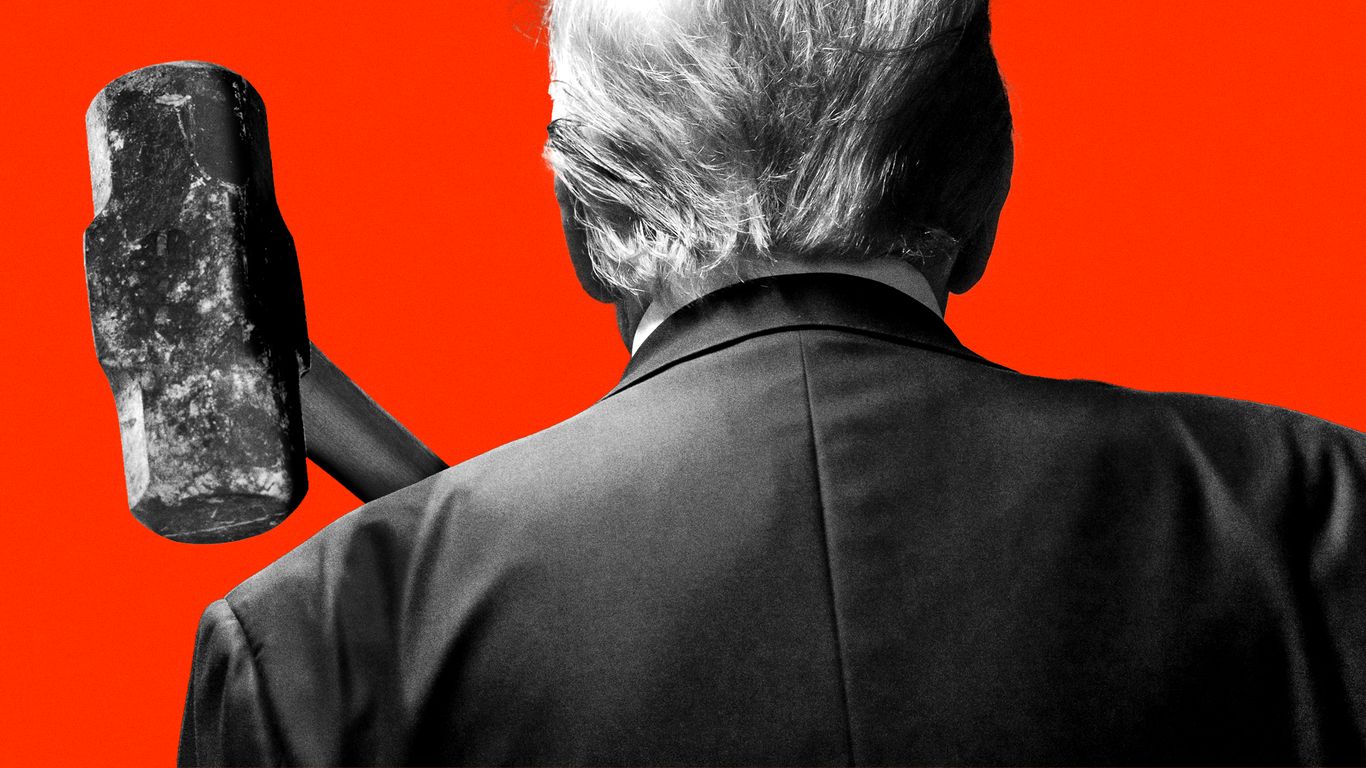
President Trump has repeatedly invoked national security as a justification for various policies and actions, often without clear connection to genuine threats. This approach has led to controversial measures such as banning journalists from the White House, constructing a 250-foot arch near the nation's capital with alleged snipers and drones, and reconfiguring the White House ballroom.
The administration has defended these actions by arguing that they serve "national security" purposes, a broad category that allows the president to bypass normal legal and democratic constraints. Law experts warn that the use of national security as a justification can lead to extreme deference from courts, effectively granting broad powers to the executive branch.
Critics argue that the ambiguity of the term "national security" has become a "blank check" that can be used to justify actions with no real link to genuine national security threats. Trump's administration has also used national security claims to advance deregulatory policies in the AI sector and to secure control over Greenland, further expanding presidential authority.
Written by urgent.news from Axios's reporting — not their text. Machine-written — may contain errors; check the original before relying on it.