‘Modi Is BJP And BJP Is Modi’, Let History Judge His Tenure
Prime Minister Modi will go down in Indian history as one of the most impactful leaders ever who changed the course of history. India before him was a different country, and it took a different turn once he became prime minister. It remains to be seen if changes that have occurred during his regime are permanent or just a blip in history. Undoubtedly, he is the greatest leader within the…
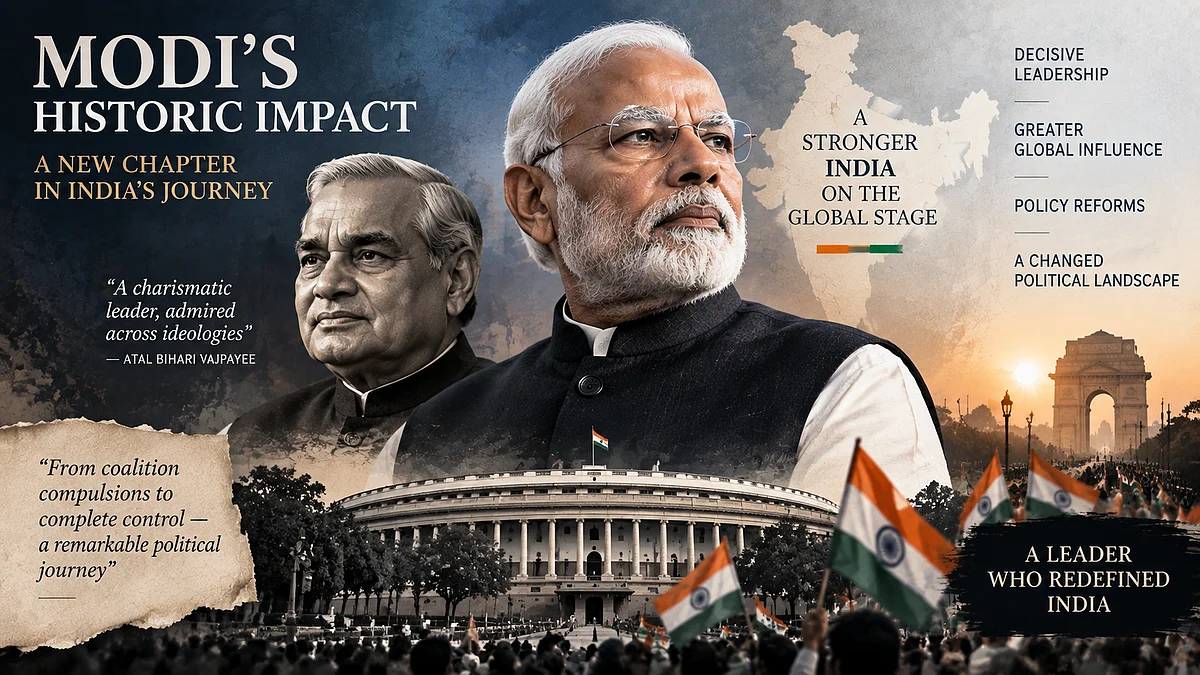
Prime Minister Modi is set to be remembered in Indian history as a leader who brought about significant changes. Comparing his tenure with that of his predecessor Atal Bihari Vajpayee, it remains to be seen whether these changes will be lasting or temporary. Modi is regarded as the greatest leader in the Hindutva fold, with only Vajpayee being compared to him.
Vajpayee was a charismatic and effective orator who commanded respect not only from his party but also from leaders of other parties and ideologies. Modi, on the other hand, is feared more than respected, but his presence is unmatched. While Vajpayee was a Swayam Sevak, Modi's authority within the party is absolute. During the 1998 BJP government formation, Vajpayee secured support from secular parties, which was crucial as the BJP did not have a majority.
In contrast, in 2024, Modi formed the government with the support of secular parties even when the BJP lacked majority numbers due to the BJP's dominance. The BJP in the 1990s had to compromise on its three contentious issues to attract secular parties' support. However, now, Modi has received support from secular leaders without having to compromise on his agenda.
When the Congress led by Narsimha Rao lost the 1996 election, the BJP formed the government for only 13 days. Sushma Swaraj once remarked that if Atal Bihari Vajpayee was invited to form the government, parties supporting the BJP would rush to do so. However, that did not happen. Now, Modi enjoys unwavering support from secular leaders like Nitish Kumar and Chandra Babu Naidu.
The BJP-isation of non-BJP parties in the NDA is complete, with the two parties being virtually the same. However, in Vajpayee's time, allies were aggressive, constantly threatening to withdraw support. In 1999, the Atal government fell after not securing enough votes to defeat the no-confidence motion. It is uncertain if a similar scenario will unfold for Modi's government.
Clearly, Modi has learned from Vajpayee's experience, understanding that total control is necessary to maintain power and control within the party and the government. Modi's centralization and polarization of political discourse have mirrored Indira Gandhi's strategies, who also centralized power and silenced dissent to remain in command.
Written by urgent.news from Free Press Journal's reporting — not their text. Machine-written — may contain errors; check the original before relying on it.