Milliardengeschäft: Wanderweg als Wirtschaftsmotor: Wie Gäste umworben werden
Wandern ist nicht nur eine beliebte Freizeitaktivität in der Natur. Es bringt auch Geld in ländliche Regionen. Touristiker ersinnen daher neue Angebote rund ums Wandern - auch in extremen Varianten.
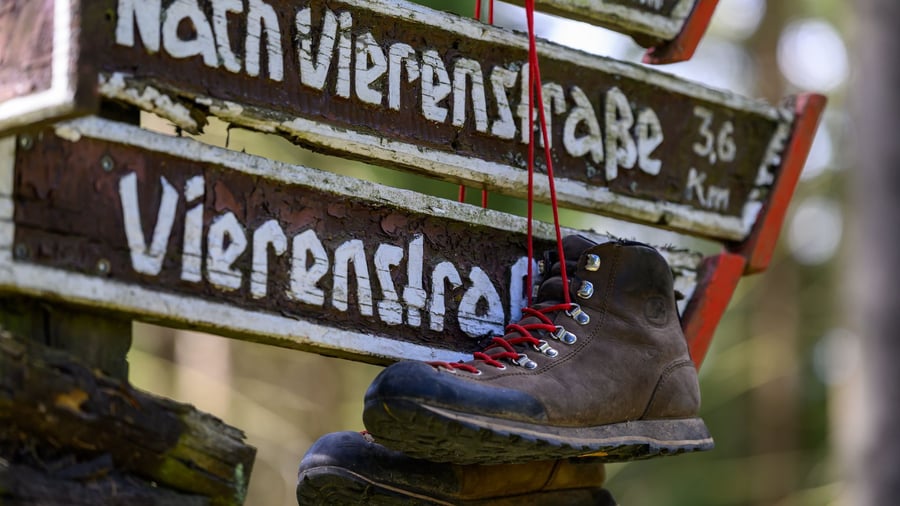
Natascha Heinrich, a former hiker who crossed the Alps on foot, now runs a family-run hotel in the Ore Mountains. After the renovation of the old inn at the foot of the Fichtelberg, the "Base Camp" was built for several million euros. Since spring 2025, she has been accommodating mainly active tourists, including many hikers. Many come via the Erzgebirge-Vogtland ridge road or use the hotel as a starting point for tours in the German-Czech border region.
To make hikers feel at home, it's not just about accommodation: from shoe dryers to insider tips for tours, a wellness area with saunas and infrared cabins for relaxation after the tour, and more. "People who hike far also want good food," explains the hotel manager. "And those who are away for several days appreciate the chance to wash and dry their clothes."
Interest in hiking has grown in recent decades, according to studies. "More people are hiking today," says Bernd Hartmann, Managing Director of the German Hiking Association. "About two out of three Germans aged 16 and older." They spend money not only on shoes, outdoor clothing, or tickets, but also generate revenue in restaurants and hotels.
In Germany, this amounts to about 7.8 billion euros per year. This benefits rural areas. Shoes, apps, and more: hikers invest in equipment. Hiking has undergone a lifestyle transformation since the 1990s, explains Heinz-Dieter Quack, head of the research center for hiking at Ostfalia University of Applied Sciences in Salzgitter.
From a more rustic pastime to a lifestyle-oriented form of recreation. His research group compiles a Hiking Monitor annually, looking at various aspects, including the economic value of hiking. In 2025, the survey found that respondents had spent about 445 euros on equipment over the previous two years. Shoes, socks, and pants were the top purchases, but backpacks, bottles, apps, and maps were also popular.
Those aged 30 to 49 tend to spend more on equipment. On average, hikers spend more than 60 euros per day - roughly for gastronomy, shopping, or public transport; those who hike for several days add another 100 euros, including accommodation. The extensive network of hiking trails is maintained at a considerable cost by volunteers and municipalities.
The professor therefore asked if hikers would be willing to pay for the use of these trails. Around 43 percent of respondents could imagine this. However, he emphasized that this has not yet been proven in practice. Projects that ask for contributions have yielded only small returns. Service offerings along the trails, such as transfers, catering, or parking fees, show more promise, according to Quack.
The German Hiking Association speaks of a hiking network of over 300,000 kilometers in Germany, seven and a half times the length of the equator. Germany, with its diverse regions, offers plenty of variety for visitors, not just German hikers. Even abroad, Germany is promoted as a "Hiking Country" by the German Tourism Central Agency.
Hiking has become more extreme in recent years, with people seeking a sporting challenge. The variety of hiking has increased, with some people seeking tranquility in nature or pilgrimage, while others explore cities - urban hiking - by studying architecture and parks. Still others seek sporting challenges. The Frankenwald Hiking Marathon attracts hundreds of participants from Germany and abroad and is usually sold out within hours.
In the Harz, regular hiking marathons are held, and in Saxony, extreme hikers complete a 62-kilometer, 1,700-meter-high hike from Chemnitz to the Fichtelberg in just one day. Despite the snow becoming scarcer in mountainous regions, the tourism industry is looking for ways to attract guests and keep hotels and pensions busy year-round.
This includes activities like mountain biking and hiking. Hotel manager Natascha Heinrich in Oberwiesenthal is pleased with these new offerings. This week, the region is hosting the European Hiking Festival Eurorando and the German Hiking Day. Heinrich hopes that those who have already visited will return and bring their families and friends.
"There are many who still don't know the Ore Mountains." She also believes that hiking can be combined with other events, such as company conferences or yoga classes.
Written by urgent.news from Handelsblatt's reporting — not their text. Machine-written — may contain errors; check the original before relying on it.