Microsoft launches India South Central cloud region in Hyderabad
Hyderabad region is designed to support mission-critical and AI workloads at scale, with three availability zones and resilience aligned to India’s regulatory and seismic requirements.
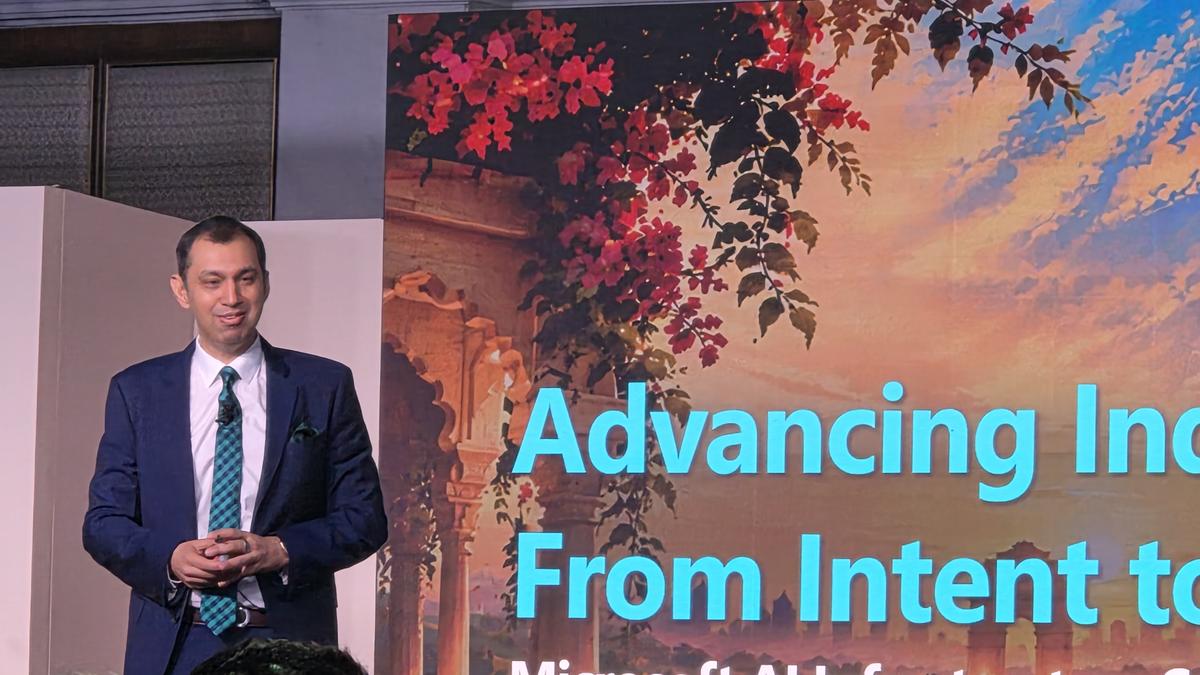
Microsoft inaugurated its India South Central cloud region in Hyderabad on Monday, expanding its presence in India's growing AI and cloud infrastructure landscape. This new addition brings the company's total cloud regions in the country to four, including Pune, Chennai, and Mumbai, solidifying its position as the largest hyperscale cloud provider in the nation based on footprint.
Microsoft framed this move as part of the broader transition from digital public infrastructure to AI infrastructure, emphasizing that India's next wave of economic growth will rely on dependable, sovereign-ready compute capacity, local data residency, and trusted cloud services.
According to Puneet Chandok, Microsoft India and South Asia President, India is currently responsible for 20% of the world's data, yet only houses 3% of the data capacity. He further stated that India's data centre capacity is projected to grow between 12-14 GW by 2035. The Hyderabad region is tailored to handle mission-critical and AI workloads at scale, featuring three availability zones and resilience aligned to India's regulatory and seismic standards.
The launch underscores that demand for such services is already evident, with enterprises, governments, and public-sector entities in India increasingly adopting AI technologies. Microsoft stated that the priority now is to supply, equip, and develop regional infrastructure to meet this demand responsibly.
The Hyderabad facility is designed with advanced sustainability measures, including zero-water cooling for operations, renewable energy procurement, and groundwater recharge protocols. Microsoft also affirmed that customer data remains under the control of the customer, and the company does not utilize customer data for training commercial foundation models.
This launch is projected to generate economic benefits, creating jobs, fostering skills development, and stimulating local enterprise growth. Early adoption from prominent Indian organizations was highlighted by Microsoft, positioning the region as a catalyst for wider economic activities encompassing construction, power, cooling, connectivity, and AI-related employment.
Microsoft's Hyderabad launch is being portrayed as both an infrastructure milestone and a strategic investment in India's emergence as a global AI hub.
Written by urgent.news from The Hindu - Sci-Tech's reporting — not their text. Machine-written — may contain errors; check the original before relying on it.