Local opposition blocked 45 data center projects worth $68 billion in the second quarter of 2026 — data center investments reportedly still on track to hit $32 trillion by 2050
Local opposition to data center buildouts has blocked $68 billion worth of data center projects in the second quarter of 2026, despite investments still rising.
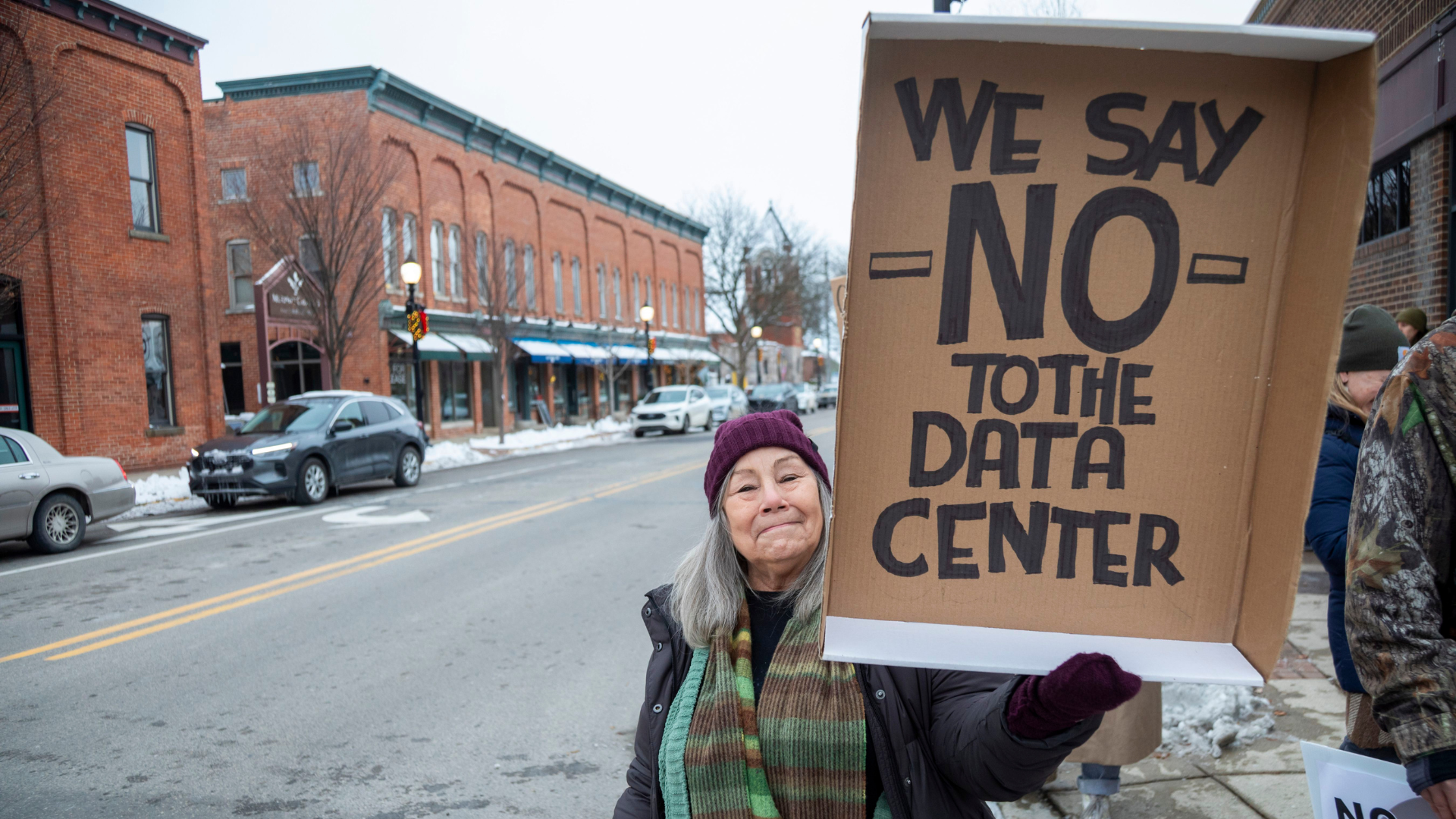
In the second quarter of 2026, local opposition thwarted or delayed 45 data center projects valued at $68 billion, according to a Bloomberg report citing Data Center Watch research. Thirty state legislatures have enacted rules around data center siting and resource use, with some communities even imposing moratoriums on construction before developers submit permit applications.
Hyperscalers, however, have invested over $1 trillion in data infrastructure since 2023, with another $745 billion in capital expenditures expected in 2026 alone.
The opposition stems from concerns over land use, noise pollution, and water and electricity consumption. In July, 142 AI data center protests took place simultaneously across 42 states, reflecting widespread apprehension. Data Center Watch estimates there are 843 opposition groups nationwide, with a primary worry being the environmental impact of AI data centers.
Each facility consumes vast quantities of water for cooling hundreds of thousands of AI accelerators, with the technology projected to consume up to 600 billion gallons of water by 2030.
Hyperscalers, including Microsoft and OpenAI, argue that these concerns are exaggerated. OpenAI CEO Sam Altman asserts that a single ChatGPT query consumes as much water as producing one almond, while Microsoft claims its new data center design uses water consumption comparable to that of a restaurant. A leaked incident in May revealed that an AI data center in Virginia consumed 29 million gallons of water over a year and a half before low water pressure alerted nearby residents.
Electricity consumption is another major point of contention, with analysts predicting that data centers will account for 20% of U.S. power usage by 2035. Local residents have already faced the consequences, such as a 76% increase in electricity bills following the construction of an AI data center in Virginia, leading to a mandate that hyperscalers cover the cost of additional transmission infrastructure.
Many regions are now implementing similar policies, and hyperscalers are increasingly building on-site power generation, including partnering with utility companies for off-grid solutions.
However, this shift to on-site power generation introduces new challenges. Some hyperscalers are relying on gas plants, which primarily burn fossil fuels, to meet their electricity needs. Elon Musk's Colossus 2 data center in Mississippi, for instance, faced criticism after 59 unpermitted natural gas turbines released significant pollutants into predominantly black communities.
Amazon's custom 35-turbine gas plant is projected to emit 33 million tons of greenhouse gases annually, making it the largest single source of CO₂ pollution in the U.S.
These concerns have created a dilemma: AI technology is revolutionizing industries and witnessing unprecedented adoption, but the rapid expansion of data centers is facing stiff local opposition. Advocates argue that data centers are essential for technological progress and that any opposition hinders growth, while opponents contend that they merely demand responsible implementation and have no issue with AI itself.
President Trump has defended communities opposing data centers, suggesting they "want to end up being backwards and poor," and implying a potential Chinese hand behind the movements. Incidents of death threats and gunfire over AI data center projects further highlight the intense emotions surrounding the issue, even as investments in AI data centers are projected to reach $32 trillion by 2050.
Written by urgent.news from Tom's Hardware's reporting — not their text. Machine-written — may contain errors; check the original before relying on it.