Kwesi Pratt urges Ghana to draw lessons from Nkrumah’s Seven-Year Development Plan
Veteran journalist and Pan-Africanist Kwesi Pratt Jnr has urged Ghana to draw lessons from Dr Kwame Nkrumah’s Seven-Year Development Plan as the country searches for lasting solutions to its economic challenges. According to Mr Pratt, the development plan, which was implemented between 1963 and 1970, provided a long-term framework for transforming Ghana’s economy through strategic […]
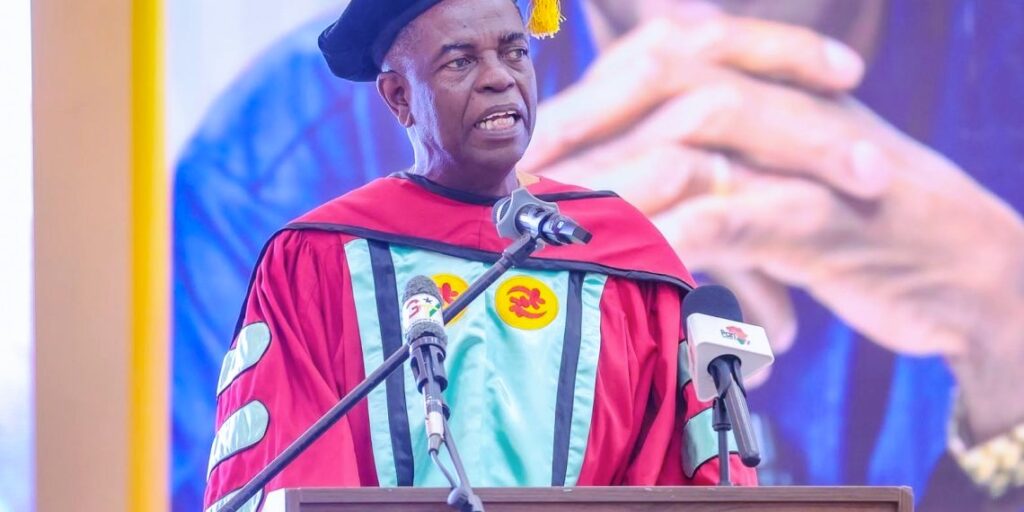
Renowned journalist and Pan-Africanist Kwesi Pratt Jnr has called on Ghana to learn from Dr Kwame Nkrumah's Seven-Year Development Plan as the nation seeks to address its economic issues. According to Pratt, the plan, executed between 1963 and 1970, offered a long-term strategy for transforming Ghana's economy through investments in infrastructure, education, energy, industry, and social services.
He highlighted that many of the assets established under this plan are still benefiting Ghanaian generations and underscored the significance of long-term national development planning. Speaking at the 15th Kwame Nkrumah Memorial Lecture in Cape Coast, delivered by the University of Cape Coast (UCC), Pratt emphasized that the Seven-Year Development Plan represented a comprehensive effort by a post-independence government to alter Ghana's colonial economic framework and pave the way for economic independence.
He explained that the plan focused on six key areas: state-led industrialization, economic diversification, agricultural modernization, infrastructure development, human capacity development, and an African economic purpose. Pratt noted that Nkrumah recognized the need to transform the colonial economic structure to avoid remaining dependent on the export of raw materials like cocoa, gold, and timber while importing manufactured goods.
This economic pattern remains a challenge for Ghana today. He elaborated on Nkrumah's industrialization strategy, which involved the creation of state enterprises in various sectors, including manufacturing, agriculture, transportation, hospitality, and others. Pratt explained that diversifying the economy was crucial due to Ghana's reliance on cocoa, making it vulnerable to fluctuations in global commodity prices.
Industrialization aimed to reduce this vulnerability, generate employment, and preserve more value within the national economy. He emphasized that Nkrumah did not pit agriculture against industry but viewed them as complementary to national development. Modern agriculture was expected to provide food, industrial raw materials, employment opportunities, and export earnings.
Infrastructure projects, such as the Akosombo Dam and Volta River Project, Tema Harbour, roads, electricity infrastructure, Tema Township, and industrial estates, were also integral to the development strategy, providing the necessary support for productive economic activity and industrialization. Pratt also discussed Nkrumah's emphasis on education and human capital, highlighting the expansion of primary, secondary, technical, and university education to develop the skilled workforce necessary for national development.
He pointed out that the University of Cape Coast emerged from this commitment to train educators for Ghana's growing school system, demonstrating that Nkrumah's vision extended beyond physical infrastructure to the development of people. He linked the Seven-Year Development Plan to Nkrumah's broader Pan-African vision, noting that it aimed to integrate Ghana's development into the wider economic advancement of Africa and reduce colonial dependence.
While acknowledging the challenges the plan faced, such as the collapse of world cocoa prices, rising external debt, shortages, inflation, and weaknesses in administrative and financial capacities, Pratt argued that these issues should not lead to abandoning national planning or industrialization. Instead, he suggested that the correct lesson is to combine them with stronger management, accountability, technological competence, realistic sequencing, and disciplined evaluation.
Pratt also refuted the claim that Nkrumah destroyed Ghana's economy, maintaining that he inherited a dependent commodity-export economy and attempted to transform it, leaving a legacy of significant national assets.
Written by urgent.news from Adom Online's reporting — not their text. Machine-written — may contain errors; check the original before relying on it.