In situ and operando optical microscopy and spectroscopy: investigating perovskite optoelectronic devices at work
Join the audience for a live webinar at 4 p.m. GMT/5 p.m. CET on 3 November 2026 Learn how optical microscopy reveals local processes in working perovskite optoelectronic devices The post In situ and operando optical microscopy and spectroscopy: investigating perovskite optoelectronic devices at work appeared first on Physics World .
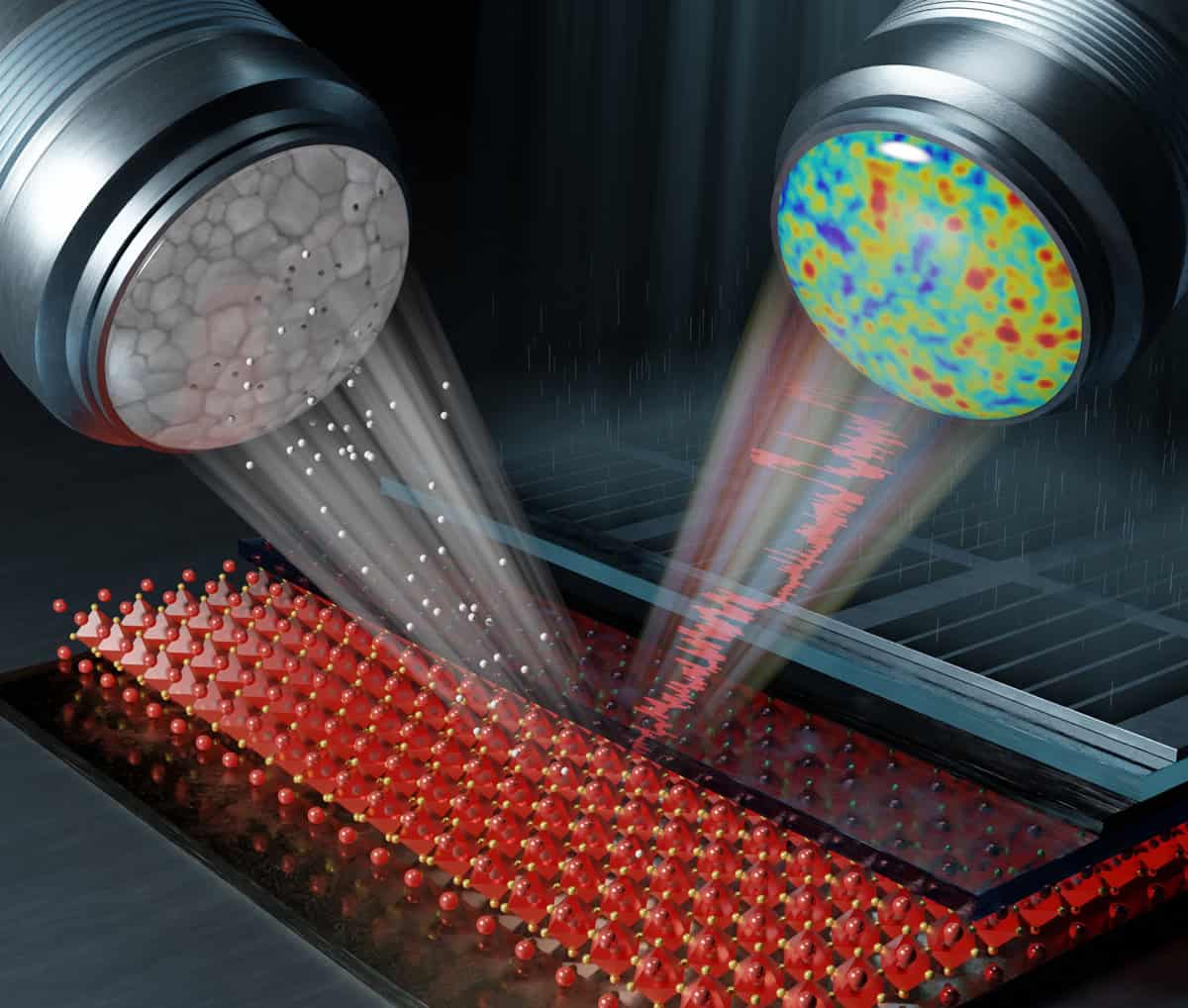
Optoelectronic materials and devices perform best when carrier transport, recombination, ion migration and phase segregation occur efficiently. These processes take place on a range of length scales from nanometers to micrometers, and timescales from picoseconds to hours. Current characterization methods do not capture these local events happening within operational devices.
However, optical microscopy and spectroscopy can provide a more detailed picture. They convert local material function into optical contrast, which can be resolved across the relevant length and time scales. Dr. Sudipta Seth, a research associate at KU Leuven, will present advanced optical microscopy and spectroscopy techniques to investigate halide perovskite materials and optoelectronic devices under operational conditions.
This approach can reveal local fields, transport bottlenecks, and defect chemistry that influence solar cell performance. Dr. Seth's talk will demonstrate how these local optical signatures can provide a mechanistic understanding of device operation, and how this understanding can inform the design of improved probes, interfaces, defects and devices.
The webinar is open to both materials scientists interested in understanding the inner workings of their materials and microscopists and spectroscopists seeking new applications for their tools. Certificates of attendance will be provided upon completion of the webinar.
Written by urgent.news from Physics World's reporting — not their text. Machine-written — may contain errors; check the original before relying on it.