How States In India Are Taking E-Governance To The Last Mile
Avijit Dwivedi, writer, consultant, Policy matters and Rural Advocacy sheds light on How states in India are taking e-governance to the last mile. Over the past decade, public administration in India has gone through a massive overhaul. Centralised portals, direct benefit transfer pipelines, DigiLocker, DigiYatra and digital public infrastructure have changed how citizens deal with the…
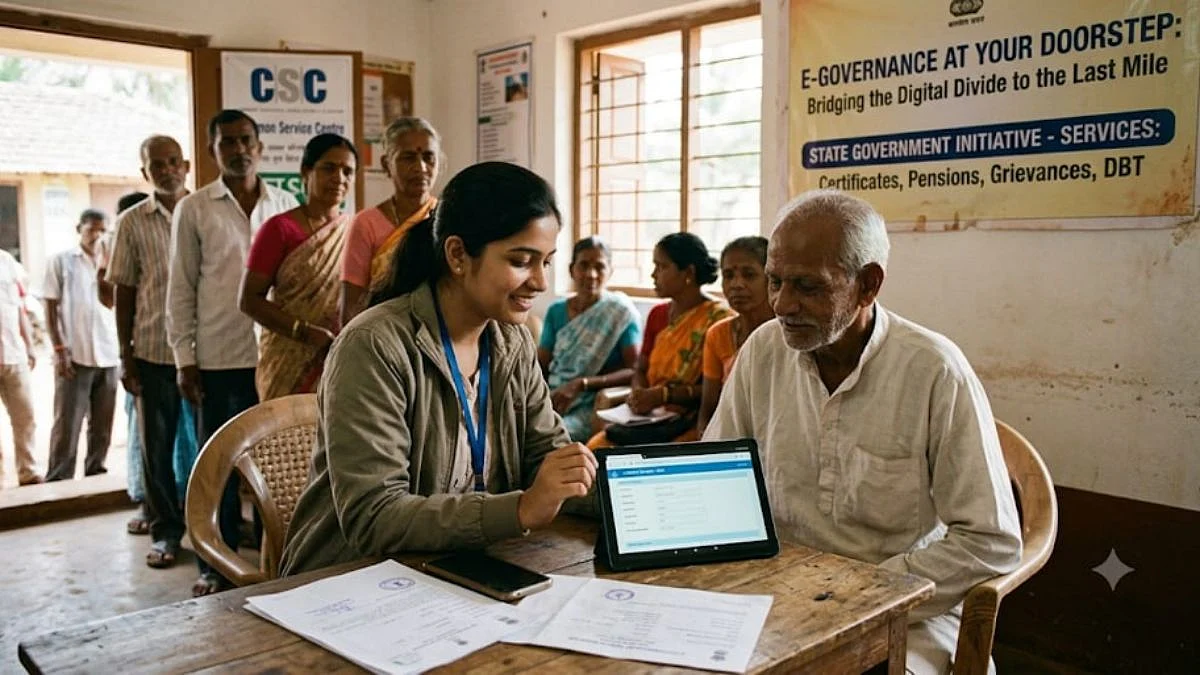
In recent years, Indian states have been pioneering the integration of e-governance into the most remote corners of the country. While centralised online portals, direct benefit transfer systems, and digital infrastructure have streamlined many government services, a new challenge has emerged: how to ensure that these digital tools are accessible to every citizen, regardless of their literacy levels or technological comfort.
In Goa, the state has devised a unique solution to bridge the digital divide. With a rapidly ageing population, where 17.2% of residents are aged 60 and above, Goa recognizes that technological solutions alone are insufficient. The state has implemented a hybrid model that combines advanced digital tools with human assistance. Goa Online serves as a centralized platform for various government services, while the Gramin Mitra programme dispatches trained facilitators to assist individuals in navigating the online portals.
This approach ensures that even the most technologically disadvantaged citizens can still access essential services, without being excluded from the benefits of e-governance.
Madhya Pradesh, often hailed as an early adopter of digital initiatives, has taken a different approach by focusing on physical access points. The state established rural internet kiosks operated by local entrepreneurs, providing convenient locations for residents to access government services. This model has been further expanded through initiatives like MP e-District, which streamlines public service delivery and reinforces the importance of accessible points of assistance to complement software efficiency.
Andhra Pradesh, on the other hand, has opted for a workforce-centric strategy. The state has established Village and Ward Secretariats, placing full-time staff within local communities. This enables citizens to seek guidance directly from knowledgeable individuals, eliminating the need to navigate complex online platforms. The Ward Secretariat system functions as a single-window service provider, facilitating easy access to government services at the grassroots level.
By combining digital tools with human support, Andhra Pradesh has created an inclusive e-governance framework that addresses the diverse needs of its citizens.
Rajasthan has explored a different avenue by leveraging local entrepreneurship through its e-Mitra system. This initiative sets up operator-led service points across both rural and urban areas, allowing residents to conveniently access a wide range of public services. By positioning these kiosks in familiar neighbourhood locations, Rajasthan aims to provide a familiar and accessible environment for citizens to engage with government services.
These diverse approaches from different Indian states highlight the importance of tailoring e-governance solutions to specific regional contexts. While technology remains a crucial component, the successful integration of digital services hinges on ensuring that every citizen, regardless of age or technical proficiency, can effectively access and benefit from these services.
By combining robust digital infrastructure with human assistance, states like Goa, Madhya Pradesh, Andhra Pradesh, and Rajasthan are paving the way for an inclusive and accessible Assisted Digital India.
Written by urgent.news from Free Press Journal's reporting — not their text. Machine-written — may contain errors; check the original before relying on it.