Crew Biology Research, Spacecraft Cargo Jobs Kick Off Week on Station
A variety of human research encompassing body measurements, exercise monitoring, and breath rate recording kicked off the week aboard the International Space Station. The Expedition 75 crew members also prepared for an upcoming crew swap, worked inside a pair of cargo spacecraft, and activated automated Earth observation hardware on Monday. The post Crew Biology Research, Spacecraft Cargo Jobs…
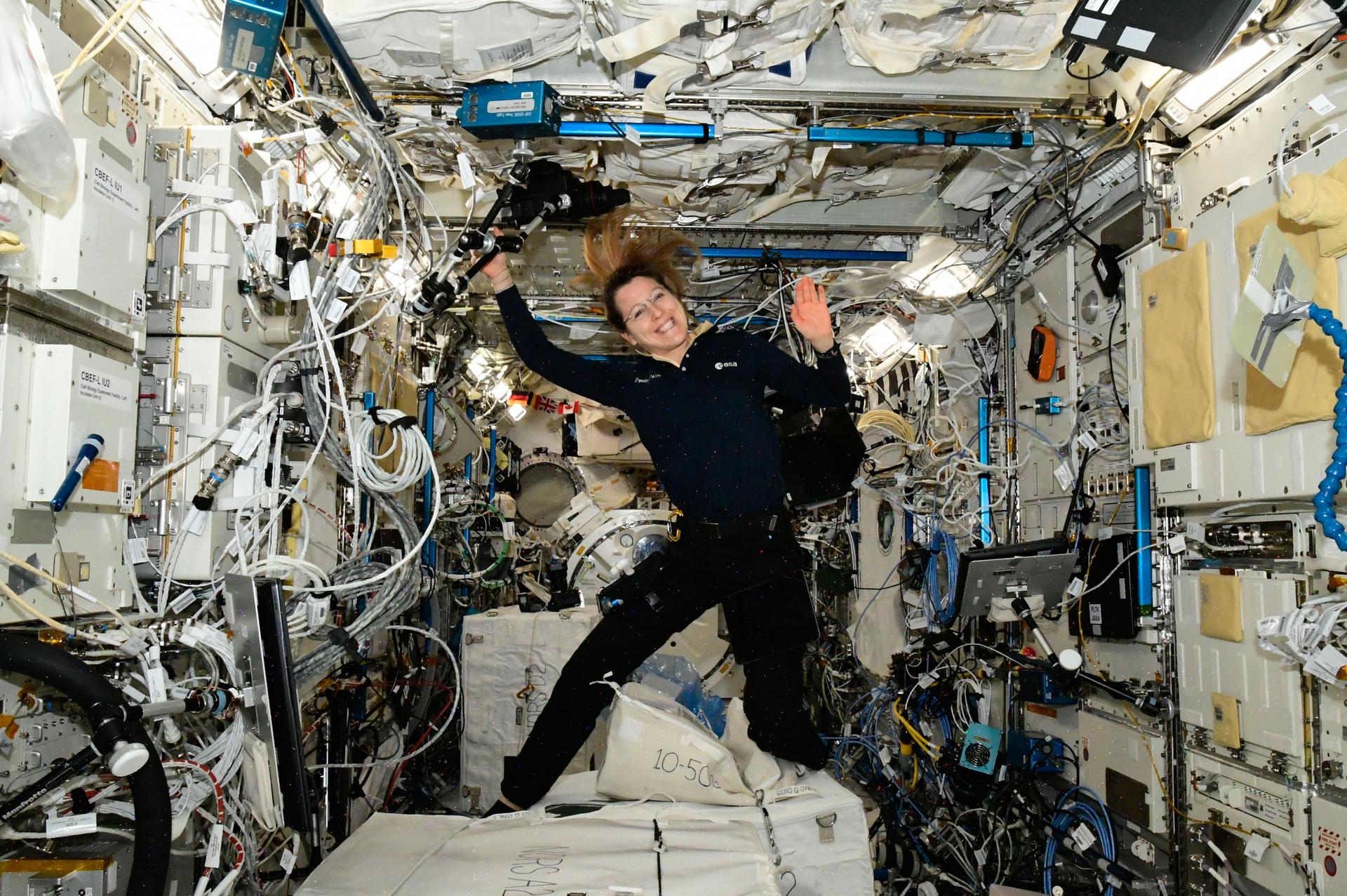
Expedition 75 crew members on the International Space Station began the week with a variety of human research activities, including body measurements, exercise monitoring, and breath rate recording. Expedition 75 commander Jessica Meir and flight engineer Jack Hathaway conducted body measurements using a tape measure in the Columbus laboratory module, with the data recorded via the EveryWear app for analysis back on Earth.
This research aims to understand how weightlessness affects astronauts' height and circumference, which can aid in suit sizing and health monitoring.
The crew also prepared for an upcoming crew swap and worked inside two cargo spacecraft—Cygnus XL and Dragon—preparing cargo for return to Earth aboard Dragon when NASA's SpaceX Crew-12 mission concludes next month. Jack Hathaway assisted Meir and NASA flight engineer Anil Menon with Cygnus XL and Crew-12 cargo operations, wrapping up his shift with scientific photography in the Harmony module to support space-based material manufacturing.
Flight engineer Sophie Adenot set up a motion capture system in the Tranquility module to record her resistance exercises performed on the advanced resistive exercise device, simulating Earth's gravity forces. Researchers will analyze her movements to better understand muscle forces and bone stresses experienced during microgravity workouts, potentially leading to more effective exercise routines for long-duration missions.
Progress 96, the newest cargo craft that docked to the Poisk module on Saturday, is currently being unpacked by Roscosmos flight engineers Pyotr Dubrov and Anna Kikina. The spacecraft is delivering nearly three tons of food, fuel, and supplies, while Roscosmos flight engineer Andrey Fedyaev tested a lower body negative pressure suit designed to counteract microgravity-induced fluid shifts, potentially easing the transition back to Earth's gravity after long-term spaceflight.
Written by urgent.news from NASA Science's reporting — not their text. Machine-written — may contain errors; check the original before relying on it.