Carlo Rovelli on the Dangers of Getting Trapped Inside Your Own Conceptual Framework
Before arriving at the quanta to which this first lesson is devoted, allow me to begin with a simple observation. We humans inhabit the surface of the planet Earth, and this is a rather peculiar place: it has aspects that
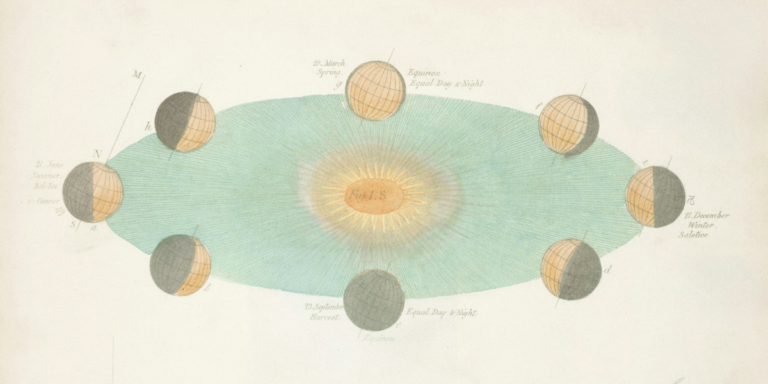
Carlo Rovelli cautions that humans often become trapped within their own conceptual framework. On Earth, we perceive a world with small-scale peculiarities that lead us to false assumptions. The Earth's limited size makes communication seem instantaneous, giving us the impression of a shared, common time. We view objects, such as stones and houses, as solid and stable over time.
However, this is not true everywhere. Jupiter and Saturn, vast planets with fluid qualities, defy our understanding of objects. Air, which fills the Earth's atmosphere, is often overlooked as if it were not there. The Earth's solid continents allow us to locate ourselves with names, giving a false sense of permanence. Gravity remains relatively constant, so time passes uniformly for everyone.
Yet, this is not the case in the wider universe where time can pass at different speeds for different travelers. Our intuitive understanding of reality is shaped by local peculiarities, leading us to mistake them for universal truths. Recognizing these limitations is crucial to avoiding the trap of a narrow conceptual framework.
Written by urgent.news from Literary Hub's reporting — not their text. Machine-written — may contain errors; check the original before relying on it.