Batteries that safely break down in the GI tract could improve ingestible devices
Made from “bioresorbable” materials, the new batteries could power capsules for drug delivery, sensing, and other applications.
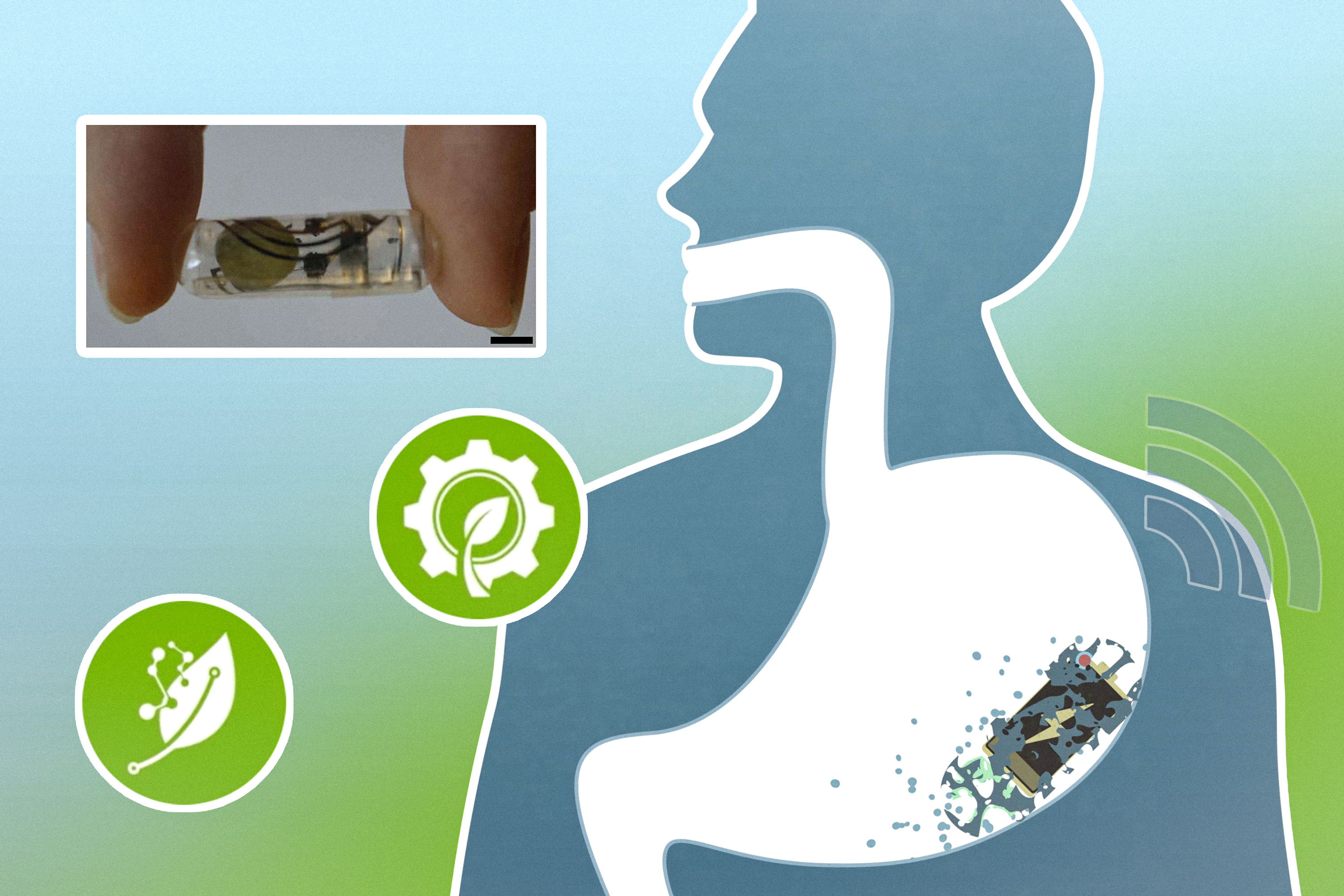
MIT researchers have developed tiny, biodegradable batteries that could power ingestible electronic devices, making them safer for patients and reducing environmental impact. These batteries, created using magnesium and molybdenum trioxide, generate 1.84 volts and can power RFID tags and devices that stimulate the production of ghrelin, the hunger hormone.
The batteries, which are bioresorbable, could be used in various ingestible devices for sensing or therapeutic applications. The researchers previously developed ingestible capsules for monitoring vital signs, delivering drugs, and detecting opioid overdoses. Although some of these devices don't require power, those that do have traditionally been powered by external batteries, which could pose safety risks if damaged within the GI tract.
To address this, the researchers turned to magnesium and molybdenum trioxide, metals that are known to be safe for human consumption in small amounts. They created two battery versions, a disc and a rectangular bar, which function normally for about three days before breaking down completely. When incorporated into a device that stimulates ghrelin production, the new magnesium-molybdenum oxide batteries made the device bioresorbable.
Tests in animals showed that continuous electrical stimulation for up to three days could boost ghrelin levels by about 50 percent. The researchers also incorporated the battery into an RFID device that can transmit from within the GI tract, allowing for improved medication adherence. The researchers are now planning a clinical trial for the RFID system, which could reduce the environmental impact of batteries excreted into sewage systems.
Written by urgent.news from MIT News Research's reporting — not their text. Machine-written — may contain errors; check the original before relying on it.