Balea: Von der belächelten Eigenmarke zur Benchmark für die Branche
Einst als Billigprodukt verschrien, wächst Balea schneller als viele Herstellermarken. Wie hat die Drogeriekette dm das geschafft? Die Erfolgsfaktoren – und die Gefahren.
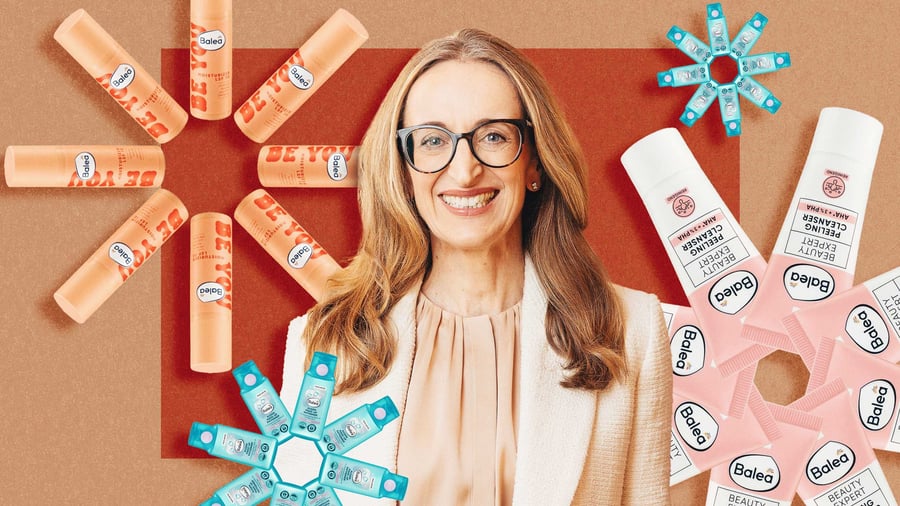
Balea, a dm-owned private label, has transformed from being seen as a "white label" to becoming a benchmark for the industry. According to Yougov, a product from Balea is bought in the German shopping cart every 6-7 months, more than once every two months. Over the years, Balea has evolved from simple shower gels and facial creams to korean skincare, medically enhanced facial treatments, and a "Professional" hair care range.
In a recent study, consulting firm Porsche Consulting described Balea as a "category-defining outlier," a private label that redefines the category. The question remains: how much is good branding, how much is the influence of the dm sales network, and what is the competition doing? The Handelsblatt has looked at the success factors of Balea. Is Balea truly successful?
The story of Balea's success is not just based on perception in the business. Yougov's market data clearly shows that between June 2022 and June 2026, Balea's revenue grew by 47 percent. Nearly every second German considers buying a Balea product. Moreover, 44.2 percent of Germans consider purchasing a Balea product. Another interesting fact is that Balea continuously attracts new customers.
The reach of Balea buyers has grown from 34 to 40 percent in the past four years. This is significant in the skincare market because many startups are entering the market, making the competition very strong. According to Yougov expert Anna-Katharina Kraus, this is huge because many startup brands are invading the market and the competition environment is very strong.
Compared to the top five brands and trade brands in the categories where Balea operates, the average buyer penetration is just 23 percent. Thirty percent of competitors have lost at least 0.5 percentage points in buyer reach from 2022 to 2025. Where does Balea come from? In the summer of 1995, dm introduced the Balea brand. The first 30 products mainly consisted of shower gels, baths, and deodorants.
Even today, skincare is the strongest segment of Balea. According to Yougov, 93 percent of Balea buyers buy skincare products, while 54 percent buy hair care products. Kerstin Erbe, responsible for dm brands in the dm management, speaks about the beginnings. "In a time when trade brands were often just seen as white label in price entry, dm's founder Götz Werner consciously decided to build own brands," she says.
In the early years, products and design clearly indicated that they were private label products. "Mid-1990s to the early 2000s, Balea was the classic private label - the substitute, the economy product. Accordingly, it looked," says brand expert Tabea Höllger of the Brand Trust consultancy. Then the category was expanded, sub-brands like Balea Men were introduced.
In the 2010s, the brand started experimenting with active ingredients and developed a high pace of innovation. "One could feel it: The brand had a strategy and a plan," says Höllger.
Written by urgent.news from Handelsblatt's reporting — not their text. Machine-written — may contain errors; check the original before relying on it.