Autoindustrie: IG Metall mobilisiert rund 175.000 Auto-Beschäftigte
Die Sparpläne bei Autoherstellern und Zuliefern in Deutschland bringen Zehntausende Beschäftigte auf die Straße. „Überall brennt gerade die Hütte“, sagt die IG-Metall-Chefin.
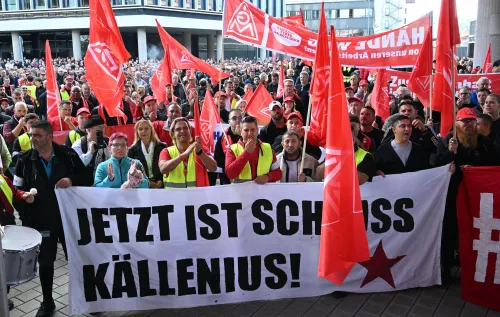
The International Association of Metalworkers (IG Metall) has mobilized approximately 175,000 auto-industry workers ahead of a tariff negotiation in the metal and electrical industries. Actions took place at around 280 locations throughout the country, not only in the major German car hubs of Wolfsburg, Stuttgart, Ingolstadt, and Munich.
The employees protested against job cuts, potential factory closures, and demands for longer working hours. The slogan for the day was "Future instead of collapse - unity is our strongest brand." The action targeted job losses, with tens of thousands of positions disappearing due to the fact that the German automotive industry is losing more jobs than any other sector.
The Auto Industry Association (VDA) had previously urged for a larger willingness to change among the unions and workers, stating that production in Germany is not a "natural law" and that plant utilization is not automatic. The high labor costs and shorter working hours in Germany were cited as reasons for this. German auto manufacturers like Mercedes-Benz, BMW, VW, and their brands, as well as suppliers such as Bosch, ZF Friedrichshafen, Aumovio, and Mahle, were affected by the job cuts, with closures in VW's Hannover, Emden, Zwickau, and Audi's Neckarsulm locations.
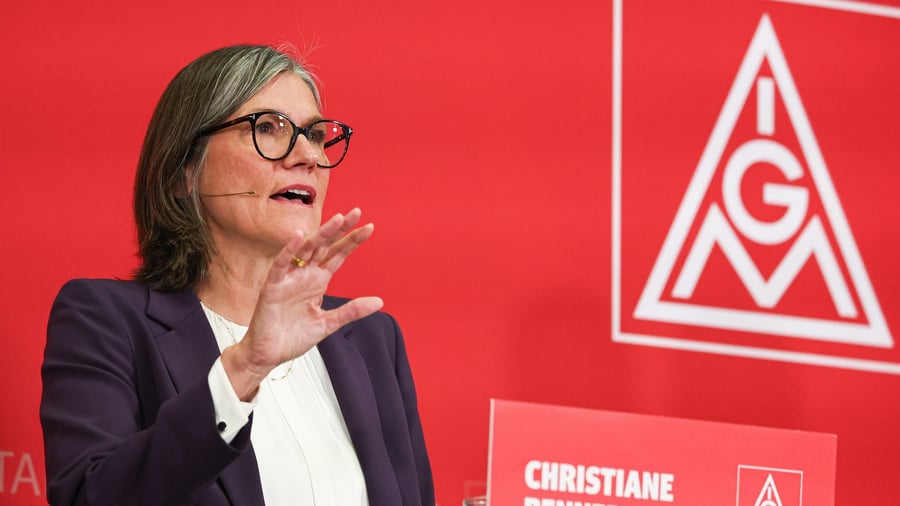
IG Metall General Secretary Christiane Benner criticized auto-managers for their actions, accusing them of making serious mistakes by pushing the industry against the wall. She stated that the boardrooms of German companies have been driving the industry into a wall and experiencing a brain drain. The union emphasized that top management must take responsibility for the auto-industry in Germany, its employees, and jobs.
She called for reliable conditions for investments, affordable energy, promotion of a "Made in EU" approach, and protection from unfair competition, financial aid for suppliers undergoing restructuring, and the retention of age retirement schemes. Industry leaders acknowledged that production in Germany is not a "natural law," and plant utilization is not automatic, citing high labor costs and shorter working hours as contributing factors.
Germany's weak sales in its largest foreign market, China, aggressive price competition, US tariffs, and slower-than-expected growth in electric mobility have all contributed to industry challenges. German auto manufacturers reported a 2.9% revenue decline in the first half of the year, with VW, BMW, and Mercedes' combined revenue falling to around €284 billion.
Written by urgent.news from Handelsblatt's reporting — not their text. Machine-written — may contain errors; check the original before relying on it.