As AI marches on math research, scholars ponder the future
A flurry of AI-generated proofs has left mathematicians in various emotional states. Some are cautiously excited. Some are critical of the AI companies’ commercial motives behind their relentless mining of open maths problems and are insisting on more careful regulation. And some are left asking existential questions
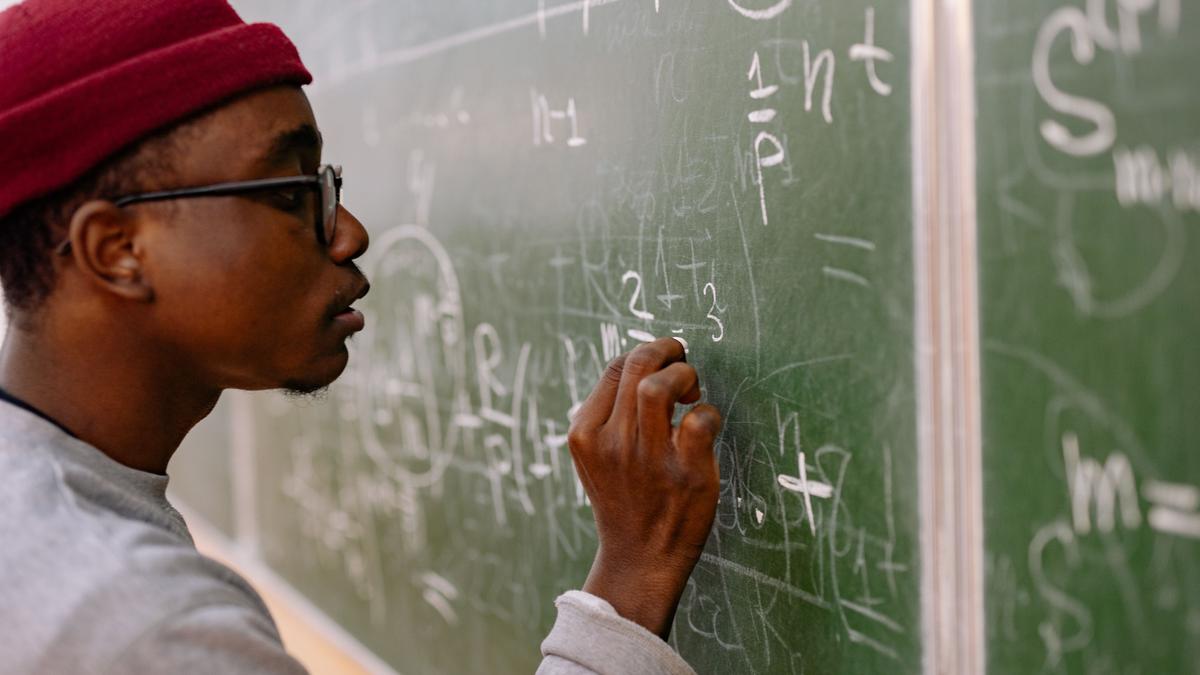
On July 20, mathematician Levent Alpöge, who works at the AI company Anthropic, tweeted that Anthropic's advanced large language model Claude Fable 5 had generated a counterexample to the Jacobian conjecture, an 87-year-old unsolved problem in algebraic geometry. This was not the first major mathematical breakthrough by AI. On May 20, OpenAI released tweets claiming its internal reasoning model had solved the planar unit distance problem, an open problem proposed by Paul Erdős in 1946.
Many experts verified the solution and realized it would be published in a top journal if solved by humans. OpenAI announced on August 1 that its newest model 'Astra' had solved ten more open math problems, including three from Erdős' legendary list. This surge in AI's mathematical prowess has left many mathematicians, including Columbia University theoretical computer scientist Henry Yuen, deeply concerned about the implications.
Written by urgent.news from The Hindu - Sci-Tech's reporting — not their text. Machine-written — may contain errors; check the original before relying on it.