Are countryside buses coming back into business?
A rise in bus miles with council funding might be starting to reverse the reduction in services.
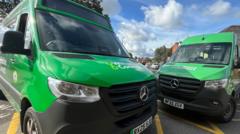
Council-funded rural buses, often seen as a lifeline, are experiencing a resurgence after a period of decline. Government data indicates that council support for local buses is increasing, with 17% of bus miles travelled across England now supported financially by government, up from a pre-pandemic low of 13% in 2019-20. However, despite the increase in support, fewer people are using buses, with journeys per person in England dropping from 88 in 2010 to 63 by 2024-25. This decline occurred during the pandemic, and has not yet returned to pre-Covid levels.
Authorities are now given more power through new laws, with council-backed services described as fundamental to social inclusion and a lifeline for many. In rural areas, demand-responsive transport (DRT) services have been particularly successful. Wiltshire Connect, a DRT service in Wiltshire, has seen 250,000 journeys since its launch in 2023, with passengers praising its affordability and convenience. The service allows passengers to book via app or phone, with routes changing based on demand.
The increase in supported bus mileage is seen as encouraging, but Bus Users UK emphasizes that bus services must enable people to make meaningful journeys. The decline in bus miles, including commercial routes, is attributed to budget cuts forcing councils to abandon routes. The government's recent funding and the Bus Services Act, which gives local authorities more power, are seen as positive steps.
However, many areas still lack the bus service they need. The Confederation of Passenger Transport attributes some decline to worsening traffic congestion, making buses slower and less attractive to passengers.
Written by urgent.news from BBC News's reporting — not their text. Machine-written — may contain errors; check the original before relying on it.