AI Agents Take the Controls in Supply Chains
Global supply chains have always been the operating system of the modern economy. They determine how food reaches supermarkets, how medicines arrive at hospitals, how factories receive components. They are also the place where economic fragility is most visible, as five years of shocks from pandemic to Red Sea disruptions to geopolitical fragmentation have made […] The post AI Agents Take the…
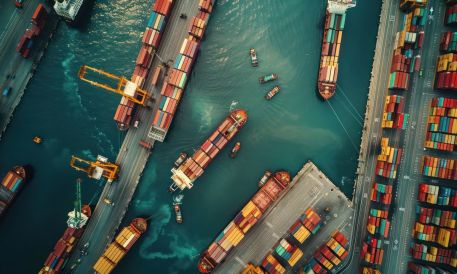
Global supply chains, the backbone of the modern economy, have always determined the flow of goods from production to consumption. However, their fragility has been underscored by recent disruptions from the pandemic to geopolitical tensions. Now, artificial intelligence (AI) agents are poised to revolutionize these chains by autonomously coordinating decisions, from inventory management to capital allocation and commercial relationship reshaping.
The World Economic Forum defines agentic supply chains as networks where AI agents continuously perceive, reason, negotiate, and execute operational decisions across organizational boundaries. The defining feature is the delegation of coordination, not just AI use. Consider an autonomous agent detecting rising security risks in the Bab el-Mandeb Strait.
Without waiting for human approval, it swiftly evaluates satellite imagery, maritime intelligence, weather conditions, freight rates, and inventory positions across continents. Within minutes, it reroutes a vessel, reallocates stock, secures additional rail capacity, and renegotiates delivery commitments. This introduces a fourth flow in traditional three-fold supply chains: decision flows.
Governing these autonomous decisions will be crucial for competitive advantage. A Harvard Business Review article highlights procurement as the business function most poised to benefit from agentic AI. Unlike other functions, procurement's work is structured, financially measurable, and filled with judgment-intensive tasks, making it ideal for AI automation.
However, low adoption rates stem from organizational issues rather than technological barriers. Companies leading in this area redesign procurement around AI, giving procurement ownership of AI initiatives, strengthening data foundations, building governance into deployments, and focusing on commercial outcomes. This approach has already improved productivity, supplier management, and financial performance.
The article emphasizes that every AI decision in procurement has a measurable financial consequence, making it the most credible early deployment environment for agentic AI. Data readiness is paramount, as IDC's Stephanie Krishnan notes that a linear, cost-optimized supply chain is obsolete. The key to success by 2030 is intelligence at scale, with 45% of G2000 companies expected to have adopted agentic AI-driven supply chain orchestration by then.
This adoption promises a 20% revenue uplift and a 30% improvement in partner and customer satisfaction. Yet, data readiness is the prerequisite for all that follows. Without clean, governed, and interoperable data, AI agents cannot scale.
Written by urgent.news from PYMNTS's reporting — not their text. Machine-written — may contain errors; check the original before relying on it.