The politics of migration hides Australia's real problem
Australia is having a debate over population numbers but perhaps weak productivity is the real problem and Canada's approach offers some of the answers.
The current level of net overseas migration (NOM) stands at roughly 300,000, with 392,700 people added to the population in the year to March, of which 292,100 were migrants. This represents an increase of 100,000 annually compared to the period between the Global Financial Crisis (GFC) and the COVID pandemic, and 200,000 more than in preceding decades.
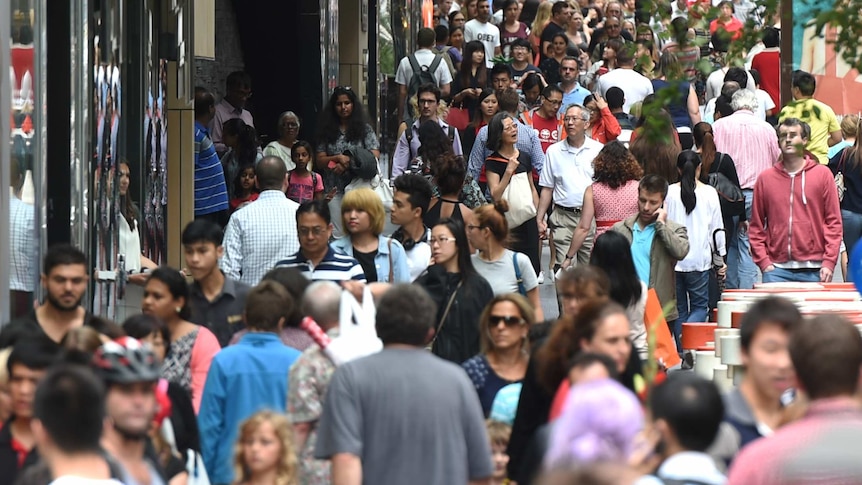
ABS data reveals that population growth averaged 400,000 per year over the past four years, equating to 1,100 people daily. Consequently, cities have experienced noticeable crowding, resulting in a 23.5% increase in the national median house price. Despite this, population growth has only led to an average annual GDP growth of 2.4%, with GDP per capita growing by just 0.5% and real disposable income often remaining negative.
Three political parties have emerged in response to the migration grievance, all advocating for more skilled migration. However, the schemes primarily impact unskilled workers who are unable to perform labor-intensive jobs such as fruit and vegetable picking. These workers are in high demand due to Australians' reluctance to engage in such tasks.
The Coalition, Labor, and One Nation have introduced modest measures aimed at resolving the issue, but none offer substantial solutions. One Nation stands out with its pledge to reduce migration to 245,000 for the current financial year and 225,000 by 2027/28. Meanwhile, the Canadian government has introduced a series of productivity-boosting measures, including a 23% reduction in temporary migration from 6.5% to 5% of the population, which would amount to deporting 1.5 million people.
While Australia's temporary resident stock currently constitutes 10.5% of the population, reducing it to 5% would require deporting a similar number. The Canadian approach involves lowering the effective business tax rate on new investment from 13% to 6.4%, while also streamlining approvals for major projects and supply chains. Australia could benefit from adopting a similar productivity-focused approach to address its low growth and productivity issues.
Written by urgent.news from ABC News AU's reporting — not their text. Machine-written — may contain errors; check the original before relying on it.