Researchers build a drone that navigates with physical whiskers to operate in dark, dusty or smoky places where cameras or GPS can fail — sub-100 gram drones run 34KB software to enable sub-millimeter precision
Whiskers attached to three pressure sensors at their base could help drones find their way around their environment purely through touch. This lightweight system emulates the vibrissae found on mice and other small mammals that help them navigate in the dark.
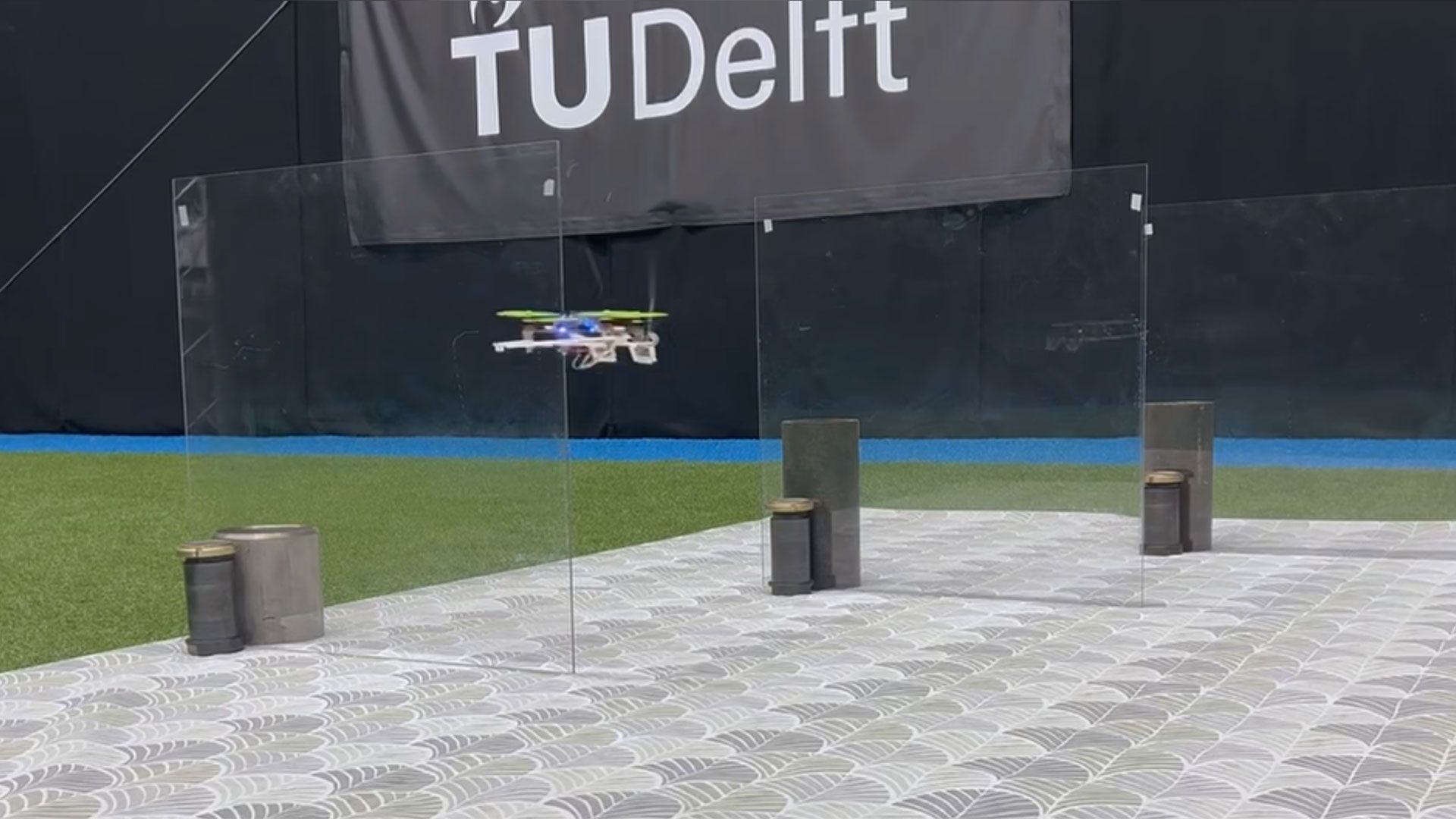
Researchers from Delft University of Technology in the Netherlands have developed a drone equipped with physical whiskers to navigate in challenging environments where cameras or GPS may fail. The tiny, lightweight drone weighs under 3.5 ounces, or 100 grams, and is designed for tasks such as search-and-rescue missions. Traditional sensors like cameras, rangefinders, and LiDAR can struggle in poor conditions such as darkness, dust, or smoke.
Associate Professor of Aerial Physical Interaction and Embodied Intelligence Dr. Salua Hamaza explained that the goal is to equip drones with tactile sensing to explore and fly through unknown environments. To achieve this, the researchers created two whiskers attached to the front of the drone that are angled upwards and connected to three miniature pressure sensors at the base.
When a whisker contacts a surface, the changes in the pressure sensors help the drone estimate its depth and location. This information allows the drone to avoid obstacles, follow surfaces, and even map the area it is exploring. Another challenge was dealing with airflow that could disrupt the whisker system. The researchers developed a lightweight, real-time processing pipeline that separates turbulence from surface detection and allows the whiskers to achieve millimeter-level precision.
Importantly, the entire tactile perception pipeline runs on the drone using only 34 kilobytes of memory, enabling real-time sensing and response without compromising size or computational power. While this lightweight system may not be ideal for the fastest drone, it is a promising solution for tiny drones tasked with search-and-rescue operations, allowing them to navigate collapsed structures without risking human or animal safety.
Written by urgent.news from Tom's Hardware's reporting — not their text. Machine-written — may contain errors; check the original before relying on it.