Low pay, job insecurity for China’s trainee doctors a turn-off for young talent
Huang Qiaoyuan has just a year to go before she completes her undergraduate medical training in southern China, but she is thinking of quitting the field and going into consulting. Huang, a fifth-year clinical medical student in Guangxi Zhuang autonomous region, said she was initially drawn to the idea of being a doctor during the Covid-19 pandemic, when the contributions of health workers came…
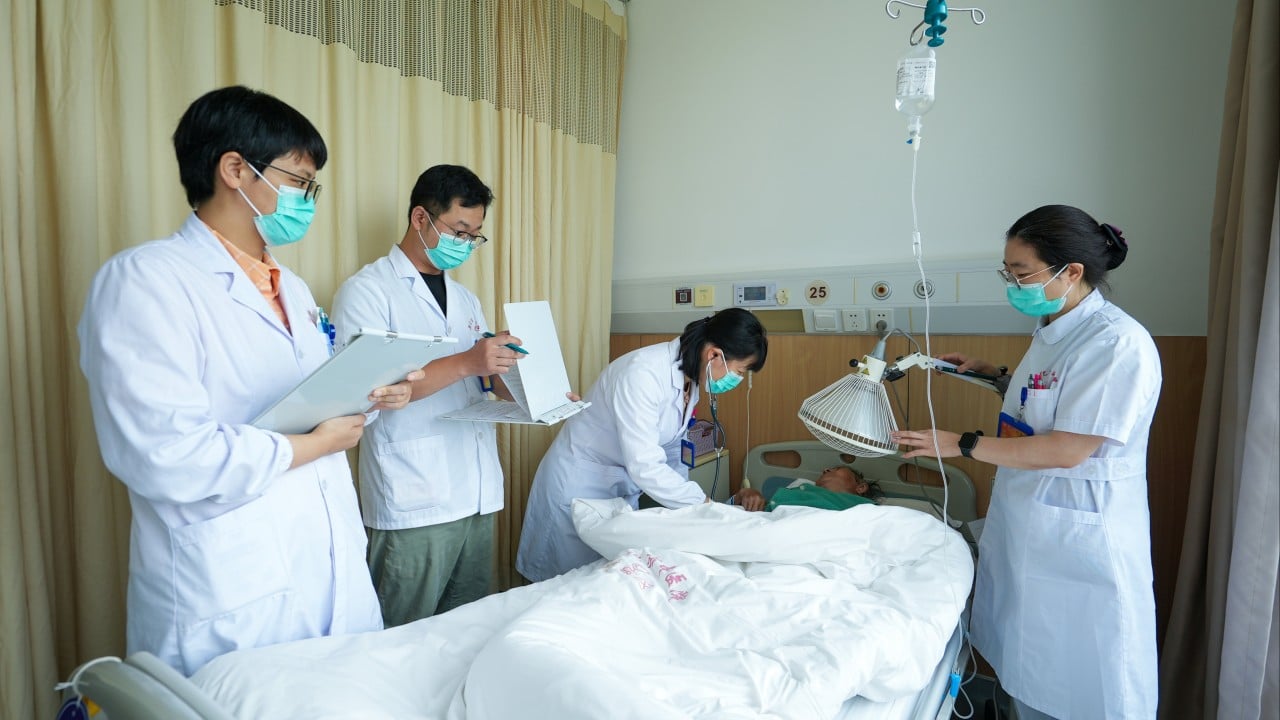
Huang Qiaoyuan, a fifth-year medical student in Guangxi Zhuang autonomous region, is considering abandoning her career path and pursuing consulting instead. She was initially drawn to medicine during the Covid-19 pandemic, but the reality has turned her off. Huang said that during her 12-month unpaid internship, interns mostly performed administrative tasks and had little opportunity to handle procedures.
The main reason for her disinterest is the "squeeze on young and mid-career doctors" caused by "cost-cutting and efficiency-enhancing" measures, namely low pay and heavy workloads. This trend is reflected in medical school admissions, where medicine remains a popular choice but the threshold for entry has increased. For example, the lowest-scoring Zhejiang candidate admitted to study medicine at Sun Yat-sen University was 1,300 places lower in the exam rankings than the lowest performer last year.
The decline is sharpest among candidates from Guangdong province, with the minimum entry threshold for Southern Medical University falling by over 10,000 places compared to 2025. The pressure to complete long-term residency programs with little pay is also a factor. In the United States, resident physicians are typically salaried with benefits, while in China, medical students' income during residencies remains precarious, with many receiving less than 1,000 yuan per month.
Written by urgent.news from Reuters Business via SCMP's reporting — not their text. Machine-written — may contain errors; check the original before relying on it.