Did the Vikings really shoot fiery arrows at funeral boats?
The idea of Vikings using fire arrows to set funeral boats ablaze is seen frequently in popular culture. But did it really happen?
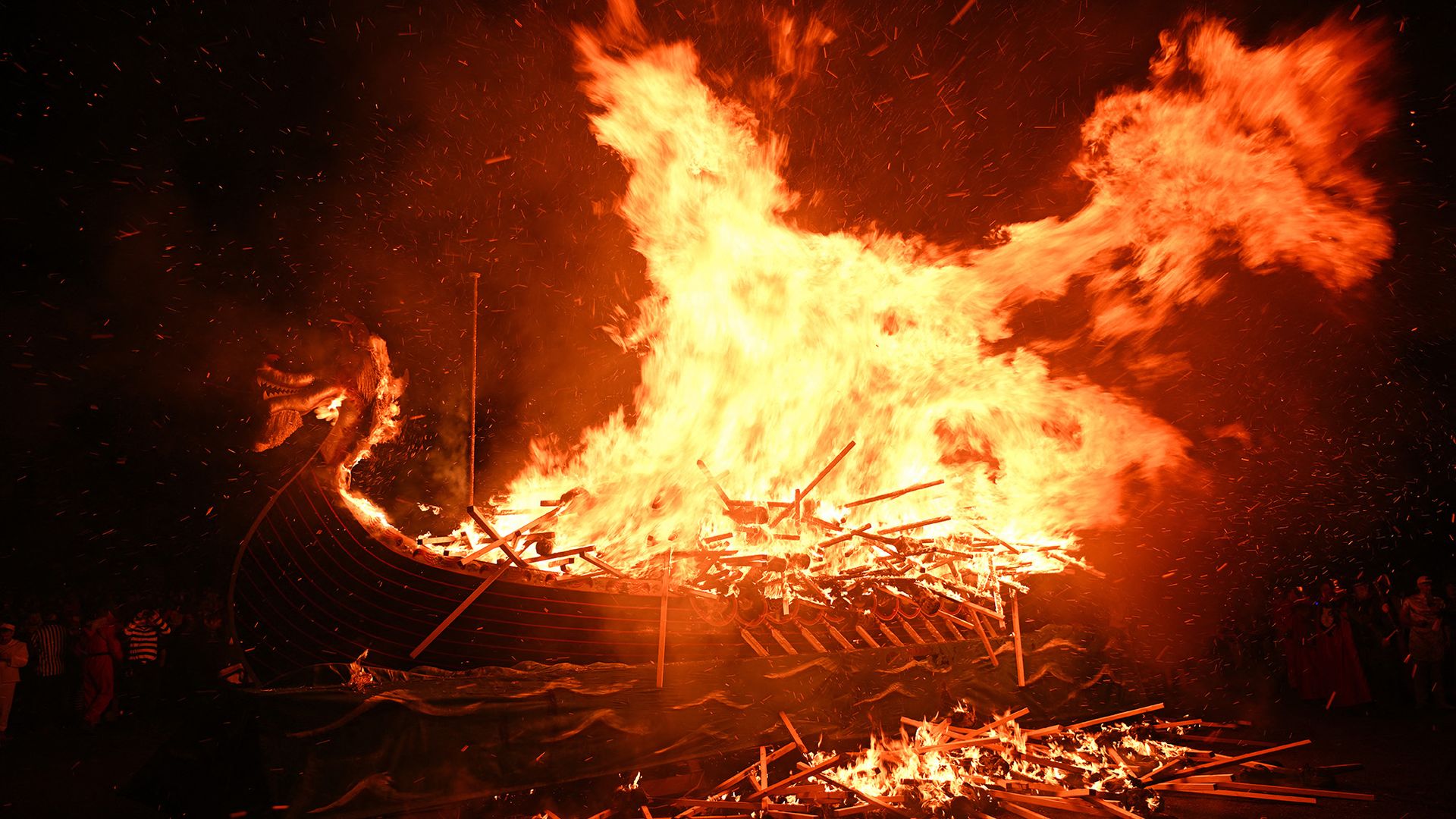
The popular depiction of Vikings shooting fiery arrows at funeral boats is a cinematic trope found in movies, TV shows, and fantasy series. However, experts question whether such a practice occurred in reality. Archaeological evidence suggests that burial practices would leave little trace and are unverified by archaeological sources.
Professor Howard Williams from the University of Chester stated that "practices would leave little trace, and they are unverified by archaeological sources." Similarly, anthropology professor Erin McGuire from the University of Victoria in Canada noted that "it would be hard to differentiate a fire set by a fire arrow from a regular fire."
Additionally, shipwrecks with human remains are rare globally, especially from the Viking Age, due to specific environmental conditions required for preservation.
The Gokstad Viking ship from Norway, dating back over 1,100 years, provides evidence of the Vikings cremating their dead. However, there is no evidence of fire arrows being used during funerals. Historical accounts and legends offer some indirect support for the idea. A 10th-century Arab traveler, Ahmad ibn Fadlan, wrote about a Viking chieftain's funeral, where the boat was lit on fire by a chief mourner.
This differs from popular culture depictions, which often include a flaming arrow and the boat drifting out to sea. Moreover, medieval literature, including the epic poem Beowulf and Snorri Sturluson's works, contain references to funerals at sea, sometimes involving burning ships.
Experts point out practical challenges with this method of funeral burial. Professor Matthias Toplak from the Viking Museum Haithabu in Germany considered the idea unrealistic, stating that "setting something alight with flaming arrows" is difficult. He also noted that a burning ship at sea might sink before the body was sufficiently cremated and could pose a danger to other vessels or harbor facilities.
McGuire added that sending a burning boat out to sea would pose additional problems, such as preventing it from drifting ashore with human remains.
In conclusion, while the idea of Vikings using fire arrows at funeral boats holds romantic appeal, experts are doubtful about its historical accuracy. The romantic portrayal, likely influenced by 20th-century Hollywood films, reflects more contemporary ideals of heroism and death rather than the actual practices of the Vikings.
Written by urgent.news from Live Science's reporting — not their text. Machine-written — may contain errors; check the original before relying on it.