What China really means when it says it’s being ‘strategic’
On September 12, Chinese President Xi Jinping met Indian Prime Minister Narendra Modi on the sidelines of the Brics summit in New Delhi. In their talks, Xi said China approached the relationship “from a strategic and long-term perspective”. He called for an objective and rational “strategic” perception. That means the two sides should treat each other as partners rather than rivals, and as…
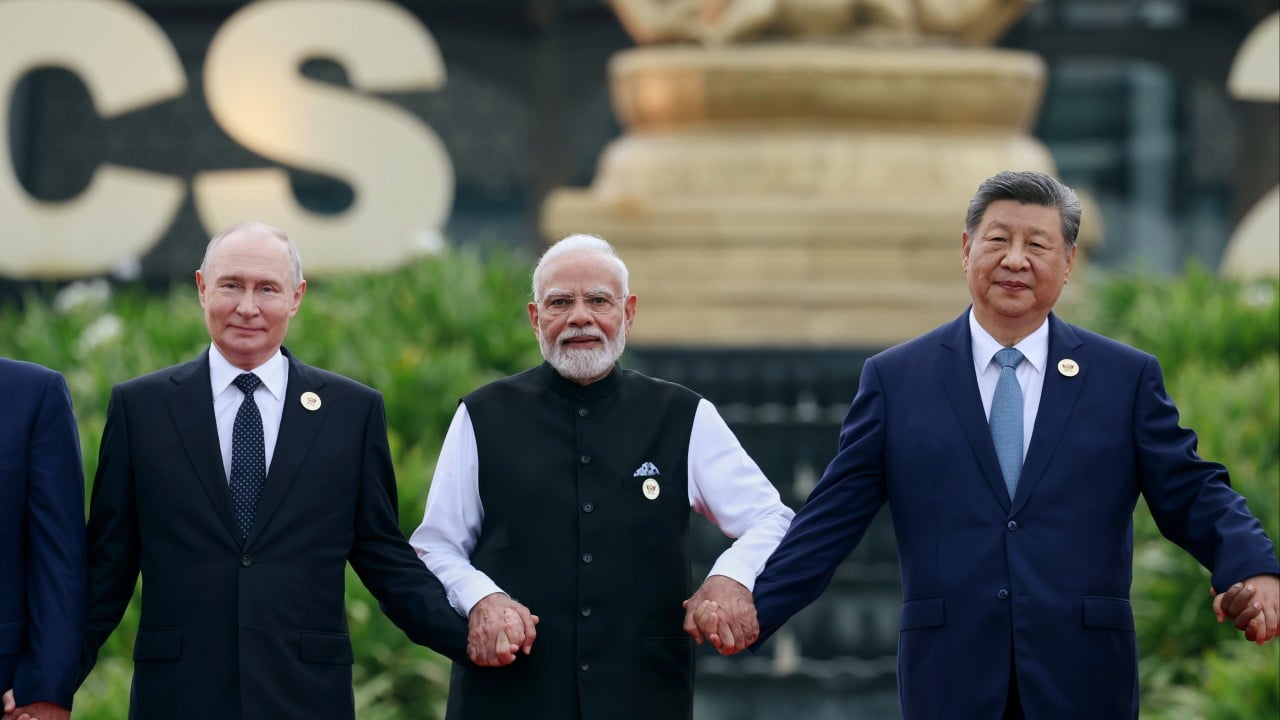
On September 12, Chinese President Xi Jinping conversed with Indian Prime Minister Narendra Modi during the Brics summit in New Delhi. Xi remarked that China considers all relationships with other nations "from a strategic and long-term perspective". He advocated for an objective and rational comprehension of "strategic" matters.
This implies treating each other as collaborators, not adversaries, and viewing opportunities, not threats. In Chinese official and diplomatic parlance, "strategic" denotes significant, long-term, and critical matters in the nation's interests and progression. When China labels a bilateral relationship as "strategic", it indicates a high-level view beyond immediate disagreements or short-term analyses.
It suggests a dedication to allocate ongoing political effort and a belief that engagement can yield mutual gains and positive repercussions for the broader region or the world. China's diplomatic partnerships are structured in a hierarchical order. Basic levels are ordinary "strategic partnerships". Upgraded tiers include "comprehensive strategic partnerships", established with numerous countries such as Brazil, France, Indonesia, Egypt, and Saudi Arabia.
Even higher ranks are "comprehensive strategic cooperative partnerships" with certain nations, and the unique "all-weather strategic cooperative partnership" with Pakistan. The "comprehensive strategic partnership of coordination for a new era" is exclusively with Russia. While the term "strategic" in these partnership labels is often interpreted as denoting military or security significance, this interpretation typically conveys goodwill and a commitment to enduring cooperation, rather than a tactical, opportunistic, or merely convenient alliance.
The same principle applies in both domestic and diplomatic contexts. Designating something as "strategic" elevates it above routine or tactical matters, emphasizing that it has been meticulously deliberated at the highest level and is intended to guide the country's trajectory over an extended period. However, this approach can sometimes create complications.
In English, "strategic" frequently implies strategic action – maneuvering to achieve goals that cannot be attained through straightforward methods. The phrase "being strategic" often implies cleverness or deceptive tactics, suggesting clever positioning, concealed motives, or the manipulation of appearances to gain an advantage.
In discussions of "war strategies", the term frequently conveys cunning, subterfuge, and the art of outmaneuvering an opponent instead of confronting them openly. Indeed, Sun Tzu's The Art of War is frequently read as a treatise focused almost entirely on strategies of deception and psychological manipulation, despite also addressing broader issues of preparation, timing, and the evasion of needless conflict.
In political science, "strategic voting" refers to deliberately supporting a less favored candidate to prevent a more undesirable outcome. In bilateral relations, "strategic ambiguity" means intentionally maintaining an unclear position to preserve flexibility or deter others. In these contexts, the word often suggests shrewd calculation, manipulation, and the clever application of means rather than open-ended commitment or goodwill.
Therefore, when Chinese leaders refer to a relationship or decision as "strategic", English-speaking audiences may unconsciously perceive this second connotation. While Chinese authorities are cognizant of the potential misunderstanding that the terms "strategic" or "strategy" might create, they continue to place significant emphasis on these words to convey importance, centrality, goodwill, and long-term dedication.
A simple solution to address this gap is to pair the term with more explicit, transparent language that lessens ambiguity. Phrases such as "a long-term and constructive approach", "a serious and sustained commitment to mutual benefit", or "viewing the relationship through the lens of long-term shared interests" can help reduce misunderstanding among English-language audiences.
When the term "strategic" is still employed, it should be briefly defined within the same context. A brief clarification – that it denotes a commitment to sustained effort, patience in managing differences, and pursuing outcomes that benefit both parties over the long term – can help anchor the audience's comprehension. Public messaging can also shift the emphasis towards sincerity, mutual benefit, and concrete shared advantages, rather than merely relying on the term "strategic" to convey these meanings.
Written by urgent.news from Reuters Business via SCMP's reporting — not their text. Machine-written — may contain errors; check the original before relying on it.