NST Leader: What led to Tasik Bera land grab?
Land encroachment is as ancient as land ownership, going back thousands of years. About 2,000 years ago, Rome established rights over land ownership and strict property boundaries, penalising accidental or deliberate construction of walls over a neighbour’s boundary.
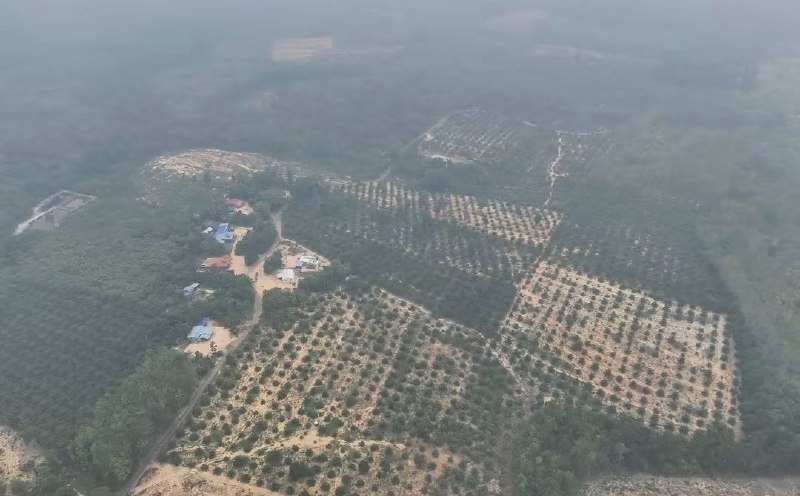
The controversy surrounding land encroachment on the Tasek Bera Permanent Forest Reserve in Malaysia has sparked widespread concern. The encroachment covers a staggering 7,000 hectares, equivalent to nearly 10,000 football fields. Rather than simply stealing and fleeing the scene, these encroachers cleared the forest reserve and began cultivating oil palm, rubber, and cash crops on the land.
The operation appears to have been orchestrated by syndicates, who allegedly used the Orang Asli, Malaysia's indigenous population, as unwitting labor. They claimed that these areas were customary land and roaming areas for the Orang Asli, thus legitimizing their illegal activities. The question remains: how was this operation able to go unnoticed for so long?
Tasek Bera is one of Malaysia's seven sites ratified under the Ramsar Convention on Wetlands, which covers 5.2 million hectares of wetland ecosystems. Since ratifying the convention in 1994, Malaysia has designated certain areas for monitoring and enforcement. The discovery of this encroachment is therefore all the more troubling.
There are two competing narratives surrounding this land grab. According to one version, the Semelais, currently facing eviction, claim that their families have been making a legitimate livelihood from these plantations for over five decades. The other version comes from the Pahang State Enforcement Unit, which detected unlicensed swaths of oil palm and rubber trees using surveillance drones. The footage suggests that these tracts were recently cleared, leading to eviction warnings in June and the current crackdown.
The syndicate masterminds behind this operation are presumably long gone, having harvested their crops and made significant profits. However, the most pressing concern is how the encroachment managed to slip through the cracks of intraagency surveillance. Did this suggest incompetence, neglect, or corruption within the authorities responsible for enforcing the law and protecting the forest reserve? The authorities must explain the failure to detect, prevent, and stop this egregious land grab.
Written by urgent.news from New Straits Times's reporting — not their text. Machine-written — may contain errors; check the original before relying on it.