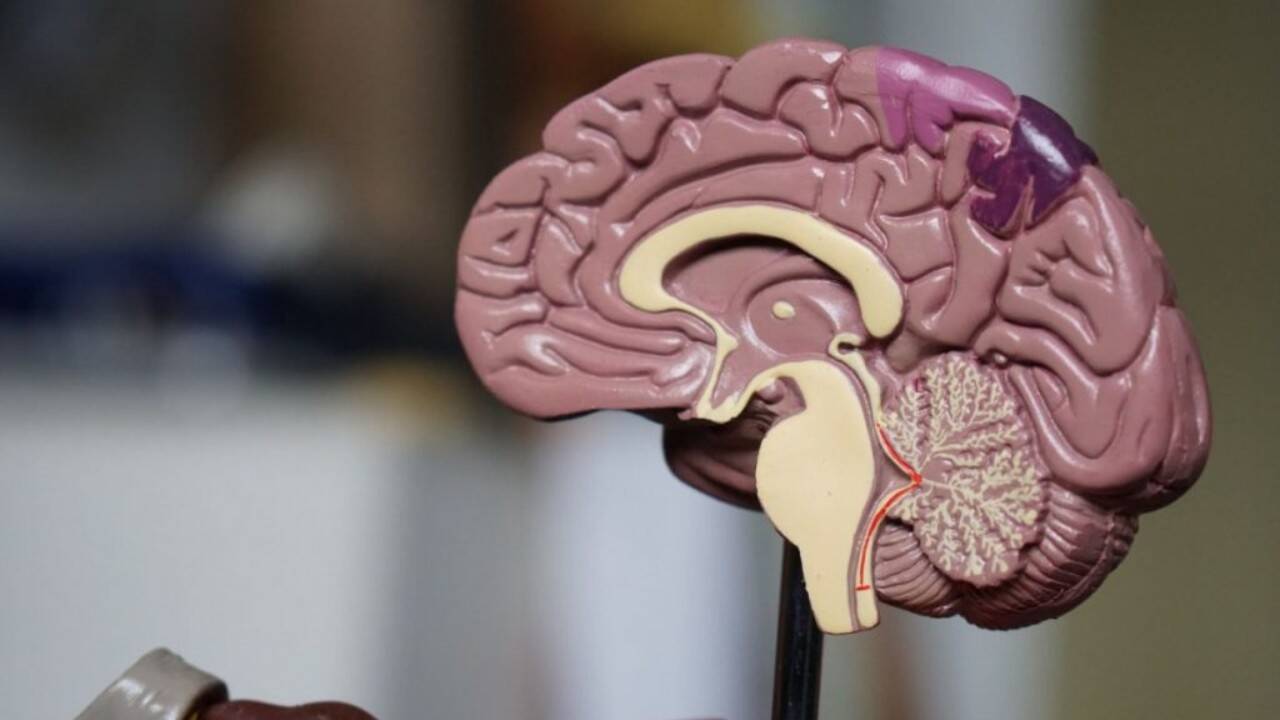
Human brain is two separate organs, Stanford Medicine-led research finds
Article URL: https://med.stanford.edu/news/all-news/2026/09/two-separate-brains.html Comments URL: https://news.ycombinator.com/item?id=49763697 Points: 264 # Comments: 107
A groundbreaking study led by Stanford Medicine has unveiled that the human brain is composed of two distinct organs, rather than one unified organ as previously thought. This revolutionary finding could potentially advance research into various neurological diseases. For centuries, scientists believed that the brain was a single, cohesive organ, but this new research disproves that notion.
The study reveals that the human brain consists of two separate and independently evolved nervous systems that share a common origin. The discovery could illuminate why researchers have faced challenges in cultivating specific brain cells in the laboratory, and it may pave the way for studying debilitating brain stem diseases. Associate Professor of Developmental Biology, Kyle Loh, explained that the front of the brain arises from a different progenitor cell than the back of the brain.
This means that it is now possible to grow hindbrain neurons, those responsible for essential functions like breathing and heartbeat regulation, in a petri dish for further study. Loh emphasized that the breakthrough came from studying the earliest moments of embryonic development, specifically during gastrulation when the body first takes shape.
Graduate students Carolyn Dundes and Rayyan Jokhai, along with Loh, discovered that the hindbrain follows a distinct developmental path, running parallel to the pathway that forms the forebrain and midbrain. They identified two unique brain progenitor cells: one expressing the gene Otx2, destined to become the forebrain and midbrain, and another expressing the gene Gbx2, committed to forming the hindbrain.
These cells never overlap, and their chromatin configurations differ significantly, effectively locking each progenitor cell into its respective fate. The researchers successfully transformed human pluripotent stem cells into functional hindbrain motor neurons in the laboratory, demonstrating the neurons' characteristic electrical activity and hindbrain proteins.
The findings, published in Nature Neuroscience, extend back over 550 million years of evolutionary history, showing the same two-origin brain pattern in various species, including chickens, zebrafish, and acorn worms, a distant human ancestor.
Written by urgent.news from Hacker News Best's reporting — not their text. Machine-written — may contain errors; check the original before relying on it.
This story
This is one outlet's version. Read the fullest account.
- Brain is two separate organs? Stanford scientists track two cell lineages in new study timesofindia.indiatimes.com
- Human brain is two separate organs, Stanford Medicine-led research finds med.stanford.edu