Ghana Jollof: Police must distinguish criminal speech from unpleasant content – Barker-Vormawor
Private legal practitioner Oliver Barker-Vormawor has called for a clear distinction between criminal speech and online content that may simply be offensive, unpleasant or displeasing.
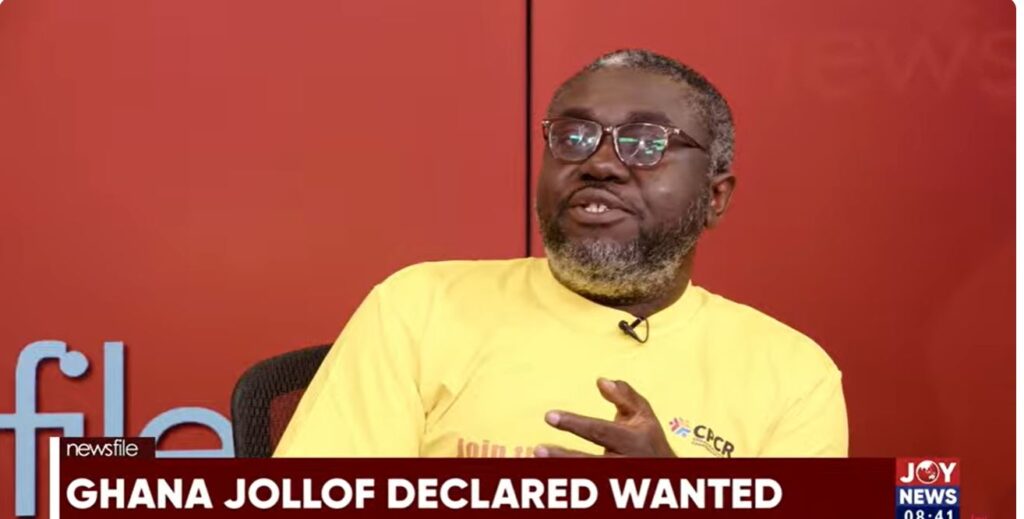
Ghanaian legal expert Oliver Barker-Vormawor has urged authorities to differentiate between criminal speech and merely offensive online content. Speaking to JoyNews Newsfile, he stressed that law enforcement must be cautious in their handling of social media users, as not every provocative statement should prompt the use of police powers.
His remarks come in the wake of the arrest and subsequent remand of Salomey Awiti Bafoh, a 40-year-old senior nursing officer. Bafoh was apprehended on September 13 at her residence in Hansua, near Techiman, and later faced the Adentan Circuit Court, where she pleaded not guilty to charges of abetting crime, specifically the alleged publication and circulation of false news. She was denied bail and remanded for two weeks, with the case scheduled to be heard again on September 30.
The prosecution contends that Bafoh served as a liaison for UK-based TikTok user Barbara Asantewaa Kodua, also known as "Ghana Jollof," and assisted in recruiting others to disseminate Kodua's videos. The charges allege that some of these videos contained inflammatory statements that could incite violence. However, these allegations have not been proven in court.
Barker-Vormawor questioned the criteria the state uses to define content as criminal rather than simply unpleasant. He highlighted the need for clear identification of the specific materials that constitute criminal speech. For instance, while a claim of a coup underway at the Jubilee House may provoke fear and panic, it does not automatically indicate participation in treasonous activity.
He emphasized that such allegations should be considered within the context of laws addressing the creation of fear and panic, but should not be treated as evidence of treason by default.
The lawyer also criticized the police's handling of the case, including a wanted notice issued for Kodua. He pointed out that police investigations suggested Kodua was in the United Kingdom, yet subsequent notices described her as "suspected to be hiding." Barker-Vormawor argued that such discrepancies demonstrate a lack of professional police work.
He rejected accusations that his comments on the police's approach were supportive of the content under investigation. "I do not like the content of the speech and the insult that we are saying being traded," he stated, reiterating that the issue lies in whether law enforcement agencies are using their powers appropriately. He argued that while online videos ridiculing public officials or security personnel may be offensive, this does not necessarily constitute criminal conduct.
Barker-Vormawor stressed the importance of striking a balance in the application of law enforcement powers. Additionally, he noted that the debate should not be polarized around the current political party in power.
Written by urgent.news from MyJoyOnline Ghana's reporting — not their text. Machine-written — may contain errors; check the original before relying on it.
This story
This is one outlet's version. Read the fullest account.