Biomedicale, da Palermo la rete delle competenze
Venti nuovi laboratori per il biomedicale e il biotech e una rete che mette insieme formazione, imprese, ricerca e sistema sanitario. Si è chiusa con l’inaugurazione dei Laboratori Biomed e...
Biomedicale, da Palermo, unveils a network of expertise
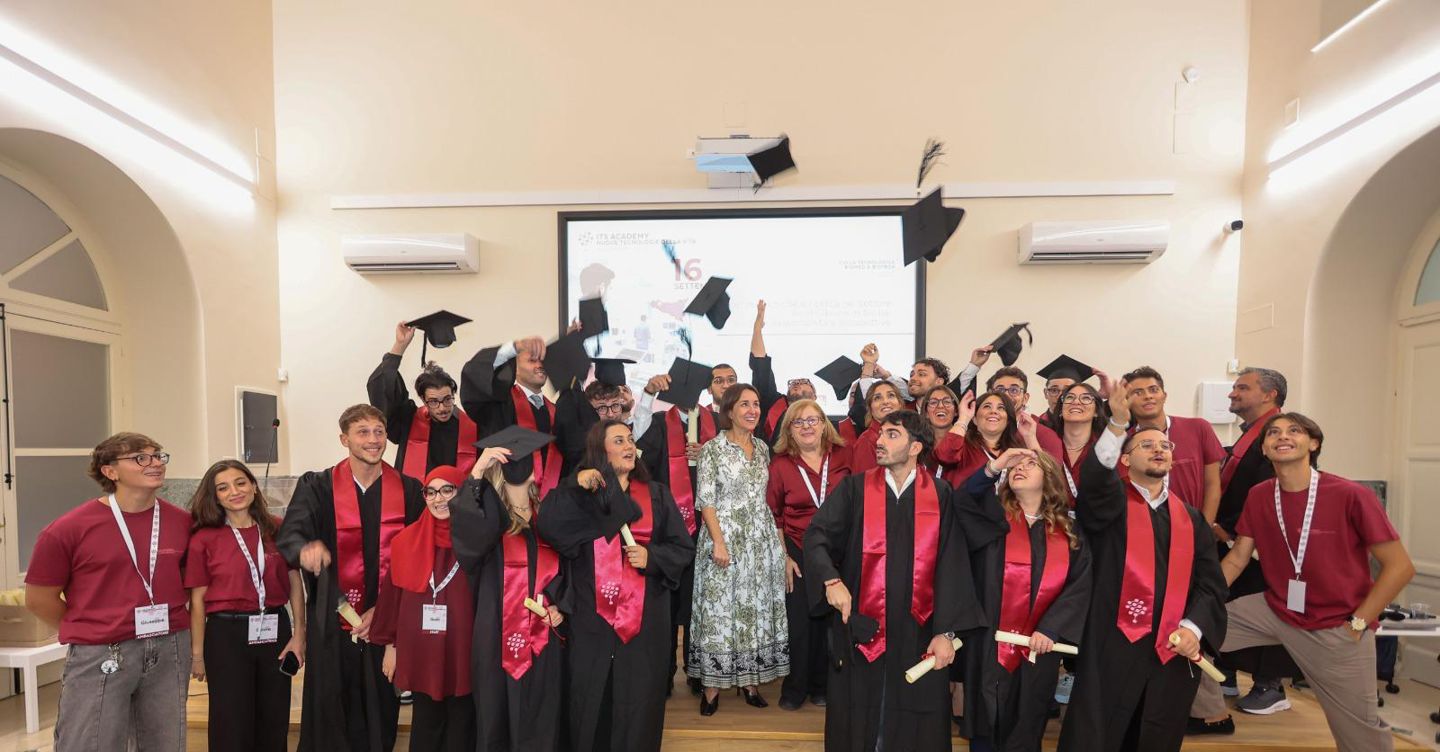
Twenty new laboratories for biomedicine and biotechnology joined together training, businesses, research and the health system. The inauguration of the Biomed and Biotech 4.0 Laboratories of Its Academy Nuove Tecnologie della Vita A took place in Palermo after three days of organization by Sicindustria. The event focused on the professionals needed to accompany innovation in healthcare and the life technologies sector.
The ribbon-cutting ceremony was held at the Technological Urn on Prince of Belmonte Street in the heart of the city, where Vincenzo Cusumano, Director General of the Sicilian Ministry of Education, and Riccardo Di Stefano, Vice President of Confindustria for Education and Open Innovation, were among the speakers. Di Stefano emphasized that the investment in the laboratories links to a broader issue.
"The Mezzogiorno is experiencing a growth trend that we cannot ignore. This does not mean that the gap is closed. There is still a gap, but we are facing a positive dynamic that we must accompany." The role of Its has grown, it was noted, from around 11,000 to 40,000 students, with a placement rate of nearly 90%. "What This and other virtuous Its are trying to do is break one of the deepest taboos in our country: the idea that technical training is a second-rate education."
The reference is also to the 4+2 reform: "A boy can start his path at 14 and potentially end up with a tertiary training diploma and a job at 20." Di Stefano stressed the need to maintain continuity in investments: "It is finally also an example of virtuous use of public resources, put to concrete service of our young people. But, once the ribbon is cut, these spaces call on us all to continuous work, so that the investment made can produce lasting results over time."
In Palermo, a three-year framework agreement was signed between Confindustria Dispositivi Medici and the nine Its Academy foundations of Area 3, "Chimica e Nuove Tecnologie della Vita." The goal is to create a stable link between technical education and the production system and anticipate the professional needs of companies. The sector, explained Faltoni, employs over 130,000 people in Italy; women represent 41% of the workforce, 7% work in research, and 3.4% have a doctorate.
The industry is worth nearly €19 billion in domestic market and exports and employs 4,648 companies. The agreement envisions a Joint Observatory on needs, co-design of paths, internships, apprenticeships, placement, applied research, and technology transfer. For Sicily, the discussion remains open on how to use these professionals in public health.
Sicindustria asked the Region to allow the recognition and integration into the organograms of Asp and hospital companies of the technical figures trained by the Its. "Today, access to the planned technical profiles is mainly tied to the possession of a degree or traditional technical qualifications, without an adequate provision for Its graduates from the biomedical area," stressed the President of Sicindustria Luigi Rizzolo.
"Therefore, it is necessary to modify the regulatory and organizational framework, identifying profiles consistent with the acquired skills and the real needs of the health system. The President of Its Academy A. Volta, Maria Pia Pensabene, stressed the network. "Our paths are created to train highly specialized professionals, built together with businesses and in response to real territorial needs.
If the health system expresses a growing demand for technical expertise linked to biomedical technologies, we must create conditions for them to be effectively utilized and valued." Pensabene also outlined the balance of the three days: "217 proclamations, 44 businesses present at the B2B with students." She noted Sicindustria as "a strategic bridge with the system of businesses," capable of intercepting their professional needs and translating them into truly connected educational paths with the labor market.
The other axis is the alliance with the University of Palermo, Cnr, Iemest, and the Ri.MED Foundation on the relationship between professionalizing tertiary education, applied research, and businesses. The goal is to shorten the distance between what emerges in the laboratories and the needs of the productive system, making Its a bridge between knowledge, innovation, and companies' demands.
In the last day, the discussion expanded to innovation. Danilo Mazzara of Skill for Equity proposed a StartCup of Its, modelled on Junior Achievement competitions, to bring together ideas and projects developed by students and link them to businesses and the territorial innovation ecosystems. "The Its can become the hub of an innovation ecosystem, a real hub capable of bringing together training, businesses, research, and new ideas," said Biagio Semilia.
"It is a model in which the Innovation Island Foundation that I chair pays close attention to, as it can help build places on the territory where skills become innovation and new companies." This is the perspective in which the inauguration of the Biomed and Biotech 4.0 Laboratories takes on a broader meaning: not just new educational spaces, but a place of encounter between training, healthcare, research, industry, and innovation.
Written by urgent.news from Il Sole 24 Ore's reporting — not their text. Machine-written — may contain errors; check the original before relying on it.