APOD: 2026 September 19 – A Zodiacal Night
APOD Science APOD APOD: 2026 September 19 –… Today’s APOD Archive Submissions Index Search Calendar RSS Education About Discuss APOD Astronomy Picture of the Day Discover the cosmos! Each day a different image or photograph of our fascinating universe is featured, along with a brief explanation written by a professional astronomer. Night SkyAnnotation A […]
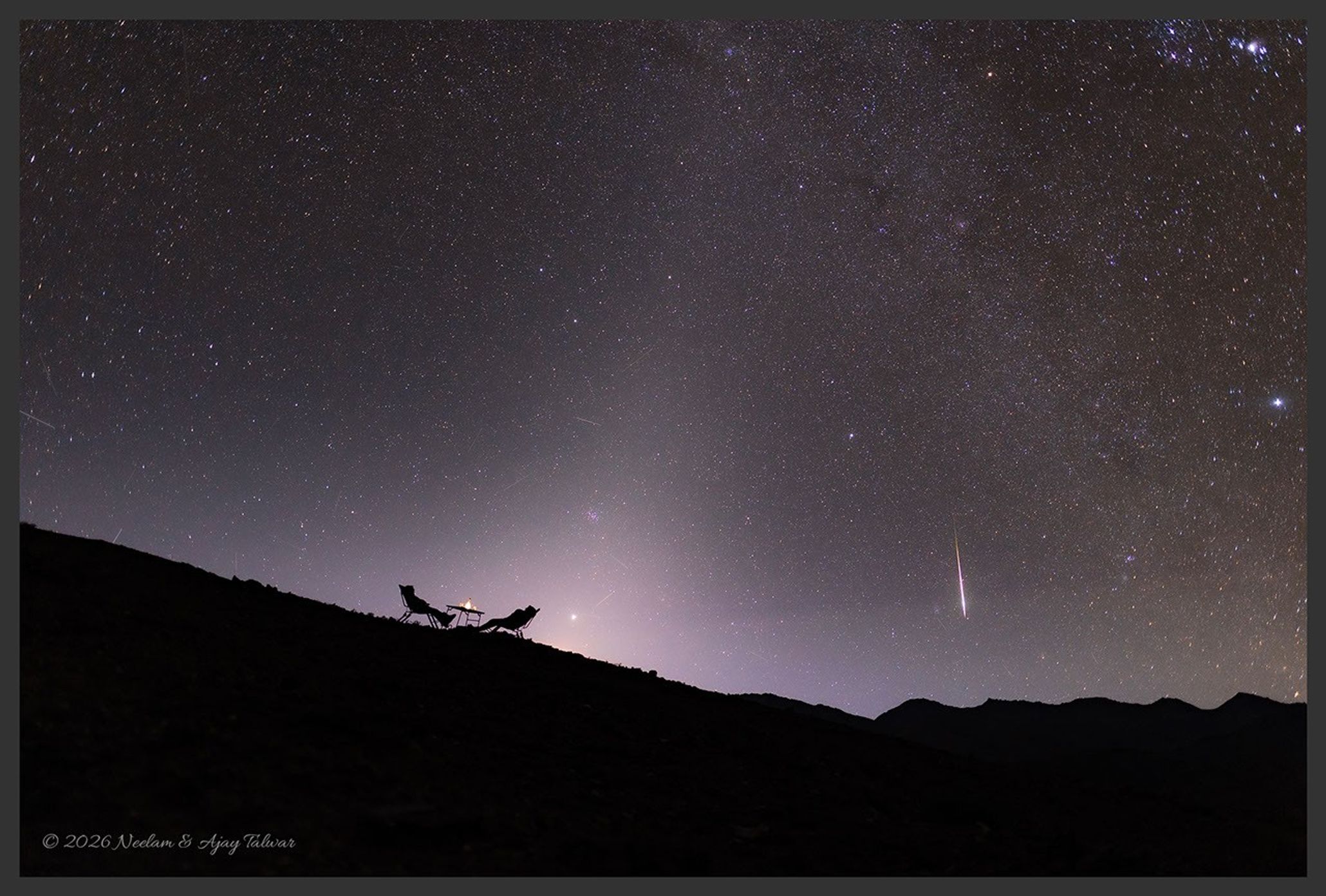
On September 19, 2026, the Astronomy Picture of the Day (APOD) showcased a captivating zodiacal night photographed at the Hanle Dark Sky Reserve in Ladakh, India. This luminous band, also known as the false dawn, was captured just before the onset of astronomical twilight during the star party. Located at an altitude of 4,500 meters, the reserve offers ideal conditions for astrophotography enthusiasts to observe the night sky.
As meteors streaked across the dark sky, a bright Jupiter was seen immersed within the faint zodiacal glow near the eastern horizon. Continuing upward, observers could spot the open star cluster M44 and a yellowish-tinted planet Mars near the center of the frame. Intriguingly, observations from NASA's Juno spacecraft had detected interplanetary dust, suggesting that Mars might be the source of the dust particles that scatter sunlight and create the zodiacal light in Earth's night sky.
Written by urgent.news from NASA's reporting — not their text. Machine-written — may contain errors; check the original before relying on it.
This story
This is one outlet's version. Read the fullest account.
- APOD: 2026 September 19 – A Zodiacal Night science.nasa.gov