What happens to the world’s farms if everyone eats less meat?
Researchers ran the numbers on a worldwide sustainable-diet transition—and found a food system that looks nothing like today’s.
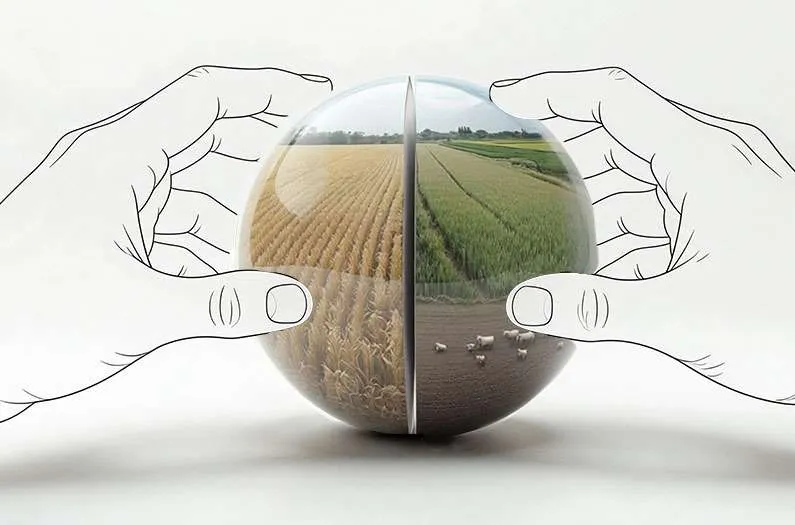
Imagine a world where nearly half of the planet's cattle ranches no longer exist. The question arises: what becomes of this land and how would farmers adapt? A recent analysis published in Nature provides a detailed look at the potential consequences of a global shift towards more sustainable diets. If the world adopted sustainable eating habits by 2050, cattle production could decrease by 50%.
This would free up an area of land equivalent to more than twice the size of France for growing fruits, vegetables, nuts, and legumes. In contrast, the land used for growing wheat, corn, rice, and other grains might decrease by a similar amount. Daniel Mason-D'Croz, an economist at Cornell University and one of the study's lead authors, explains that the goal was to accurately quantify the impact of such dietary changes and understand the disruptions they might cause for food producers.
The research builds upon earlier findings that projected a significant increase in the environmental footprint of global food production by 2050, driven by population growth, rising wealth, and increased meat consumption. Addressing this issue would require a combination of solutions, including reducing food waste, improving agricultural technologies, and altering diets worldwide.
The study also highlights that reduced livestock farming would free up vast areas of grassland, potentially used for renewable energy, rewilding, or other purposes. The shift in farming practices would likely impact various crops, with sugar crop production potentially dropping by about a third. While some farming operations may move to new locations depending on soil and water availability, prices of meats, dairy, and grains could fall by 15 to 30%, whereas fruits, vegetables, nuts, and legumes might see slight price increases.
The transition to sustainable diets presents significant challenges, particularly for rural communities that rely on livestock income. Mason-D'Croz emphasizes that any successful food system transformation must address these challenges and consider the future of local economies.
Written by urgent.news from Anthropocene Magazine's reporting — not their text. Machine-written — may contain errors; check the original before relying on it.