USA’s Venezuela takeover comes with bonus exposure to Chinese AI surveillance tech
Think tank points out that companies banned by Washington will help run the regime that Uncle Sam now controls
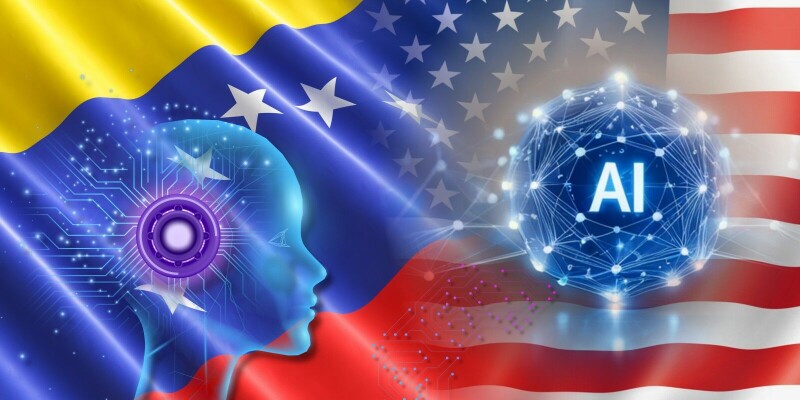
The Australian Strategic Policy Institute (ASPI) has issued a warning regarding Venezuela's potential adoption of Chinese AI systems for enhanced surveillance capabilities. In a recent report titled "Warning signals: Venezuela and the risk of Chinese AI-enabled digital authoritarianism," ASPI asserts that Venezuela's government has been utilizing Chinese technology for surveillance since the early 2010s.
In 2025, Vice-President Delcy Rodríguez reportedly spearheaded an agreement to integrate Chinese-built AI systems into existing state-sponsored surveillance mechanisms. Notably, one of the companies involved in this agreement, iFlytek, was banned by the United States in 2019 due to its involvement in the repression of Uyghur Muslims in China's Xinjiang region.
ASPI, now under the control of Venezuela, finds no indication that Rodríguez has altered her stance on incorporating more Chinese surveillance technology. According to the report, Venezuela is set to become the first country outside China to adopt the latest generation of large language model (LLM)-based AI systems for surveillance and control purposes, making it the most advanced adopter in the Western Hemisphere.
While ASPI does not believe the Venezuelan government can replicate China's comprehensive surveillance apparatus, they express concern that Chinese or other AI tools may bolster an already existing domestically directed apparatus used to suppress dissent, restrict information, and maintain political power. This situation arguably leaves Venezuelans no better off than they were before the US intervened, and it places the USA in a position of effectively governing a nation reliant on Chinese surveillance technology to retain power, even as Washington seeks a stronger presence in Venezuelan affairs.
ASPI urges US Secretary of State Marco Rubio, who effectively serves as Venezuela's viceroy, to dismantle the surveillance apparatus and foster political change. The analysts believe such actions would convey the message that democracies are prepared to counteract China's efforts to export its surveillance technology and eliminate it when feasible in the interest of civil liberties.
Written by urgent.news from The Register's reporting — not their text. Machine-written — may contain errors; check the original before relying on it.
This story
This is one outlet's version. Read the fullest account.