Teams Are Moving from Closed-Source APIs to Open-Source Models in 2026
Teams aren't ditching closed APIs because open models got smarter. They're doing it for cost control, data privacy, and no vendor lock-in.
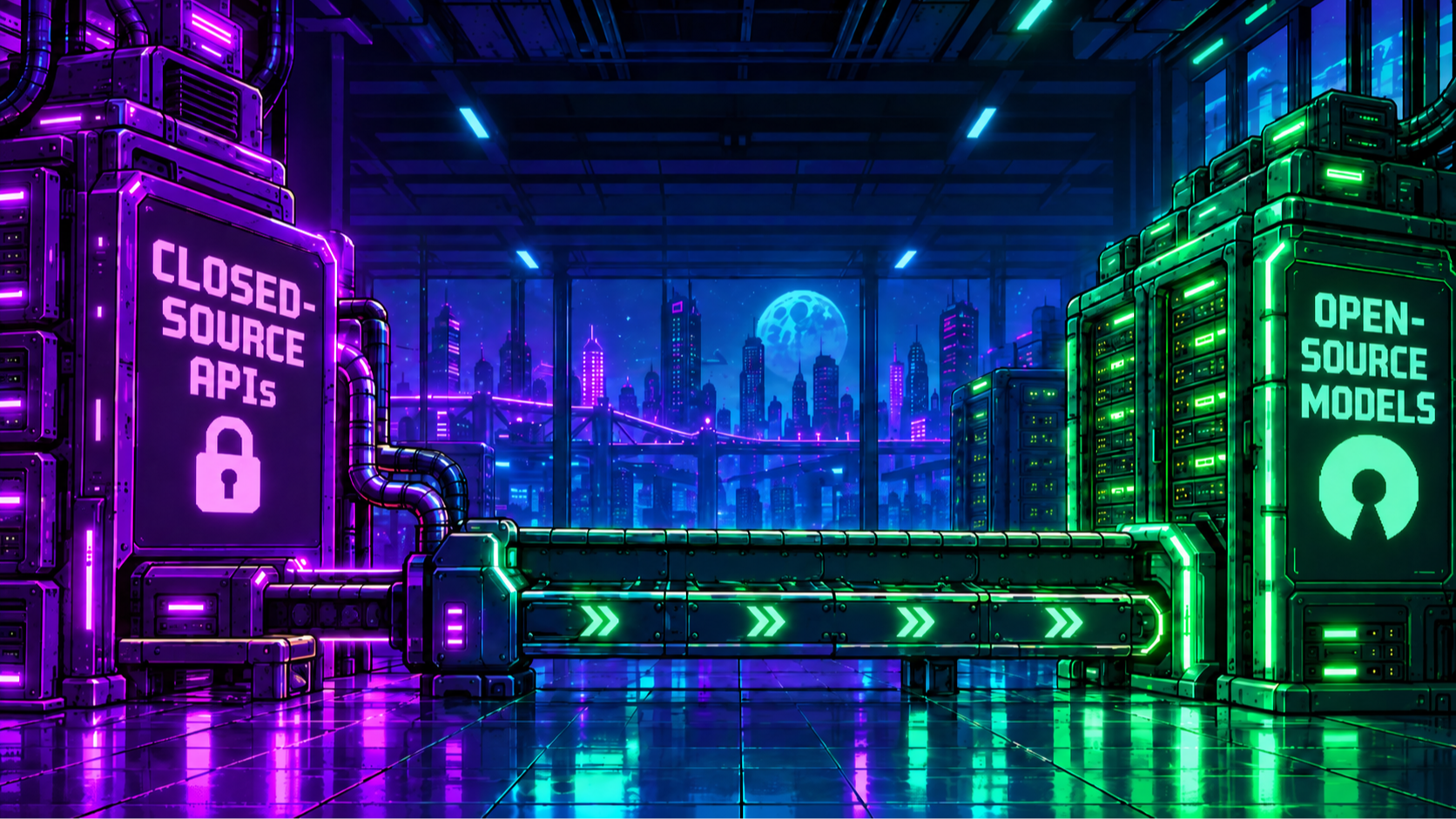
In 2026, organizations are shifting away from closed-source APIs and towards open-source models, despite the shift not being driven by the superior capabilities of the open-source models. Instead, the transition is largely due to the benefits of cost control, data residency, and avoiding vendor lock-in. Frontier models, which are the most advanced, still excel at complex reasoning, but for most everyday tasks such as retrieval, extraction, classification, and routine generation, open-source models are sufficient.
The primary motivations behind this shift are cost, data control, model control, and vendor independence. While self-hosting open-source models can be more affordable when there is sufficient utilization, it is not always cheaper, especially for low-volume or sporadic usage. Data privacy concerns may necessitate self-hosting in certain cases, particularly when handling regulated data or operating in an air-gapped network.
However, self-hosting open-source models is not a universally beneficial approach. Closed APIs remain a better choice when the task requires the highest reasoning capabilities, or when the demand is small, new, or sporadic. Moreover, a team may not have the resources to manage the necessary infrastructure. Therefore, it is crucial to carefully evaluate the specific requirements and utilization before making the move to self-hosting open-source models.
Written by urgent.news from HackerNoon's reporting — not their text. Machine-written — may contain errors; check the original before relying on it.