Should the world worry about America’s new space weapons?
Now that we have had our nose rubbed in the fact that America has weapons in space, should we worry about it?
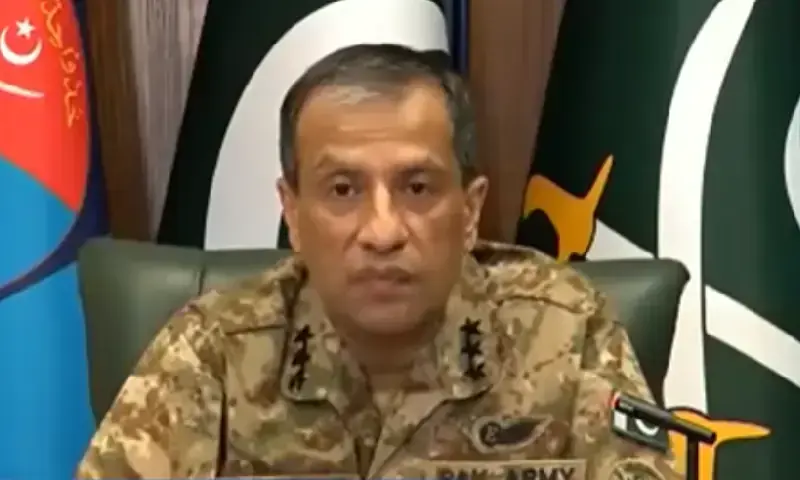
When Troy Meink, the chief of the US Space Force, announced that the United States now possesses on-orbit space-control weapons, many people naturally assumed there was more to the story than meets the eye. It is difficult to believe that Meink was intentionally trying to scare the Chinese or Russians, as they have long been keeping tabs on US military activities in space. Both the Chinese and Americans have their own secret spaceplanes, and they engage in high-speed maneuvering in orbit, sometimes causing collisions.
Reuters reported a year ago about a joint US-British operation in which an American military satellite was directed by the US Space Force to swoop in close to a British satellite as China’s Shiyan 12-01 satellite passed beneath it. The purpose of this exercise remains unclear, but it demonstrates the increasing sophistication of space warfare capabilities.
While some may view the revelation of US space weapons as a threat, the reality is that the “high ground” in land warfare does not necessarily translate to space. Surveillance and communications in space are important, but the only worthwhile targets for weapons in space are other objects in space. This means that nuclear weapons are not currently in space, as they would be ineffective due to the lack of atmosphere. Instead, lasers and projectile weapons are more likely.
The Outer Space Treaty of 1967, signed by all major powers, prohibits the placement of weapons of mass destruction in space, which primarily refers to nuclear weapons. However, nuclear weapons are not particularly effective in space due to the short-range blast effect. An electromagnetic pulse (EMP) generated by a nuclear weapon detonated at high altitude could disable satellites and damage electronics on Earth, but this would likely provoke a retaliatory response from other nuclear powers, rendering the initial action ineffective.
Although a full-scale war on the ground might involve targeting the other side’s surveillance and communication satellites, this can be achieved without the use of nuclear weapons. Escalation to nuclear weapons would be a significant risk in any war fought directly between major powers, as all of them remain on the planet’s surface at present.
Introducing some of these weapons into space would not confer a significant advantage and would not make the situation any more dangerous. It is true that some non-nuclear American weapons are now in orbit, and it is likely that other countries will follow suit, perhaps under the misguided belief that if the Americans are doing it, then it might be necessary for them as well. This attitude is deplorable and unnecessary but not particularly dangerous.
Written by urgent.news from The Citizen's reporting — not their text. Machine-written — may contain errors; check the original before relying on it.