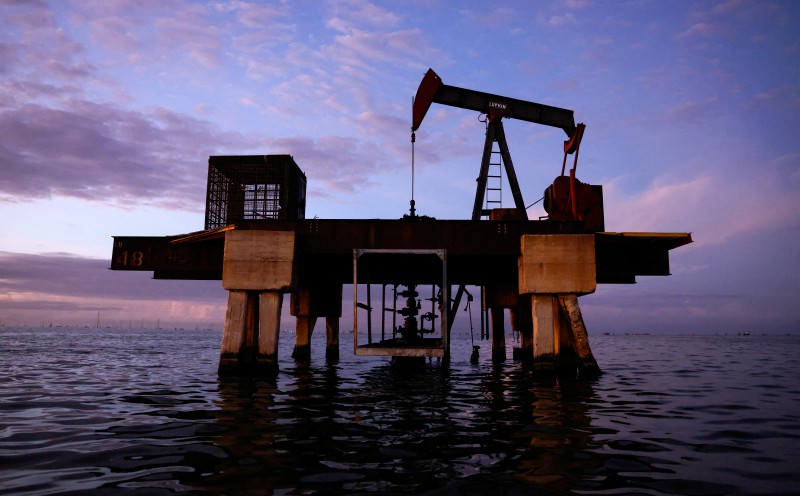
Oil prices fall 1% on hopes of limited supply disruptions
On September 18, oil prices experienced a slight decline of around 1 percent, marking a third consecutive day of losses. However, prices remained above the $100 mark on Friday, buoyed by the anticipation of alternative routes for Middle Eastern oil reaching global markets. Brent crude futures dropped $1.01, or 1 percent, to $103.77 a barrel, while US West Texas Intermediate futures decreased $1.03, or 1 percent, to $100.88 a barrel.
These figures represented a continuation of the downward trend seen on Thursday, when both benchmarks had fallen approximately 1 percent.
Despite the overall decline, the market largely disregarded fresh threats to oil supplies, even as Saudi Arabia and Yemen's Houthis, who are backed by Iran, continued to exchange strikes across their shared border. This escalation of hostilities added a layer of uncertainty to the already volatile oil market.
The drop in oil prices came after Saudi Arabia claimed that its East-West pipeline, which delivers crude to the Red Sea port of Yanbu, had been damaged by a recent attack. The pipeline, a crucial artery for global oil transport, was partially suspended and saw some deliveries canceled to Europe following the incident. However, traders estimated that reopening the pipeline could take some time, with estimates ranging from days to weeks depending on the extent of the damage and the complexity of repairs.
The uncertainty surrounding the pipeline's recovery added to the overall volatility in the oil market. JPMorgan, for instance, stated that it did not have a clear baseline view for oil markets for the first time since the start of the US-Israeli conflict with Iran. The ongoing conflict between the US and Iran has further complicated market dynamics, with no peace talks between the two nations since an interim agreement in June fell apart within weeks.
As the situation unfolded, Saudi Arabia reportedly sought to restore about half of its East-West pipeline capacity within days, following the halt of operations at the Red Sea export hub of Yanbu. Additionally, Saudi Arabia was offering more crude cargoes to Asian refiners via ship-to-ship transfers off Oman's Sohar port, a move designed to mitigate some of the disruption caused by the pipeline attacks.
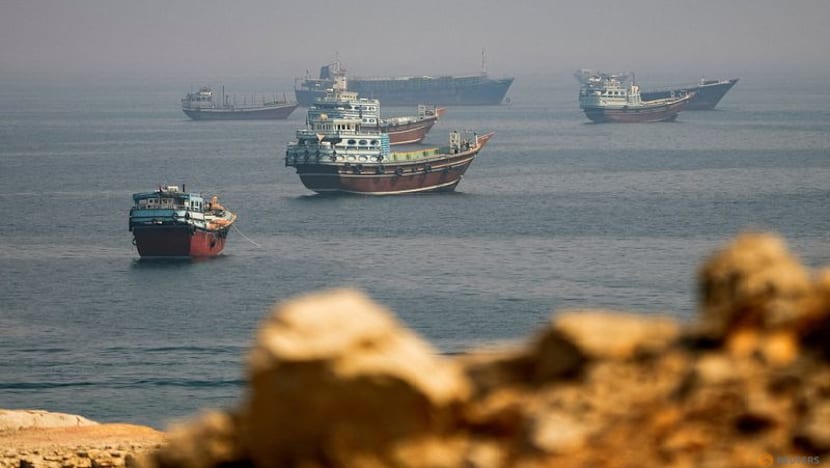
The situation was further highlighted by Iran's Revolutionary Guards Navy, which reported that a Togo-flagged oil tanker was struck while attempting an illegal passage through the Strait of Hormuz on Thursday. The incident, as reported by Iranian state media, added another layer of complexity to the already tense oil market dynamics.
As the oil market navigated these uncertainties, the discussions surrounding the Middle East conflict were expected to feature prominently at the United Nations General Assembly the following week. An Iranian delegation would be allowed to attend the assembly, according to the US State Department, further underscoring the geopolitical tensions at play.
Written by urgent.news from Channel News Asia's reporting — not their text. Machine-written — may contain errors; check the original before relying on it.
This story
This is one outlet's version. Read the fullest account.
- Oil prices fall 1% on hopes of limited supply disruptions brecorder.com
- Oil prices fall 1% on hopes of limited supply disruptions channelnewsasia.com
- Oil prices fall 1% on hopes of limited supply disruptions investing.com