Norway's King Harald laid to rest in CO2-absorbing sarcophagus
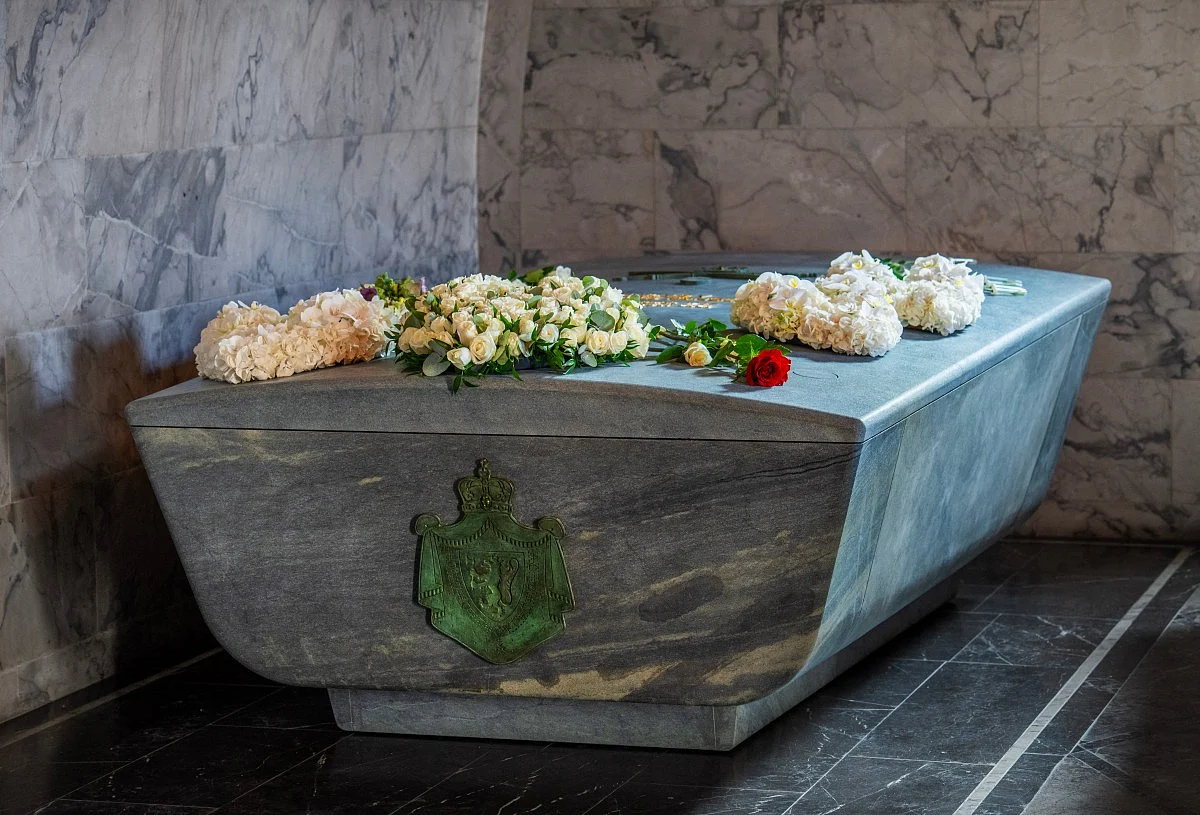
Norway's King Harald V has been laid to rest in a unique ship-shaped sarcophagus carved from a carbon dioxide-absorbing ancient rock. Details about this final resting place were scarce following his funeral in Oslo on September 9 and his passing at the age of 89 on August 28. The sarcophagus was installed in the royal mausoleum at Akershus fortress.
The coffin, fashioned from olivine, a greenish rock dating back 400 million years, was mined in western Norway. Its ship-like shape pays homage to Viking burial traditions and reflects the late king's fondness for the sea. The two-person design also includes space for Harald's widow, Queen Sonja.
The greenish olivine stone, chosen for its ability to absorb and sequester carbon dioxide, symbolizes King Harald and Queen Sonja's environmental consciousness and their concern for future generations. Prior to his death, King Harald had joked about the comfort of the coffin, jokingly stating, "I hope it has good padding so that our stay will be comfortable. We're going to be staying there for a while, after all."
The 20-million-kroner ($2.1 million) sarcophagus lies beside two others. One, made of white marble, houses the remains of Harald's grandfather Haakon VII and Queen Maud. The third sarcophagus, in dark green bronze, holds the remains of Harald's parents, King Olav V and Crown Princess Martha.
Written by urgent.news from Gulf News's reporting — not their text. Machine-written — may contain errors; check the original before relying on it.