India wants 1 lakh chip engineers: MeitY Secretary S Krishnan on what students must learn to be ready
MeitY Secretary S Krishnan explains why the India Semiconductor Mission delivered operational plants in four years and what ISM 2.0 changes
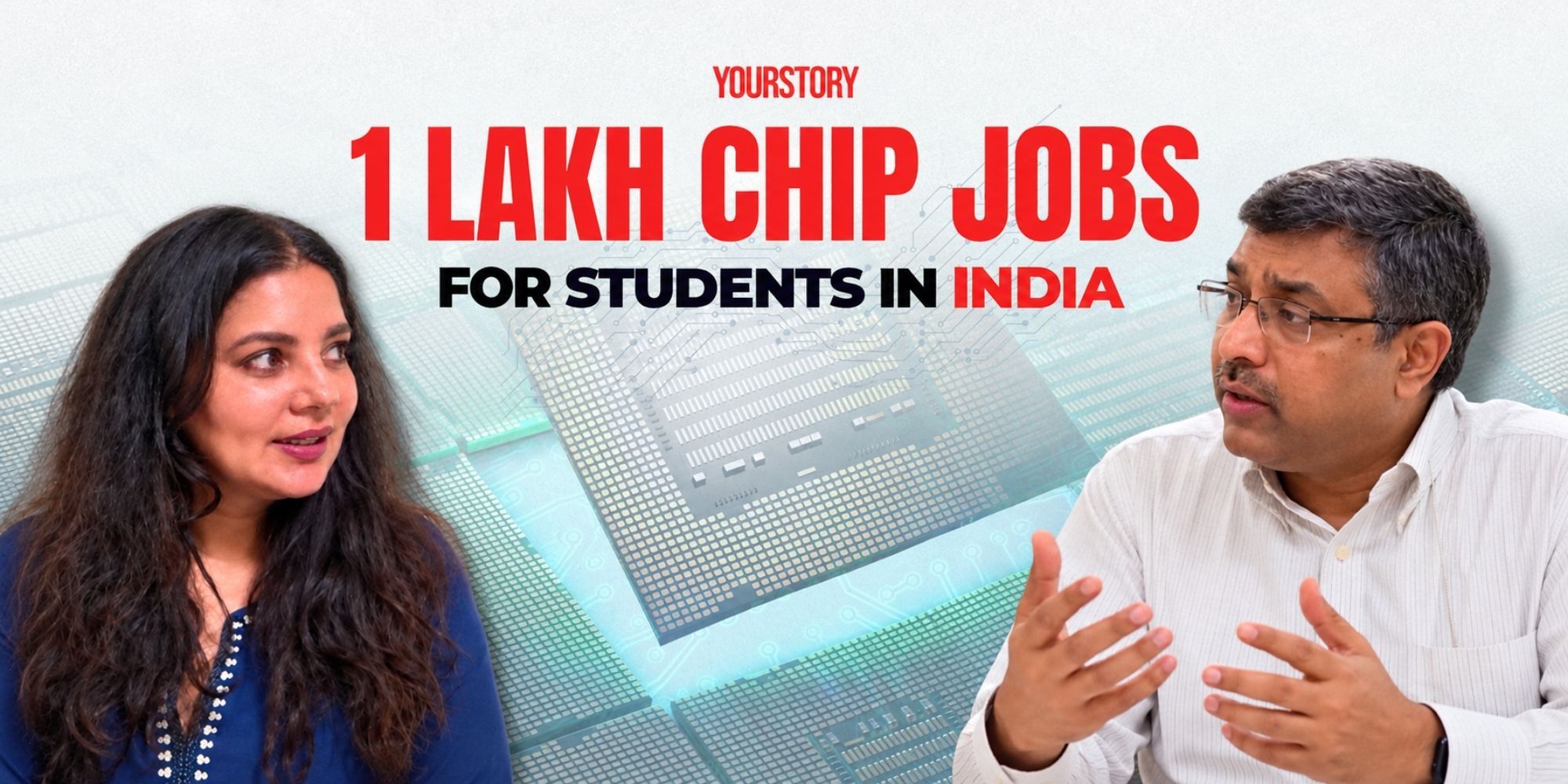
As Semicon India 2026 commenced in New Delhi, MeitY Secretary S Krishnan unveiled the rationale behind the India Semiconductor Mission (ISM) achieving operational factories within four years of its launch, contrasting this success with other national programs that often struggle to progress beyond announcements. Speaking to YourStory Founder and CEO Shradha Sharma on September 16, 2026, Krishnan highlighted that three plants approved under the first phase are already operating commercially, with two or three more anticipated to commence before year-end.
The ISM, approved in December 2021 with a budget of Rs 76,000 crore, aimed to establish chip fabrication and packaging facilities in India, which had no previous commercial semiconductor manufacturing experience. By the time the first phase concluded, the government had sanctioned 12 projects, amounting to an investment of over Rs 1.64 lakh crore.
The introduction of Micron's assembly, test, and packaging unit at Sanand in Gujarat marked the mission's first commercial product, inaugurated by Prime Minister Narendra Modi on February 28, 2026. Krishnan outlined three design choices that contributed to the mission's swiftness. First, the program targeted a narrow scope, focusing on establishing a fabrication facility and outsourced assembly and test units (OSATs or ATMPs).
Second, it incorporated flexibility in the negotiation process, allowing the ministry to review and modify proposals until projects met the mission's objectives. Lastly, each project received final approval from the Union Cabinet, signifying the highest-level commitment to their completion. Krishnan emphasized that this approach enabled the ISM to allocate almost all resources within three years and proceed to the next stage.
The Secretary expressed confidence in the mission's future based on tangible evidence rather than projections. He cited investor reactions to photographs of completed plants and a senior official's change of perspective after visiting a Gujarat facility. This evidence would be crucial as the ISM 2.0, approved by the Cabinet on July 15, 2026, with a budget of Rs 1.27 lakh crore, expanded to encompass chip design, equipment, chemicals, gases, materials, R&D, and skilling, spanning a 12-year program life.
Krishnan described this as an ecosystem approach, aiming to position India as a significant player in the global silicon value chain. Krishnan emphasized that technology must serve people, and inclusion should extend to all sectors, including government, institutions, and the private industry. He highlighted the Anusandhan National Research Foundation, the Research, Development, and Innovation Fund, the IndiaAI Mission, and the National Quantum Mission as indicative of the government's commitment to funding next-generation research and development.
Krishnan argued that strategic autonomy and openness are not mutually exclusive; India should develop and deploy its technology independently to avoid dependency while ensuring open access to technology and ideas for collective knowledge advancement. Regarding education, Krishnan proposed two key initiatives. Firstly, AI education should be integrated across all disciplines and levels, from primary schools to universities.
Secondly, a deep understanding of specific domains was essential, enabling graduates to discern AI-generated incorrect answers or "hallucinations" and grasp the rationale behind correct outputs, thus maintaining human oversight over these systems. Semicon India 2026, scheduled to run from September 17 to 19 at Yashobhoomi in New Delhi, featured Prime Minister Narendra Modi's inauguration, emphasizing operational projects, the newly approved second phase, and an expanded program scope covering design to materials.
The next 12 months would test whether the mission's focus and adaptability could be maintained across six areas of focus, rather than the initial two.
Written by urgent.news from YourStory's reporting — not their text. Machine-written — may contain errors; check the original before relying on it.