Have archaeologists confirmed where Jesus was buried? Remarkable findings from Christianity’s earliest days
Centuries of war, fire, earthquakes and renovations have left Jerusalem’s Church of the Holy Sepulchre in a spectacular but chaotic state, a hodgepodge of styles reflecting the many communities that stake a claim to the site. In recent years, major work has taken place to restore and excavate parts of the building. That followed a sudden Israeli assessment a decade ago that found the church’s…
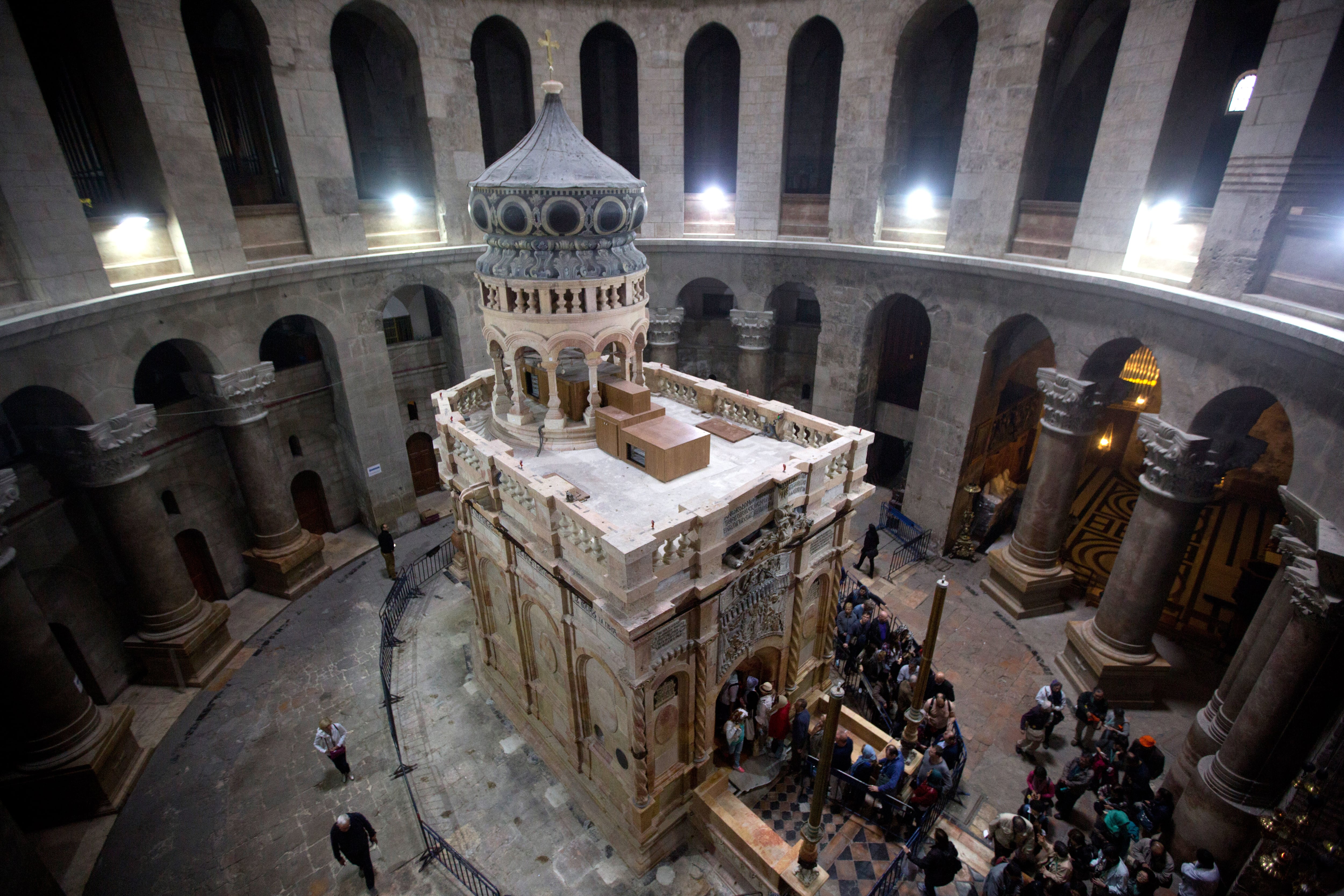
For centuries, Jerusalem's Church of the Holy Sepulchre has been a chaotic mix of architectural styles, reflecting the various communities that lay claim to the site. In recent years, extensive restoration and excavation efforts have taken place, prompted by a 2013 Israeli assessment that found the church's most revered structure – the Edicule, believed to contain Jesus's burial chamber – to be in a precarious condition.
The restoration project, known as the Hagia Polis Project, has yielded remarkable findings about early Christianity. Italian archaeologists discovered botanical and pollen evidence, including grape vines and olive trees, in a floor section adjacent to the Edicule. Father Amedeo Ricco, one of the excavators, stated that this discovery, along with the agricultural remnants found near the venerated tomb, supports the compatibility of the location with the Gospel narrative, particularly the account in John's Gospel.
Furthermore, the project has culminated in a comprehensive publication containing over 500 pages of articles, maps, and images, showcasing the research and restoration efforts. Father Athanasius Macora, secretary of the Status Quo for the Custody of the Holy Land, noted that this project represents the most significant and invasive work in the church since the late Ottoman period.
The Holy Sepulchre's history is marked by a series of setbacks, including pagan temples built over the site during the Roman era, fires set by Persian troops in 614 and Fatimid caliph Al Hakim in 1009, and a major fire in 1809. Major renovations began in 2019, following repairs to the Edicule two years earlier. The project was complicated by the Covid-19 pandemic and the ongoing Gaza conflict, which caused interruptions in archaeological work.
Despite these challenges, the co-operation between the three major Christian communities – Catholics, Greek Orthodox, and Armenian Orthodox – in managing the restoration project has been hailed as a significant achievement, demonstrating the unity and collaboration among Jerusalem's Christian communities.
Written by urgent.news from The National UAE's reporting — not their text. Machine-written — may contain errors; check the original before relying on it.