Cave markings discovered in Ireland could transform understanding of when humans first settled there
Researchers believe that humans may have walked across the sea from Wales during the last Ice Age and made art
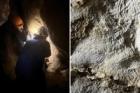
Recent cave markings discovered in Ireland may significantly alter our understanding of when humans first settled in the region. If confirmed to date between 15,000 and 10,000 years ago, these markings would also represent the earliest known cave art in Ireland from the last Ice Age. The research project, led by Genevieve von Petzinger, George Nash, and Barbara Oosterwijk, is still in its preliminary stages.
Ireland has traditionally been considered one of the last areas in northwestern Europe to be inhabited by humans. The earliest accepted evidence of human presence in Ireland is a bear kneecap from County Clare, dated to around 12,500 years ago. In 2021, zooarchaeologist Ruth Carden suggested that marks on a reindeer bone from Cork, dated to approximately 33,000 years ago, may have been created by hunters, although this remains a topic of debate.
In July, von Petzinger's team, as part of the Lost Land Bridge Project, found intentional markings in caves located in southwest Ireland. These markings include finger flutings made by tracing fingers through soft cave-wall material, as well as ochre and charcoal marks, some of which may depict animal silhouettes. The team will conduct further technical analysis to accurately date the findings.
Von Petzinger, a paleoanthropologist and rock art specialist, emphasizes that finger flutings are often found at sites from the Ice Age, with over 90% of known sites with finger flutings dating to that period. The researchers' motivation to search for cave art in Ireland stemmed from the belief that, during the Late Ice Age, changing sea levels may have created a more accessible land route between Ireland and Wales.
This hypothesis, while unproven, is based on previous geological research such as the BRITICE Glacial Mapping Project. The team used the Living Intelligent Archive of Ancient Culture, Art, and Relational Archaeology (LIACARA) system to guide their search for cave art in Ireland. LIACARA, an AI system, analyzed archaeological knowledge, maps, images, data, and published research to predict locations most likely to contain converging factors such as caves and human presence.
The team inspected 28 caves highlighted by LIACARA, and eight of these contained markings that warranted further investigation. The team prefers not to disclose the specific locations to protect the sites. Additional analysis will provide more insights into the findings, including radiocarbon dating of charcoal, Raman spectroscopy on red pigment, uranium-series dating of calcite, and potentially ancient DNA analysis of the finger flutings.
Historic cave markings are relatively rare in Ireland, with prehistoric rock art found at sites like Newgrange in County Meath but not in caves. The team plans to make LIACARA open access, as it is designed to help researchers connect evidence across thousands of sources, identify patterns, and trace conclusions back to the evidence.
Written by urgent.news from The Art Newspaper's reporting — not their text. Machine-written — may contain errors; check the original before relying on it.