Can the new Pinglu Canal become China’s ‘Yangtze of the southwest’?
The opening of China’s first new river-to-sea canal since 1949 – which will boost trade links with Southeast Asia – could transform the economy of the country’s landlocked southwestern interior in ways comparable to the Yangtze’s role in Shanghai’s rise, according to its operator. The 134.2km (83.4 mile) Pinglu Canal, which opened on Wednesday, links a major tributary of the Pearl River in the…
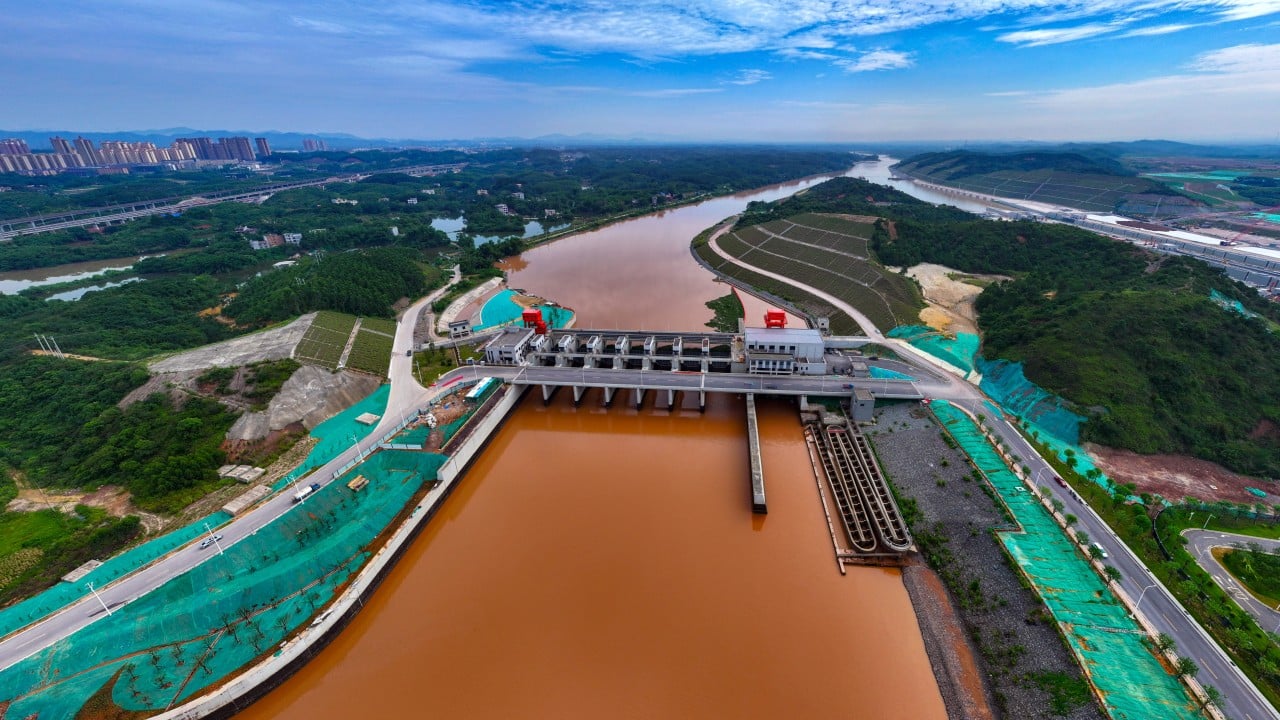
China recently inaugurated its first new river-to-sea canal in over seven decades, the 134.2km Pinglu Canal. This ambitious project could transform the southwestern landlocked Chinese economy, comparable to the Yangtze River's impact on Shanghai's growth. Spanning from a major tributary of the Pearl River in Guangxi Zhuang to the Beibu Gulf, the canal serves as a shortcut for cargo between western China and the Association of Southeast Asian Nations (Asean).
Pursued to address congestion at traditional logistics hubs, the canal's construction over 48 months involved leveling mountains and carving artificial waterways through challenging terrain. Engineers deployed heavy-duty dredgers, blasting through rock and removing up to 6,000 cubic meters of soil per hour, excavating as deep as 35 meters below the riverbed. Over 315 million cubic meters of soil and granules were removed.
With the ability to accommodate 5,000-tonne capacity vessels traveling in both directions, Pinglu is one of only three waterways in China capable of such large ships. Its significance could drive economic change in the economically underdeveloped southwestern region, as Wei Dejian, the canal's chief engineer, told local media.
However, the project faced criticism and resistance from some Guangxi residents, concerns over water scarcity during the dry season, and potential saltwater intrusion. To mitigate these risks, engineers incorporated water-saving designs, such as storage pools at major ship locks. The partnership between Guangxi and Yunnan governments aims to streamline shipping along the canal, reducing transport costs and travel time by 560km for goods from Yunnan.
Written by urgent.news from South China Morning Post's reporting — not their text. Machine-written — may contain errors; check the original before relying on it.