Wohnungsmarkt: Hohe Bauzinsen: Nachfrage nach Immobilien kühlt sich ab
Ob Eigenheim oder Wohnung: Viele Menschen wollen in die eigenen vier Wände. Doch stark steigende Bauzinsen machen bei vielen die Rechnung zunichte. Und Kredite könnten noch teurer werden.
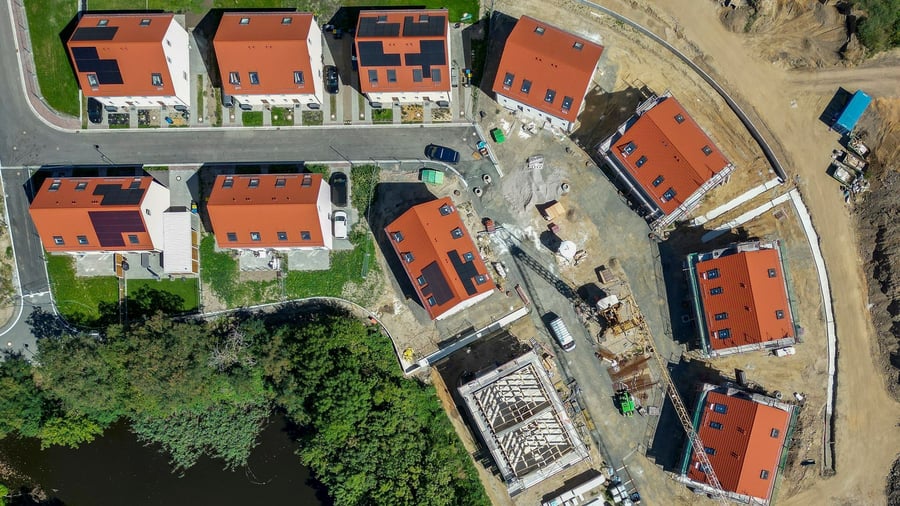
In Frankfurt/Main, inflation fears and increased building costs are causing many people to hesitate before purchasing a home or buying property. The Hamburg Gewos-Institute for Urban, Regional, and Housing Research predicts that demand for real estate this year will significantly cool. This trend reversal comes after two years of rising sales, attributed to a challenging environment due to the Iran war, leading to reluctance to buy.
According to Gewos real estate expert Sebastian Wunsch, "Apart from building costs, building prices and general inflation are rising more strongly." These concerns are compounded by worries about wars, trade conflicts, and stricter lending by banks. Specifically, Gewos anticipates that the number of residential real estate purchases - single-family homes, flats, multi-family houses, and construction land - will drop to around 612,000 this year, which is 4.4 percent fewer than in 2025.
Furthermore, residential property sales are expected to decline by 2.0 percent to about 211 billion euros. Commercial real estate is expected to see slightly larger declines. In the second quarter, demand for homeownership saw a significant dampening, with fewer inquiries on property listings and longer marketing periods. The greatest decline is anticipated in 2026, with a decrease of over five percent in single-family home purchases.
Similarly, land for multi-family houses is expected to grow slightly, as investors benefit from rising rents. However, multi-family house transactions are expected to decline, presumably due to increasing rents. Gewos analyzes annual contract closures for all German municipalities and rural districts annually. For the forecast, data from the first half of the year were used.
The real estate market is expected to cool in 2025 and 2024, with the market and sales significantly increasing. The primary cause of the cooling is rising building costs due to the Iran war. Zinsen for mortgages with a ten-year fixed rate have risen to around 4.25 percent annually, the highest level since May 2011. As building owners and homebuyers often finance large sums through loans, even small increases can become costly and derail plans.
Experts predict further interest rate hikes are possible. "We are nearing potential 4.5 percent for building costs," notes Max Herbst, founder of FMH-Finanzberatung. Gewos' expert Wunsch suggests weak sales of land as a possible sign of setbacks in housing construction. The number of building permits, which recently recovered strongly, could decline again.
"For the medium term, we currently see only limited growth potential for the German real estate market."
Written by urgent.news from Handelsblatt's reporting — not their text. Machine-written — may contain errors; check the original before relying on it.