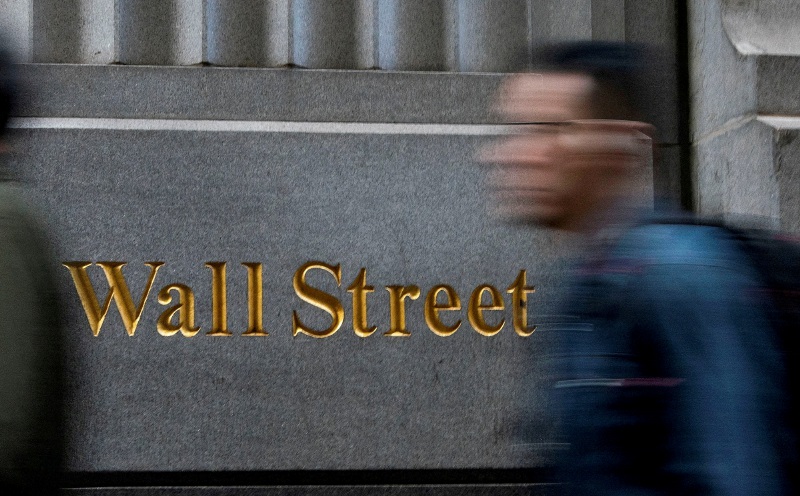
Wall Street gyrates after Fed hikes interest rate to battle inflation
NEW YORK: Wall Street whipsawed on Wednesday after the US Federal Reserve raised its key interest rate for the first time in over three years to fight stubbornly high inflation stemming from soaring crude oil prices during the US-Israeli war on Iran.
On Wednesday, Wall Street experienced significant fluctuations following the US Federal Reserve's decision to raise its key interest rate for the first time in over three years. The primary objective behind this move was to combat persistent inflation, which has been exacerbated by soaring crude oil prices amid the ongoing US-Israeli conflict with Iran.
Following the announcement, Federal Reserve Chair Kevin Warsh had previously expressed hawkish sentiments during a speech in Jackson Hole, potentially leading to a self-imposed predicament. The unanimous decision among Fed officials underscores the central bank's commitment to addressing the rising inflation concerns. In the immediate aftermath, investors closely examined Warsh's comments for further insights into the Fed's rationale and future interest rate trajectory.
Despite the economic uncertainty, retail sales data revealed that consumers continued to spend despite mounting affordability challenges, particularly at the gas pump. The Middle East conflict escalated with Saudi airstrikes against Yemen and retaliation from Iran-backed Houthi fighters, causing crude oil prices to surge over 20% in just two-and-a-half weeks.
The three major US stock indexes initially gained momentum before the announcement, with the tech-heavy Nasdaq leading the gains. However, the Dow Jones and S&P 500 subsequently experienced declines. Among the S&P 500's 11 major sectors, technology shares led the gains, while energy stocks, especially those reliant on crude, faced the steepest decline.
Chevron and Exxon Mobil were among the hardest hit, with declines of 2.3% and 3.0%, respectively. On the other hand, semiconductor stocks experienced a notable rally, buoyed by a call for industry-wide safety coordination. Conversely, Robinhood shares plummeted 5.3% following the US Senate's failure to pass crypto legislation, dealing a significant blow to digital asset companies.
Meanwhile, the US Department of Justice charged two former Robinhood engineers with insider trading and misuse of confidential information. Intel and SK Hynix, a South Korean chipmaker, also saw substantial gains, with Intel up 5.2% and SK Hynix rising 0.6%, following talks of potential memory chip manufacturing in the United States.
IBM recorded a 3.5% decline after announcing a funding agreement with the US government for its chip unit. The trading activity on Wall Street was robust, with advancing issues significantly outnumbering decliners on both the NYSE and Nasdaq. The S&P 500 and Nasdaq Composite both recorded new 52-week highs, indicating investor optimism despite the mixed performance.
Written by urgent.news from New Straits Times's reporting — not their text. Machine-written — may contain errors; check the original before relying on it.
This story
This is one outlet's version. Read the fullest account.