The virtual worlds where robots are trained
Training systems that allow robots to negotiate the real world are getting more sophisticated.
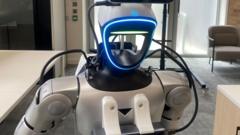
The virtual worlds where robots are trained showcases the cutting-edge technology developed by British start-up Vsim. Their software enables robots like Freddo, a robot capable of walking, recognizing, and grasping objects in mere minutes, to navigate and perform tasks with remarkable efficiency. This rapid skill acquisition is made possible through virtual simulations that allow robots to practice and refine their abilities in a computerized environment millions of times over.
Vsim's innovative approach leverages powerful graphics processing units (GPUs) to optimize their algorithms, resulting in a super high-performance simulator that can run on the hardware carried by the robot itself. This enables the robot to simulate and adapt to a multitude of scenarios in real-time, ensuring its actions remain safe and on-mission even when faced with unexpected events.
While Nvidia, a dominant player in the robotics software market, offers various tools for training and controlling robots, their software falls short in providing a comprehensive understanding of the real world. Nvidia's approach relies on manual labor and agents to build virtual environments, which can be time-consuming. In contrast, Vsim's fast simulation approach allows for quicker adaptation and refinement of robot behavior, making it a promising solution for the future of robotics.
Written by urgent.news from BBC Technology's reporting — not their text. Machine-written — may contain errors; check the original before relying on it.
This story
This is one outlet's version. Read the fullest account.