The Energy Department launches $215 million push to make quantum computers scientifically useful by 2028
The U.S. Department of Energy is launching a $215 million competition to build quantum computers that are usable in scientific research. Officials are hopeful that early versions of such machines could be operational as soon as 2028. While ordinary computers famously store data as binary digits that can take on a value of either zero or one, quantum computers harness the laws of quantum mechanics…
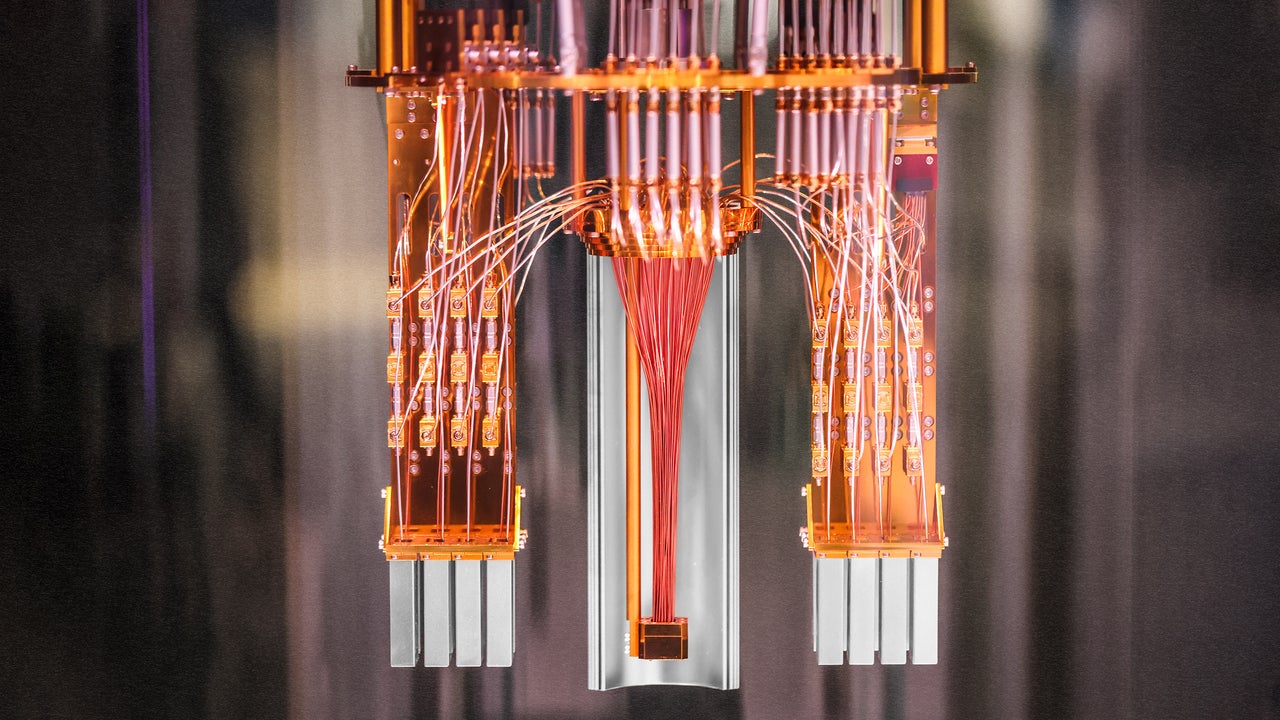
The U.S. Department of Energy has announced a $215 million competition aimed at developing quantum computers that are scientifically useful by 2028. Quantum computers operate on different principles than traditional computers, using quantum bits or qubits that can exist in multiple states simultaneously, allowing them to potentially solve complex problems much faster than classical computers.
However, these devices have primarily been subjects of experiments rather than practical tools due to their difficulty in building and sensitivity to external interference, often requiring temperatures close to absolute zero. The Quantum Genesis Q Competition seeks to make these quantum computers "fault-tolerant scientifically relevant quantum computers" (SRQCs), transforming them from lab experiments into operational equipment.
The competition, which will be divided into two phases, offers up to $1.5 million for meeting early milestones and a $100 million prize pool for producing SRQCs with at least 100 logical qubits. Additional $50 million pools are available for demonstrating computers with 150 or 200 logical qubits. Logical qubits refer to the effective computation capacity of qubits after error-correction mechanisms.
The department hopes to have prototypes capable of conducting meaningful scientific calculations by 2028, with potential applications in drug discovery, astrophysics, secure communications, and more. The DOE aims to secure a "DOE Quantum Computing User Facility" to facilitate scientific research and collaboration among quantum computing developers and scientists.
While the likelihood of meeting the 2028 target is acknowledged as challenging, the department remains optimistic about its prospects by 2030.
Written by urgent.news from Fast Company's reporting — not their text. Machine-written — may contain errors; check the original before relying on it.