Scientists Mapped a Hidden Glacier Using Gravity
Rock glaciers like Timpanogos in Utah are a jumble of ice and stone. A new method could finally show just how much water these glaciers hold.
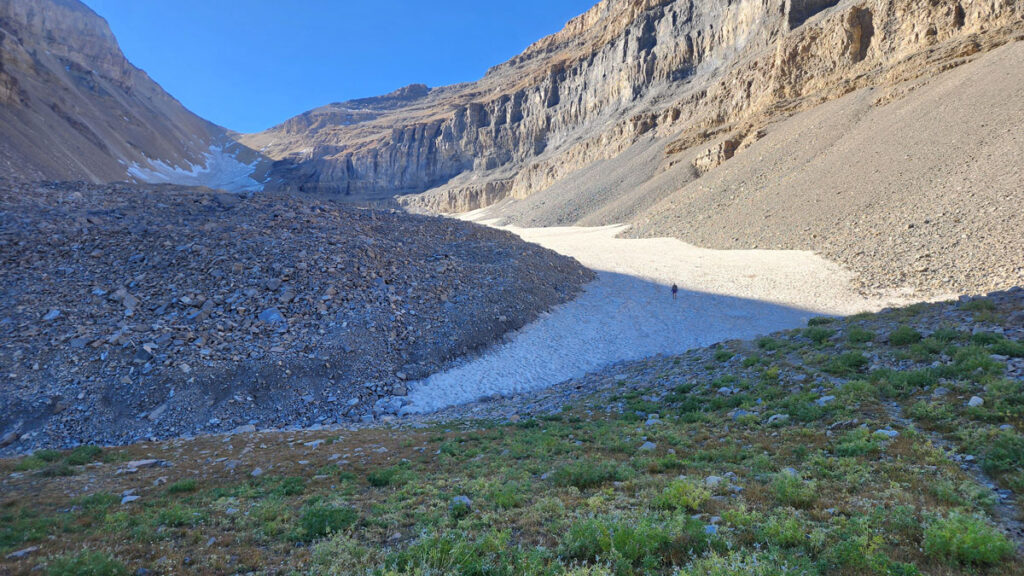
A new study published in the Journal of Geophysical Research: Earth Surface has mapped a hidden glacier in Utah using gravity measurements. The glacier, called Timpanogos Glacier, is concealed by layers of fallen rock and contains an estimated 1,550,000 cubic meters of ice - enough to fill Egypt's largest pyramid.
Michael Thorne, a seismologist at the University of Utah and coauthor of the study, explained that while most hikers know about the rockfall below Mount Timpanogos, they are unaware of the glacier hiding there. The glacier's ice is internal, which explains why it remains largely unknown to the public.
Traditionally, scientists use ground-penetrating radar (GPR) to measure glaciers and estimate their water content. However, GPR is less effective with rock glaciers, as it can't always detect the bedrock beneath the glacier. To overcome this limitation, Thorne proposed using a gravimeter, which measures tiny changes in Earth's gravity caused by differences in underground density.
Bronson Cvijanovich, a University of Utah master's student, carried the gravimeter up the 5-mile high-elevation trail for six multiday trips, taking 232 measurements. The data was then analyzed using Bayesian inversion, a statistical method that compares simulations of ice distribution beneath the surface to real measurements, providing a measure of how well the data fit reality.
The researchers found that Timpanogos Glacier contains enough ice to fill about 600 Olympic swimming pools, with an equivalent amount of water. They also estimated that rock glaciers in Utah hold about 1.08 cubic kilometers of ice, while rock glaciers across the western United States hold up to 13 cubic kilometers of ice, and all known rock glaciers on Earth store about 52.38 cubic kilometers.
Written by urgent.news from Eos's reporting — not their text. Machine-written — may contain errors; check the original before relying on it.