Kraken: The Medellin Disaster Prevention System the UN Is Studying
Medellin is preparing to showcase Kraken to the world, a strategy designed to strengthen the city’s ability to anticipate and respond to natural disasters, such as landslides, floods, and emergencies associated with heavy rainfall. A United Nations delegation will visit the capital of Antioquia today to learn about this initiative, which combines monitoring, early warnings, […]
A UN delegation will be visiting the Kraken disaster prevention system in Medellin this week, according to the Bello Mayor's Office. The city is showcasing Kraken, a strategy aimed at enhancing the ability to anticipate and respond to natural disasters such as landslides, floods, and heavy rainfall-related emergencies. A UN delegation will arrive in Medellin's capital city today to study this innovative initiative, which combines monitoring, early warnings, and community coordination to reduce disaster risks.
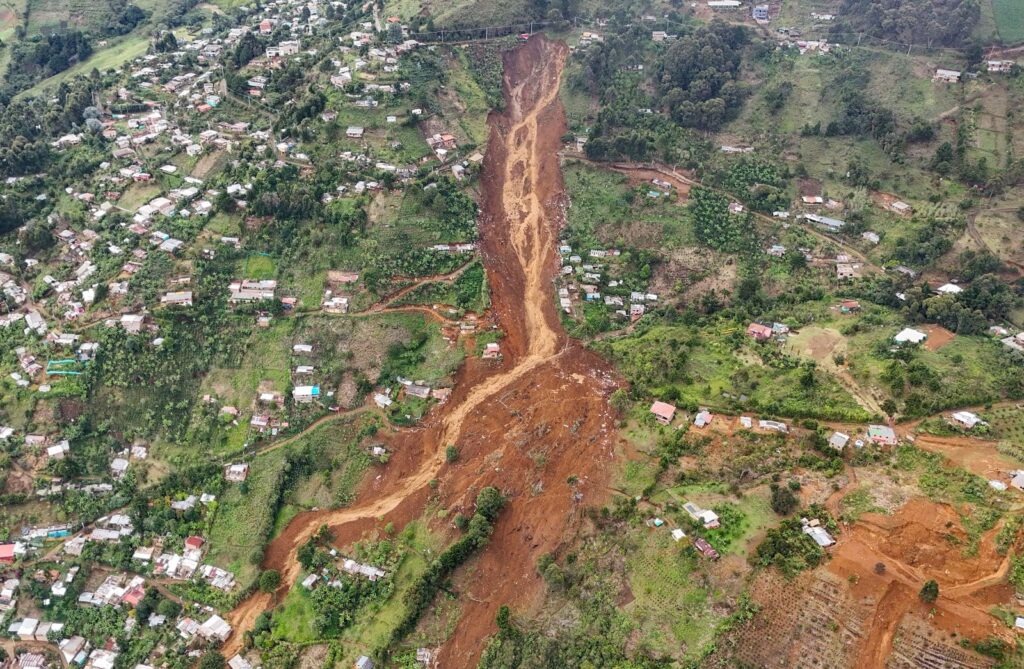
This visit takes place just before Climate Week 2026, which will commence on September 28 and be held in Medellin. The Kraken system highlights the city's experience in risk management and its commitment to strengthening community preparedness for increasingly complex environmental threats. Medellin's geography poses constant challenges for disaster prevention due to its mountainous terrain and numerous streams, some of which have been altered by urban growth and residential construction near their channels.
Historical records document several tragic incidents, including recent emergencies in the Santo Domingo Savio neighborhood and El Pinar, Bello, which resulted in dozens of casualties. These events underscore the necessity of identifying hazardous conditions before they escalate into emergencies, particularly in regions where steep slopes, heavy rainfall, and uncontrolled land occupation intersect.
The city government emphasizes that Medellin has 4,217 waterways, many of which have been modified by urban expansion and illegal occupation. In these vulnerable areas, streams and small creeks often remain hidden during summer but become active during winter rains. Marcela Ruiz Saldarriaga, secretary of Environment, explains that the city has been inhabited for 350 years, but the pace of urban development and growth has intensified over the last century.
In some areas, urban planning has integrated criteria for managing streams and constructing channels. Kraken is a risk management strategy developed by Medellin's city government in collaboration with EAFIT University. Its purpose is to detect potential threats, analyze collected data, and ensure timely alerts reach communities that may need to evacuate.
The system integrates three key components: technological monitoring, technical analysis, and community participation. By combining these elements, Kraken transforms field measurements into timely decisions and coordinated actions. Monitoring is achieved through sensors and instruments installed in identified vulnerable areas. These devices measure variables such as water levels, rainfall, soil moisture, and ground deformation, aiming to spot changes that may indicate dangerous situations.
Experts analyze the data, assess recorded conditions, and establish thresholds to determine when attention or preventive measures are required. Community involvement is equally crucial, with residents receiving risk information, participating in preparedness activities, and learning how to respond when an alert is issued. This includes adhering to evacuation routes and heading to designated meeting points.
The Kraken name derives from the mythological sea creature with many tentacles, symbolizing the coordinated operation of the strategy's various components. Sensors and monitoring in vulnerable areas are a crucial part of the strategy. Medellin has installed 116 sensors and devices at 21 critical locations to monitor landslides and floods.
Additionally, the city boasts a geological and geotechnical monitoring network covering 31 high-risk areas, featuring 57 inclinometers, 47 piezometers, four integrated hydrometeorological and geotechnical monitoring stations, and two Smart Node prototypes for remote measurement of ground deformation, moisture, and suction. Over 500 families residing near monitored areas have identified risks in their surroundings, enabling planners to devise interventions to minimize their exposure.
The strategy also involves expanding community-based early warning systems. Out of the 40 new systems targeted by the current administration, 29 are already operational. The UN delegation will study Medellin's experience in collaboration with technological monitoring, scientific knowledge, and community preparedness ahead of Climate Week 2026.
Environmental initiatives, such as Mi Rio, Mis Quebradas, will also be presented during the visit, focusing on improving waterway management and reducing flood and erosion risks. Kraken has garnered international attention, with the strategy recently presented in India at a specialized geotechnical instrumentation meeting. The UN delegation's visit precedes Climate Week 2026, scheduled for September 28 to October 10, during which Medellin will take center stage in discussions and initiatives related to climate change.
Written by urgent.news from Colombia One's reporting — not their text. Machine-written — may contain errors; check the original before relying on it.