In defence of Ealing Broadway’s ‘calm space’
The arrival of an unlit hut at Ealing Broadway has naturally been the source of ridicule, but there is some sense behind it, says Sophie Maxwell Brown.
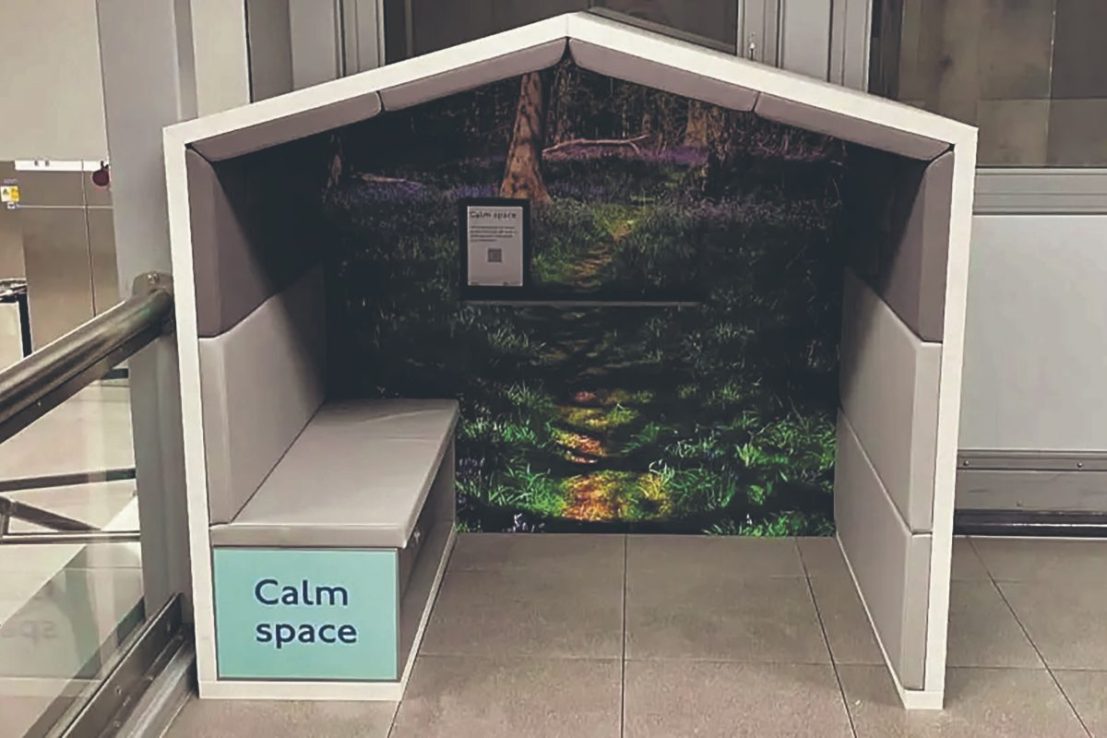
Recent controversy surrounding Ealing Broadway's "calm space" has raised questions about its design and purpose. However, design expert Sophie Maxwell Brown argues that there is a meaningful rationale behind the installation. For many Londoners, their commute significantly influences their day's mood, with travel being a primary source of physical and psychological stress.
In response, Transport for London (TfL) introduced a trial "calm space" at Ealing Broadway, aiming to provide a quiet area for passengers who feel overwhelmed, particularly neurodivergent travelers. The space features an unlit padded booth with a single cushioned bench, situated near the stairs and lift. Despite its unappealing appearance, the design is rooted in the growing practice of neuroarchitecture, which focuses on creating spaces with a positive emotional impact on users.
This approach has gained popularity due to the WELL Building Standard certification, which measures the health impact of buildings. TfL consulted with Autistica, a neurodiversity organization, during the design process, ensuring that the space addressed the needs of neurodivergent travelers. The chosen location for the "calm space" allowed for staff supervision, prioritizing safety and visibility.
While the unlit booth may seem like an impractical choice, Maxwell Brown emphasizes that the primary goal of the space was to provide a designated area for regulation and calmness. The design could have been improved by prioritizing quiet, privacy, and reduced visibility, but the intention behind the space remains valid.
Written by urgent.news from City AM's reporting — not their text. Machine-written — may contain errors; check the original before relying on it.