Excuse me while I snap the sky! NASA astronaut’s ‘Purple Haze’ photograph of aurora kissing the curvature of the Earth was taken from the ISS and is simply jaw-dropping
255 miles above Earth, from a vantage point on the International Space Station, a NASA astronaut captured an incredible green-and-purple aurora tracing Earth’s curvature
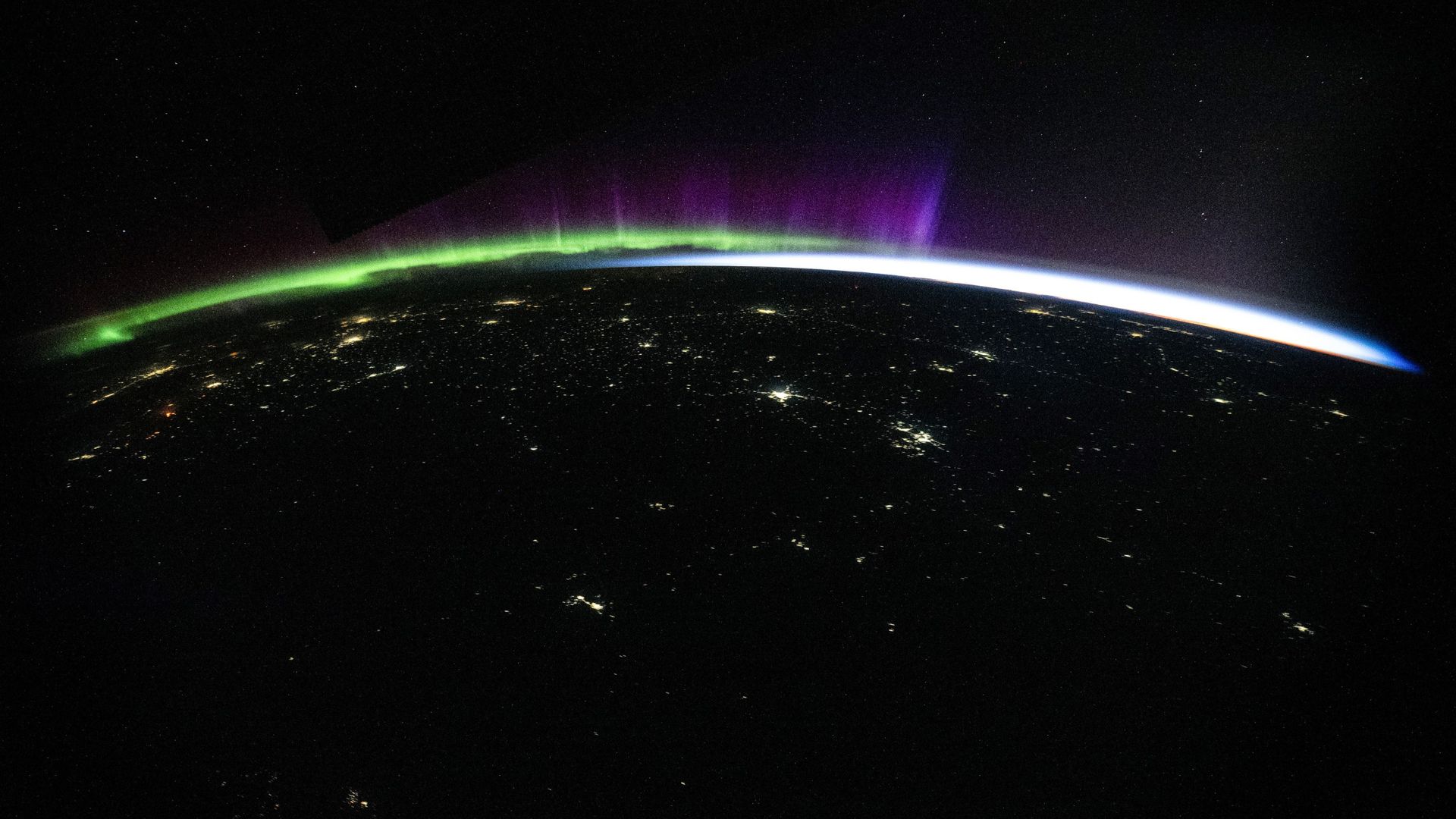
NASA astronaut Jessica Meir recently captured a breathtaking photograph titled 'Purple Haze Aurora', which was taken from the International Space Station (ISS). The stunning image, aptly named after Jimi Hendrix's song, beautifully depicts an aurora painting the Earth's surface with a vivid purple hue.
The 30-second long exposure photograph was taken by Meir herself, using a Nikon Z9 camera and a Zeiss 15mm T1.8 lens mounted on the Dragon window of the ISS. The ISS was orbiting our planet at an altitude of 255 miles above Kyrgyzstan when this awe-inspiring image was captured on September 12, 2026.
The photograph showcases not only the mesmerizing aurora but also a myriad of satellites moving across the sky, as well as the rising Moon, reflecting NASA's Artemis ambitions. The image was created by stacking multiple images, resulting in impressive star trails and light trails from the Earth's surface.
For those who wish to capture an aurora from Earth, Meir suggests using manual mode on a camera and shooting at a wide aperture to let in as much light as possible. A long exposure of 10 seconds is recommended, with adjustments made to ISO and shutter speed as needed. Keep in mind that auroras appear less vibrant to the naked eye, so capturing them through a camera lens can result in more spectacular images.
Written by urgent.news from Digital Camera World's reporting — not their text. Machine-written — may contain errors; check the original before relying on it.