Exclusive: PeakMetrics tracks brand reputations across five top AI platforms
Narrative intelligence company PeakMetrics Inc. today launched a monitoring service that measures how brands are portrayed across five prominent generative artificial intelligence platforms and identifies the online sources that shape those portrayals. The new AI Perceptions service tracks answers generated by OpenAI Group PBC’s ChatGPT, Google LLC’s Gemini, Anthropic PBC’s Claude, xAI Corp.’s…
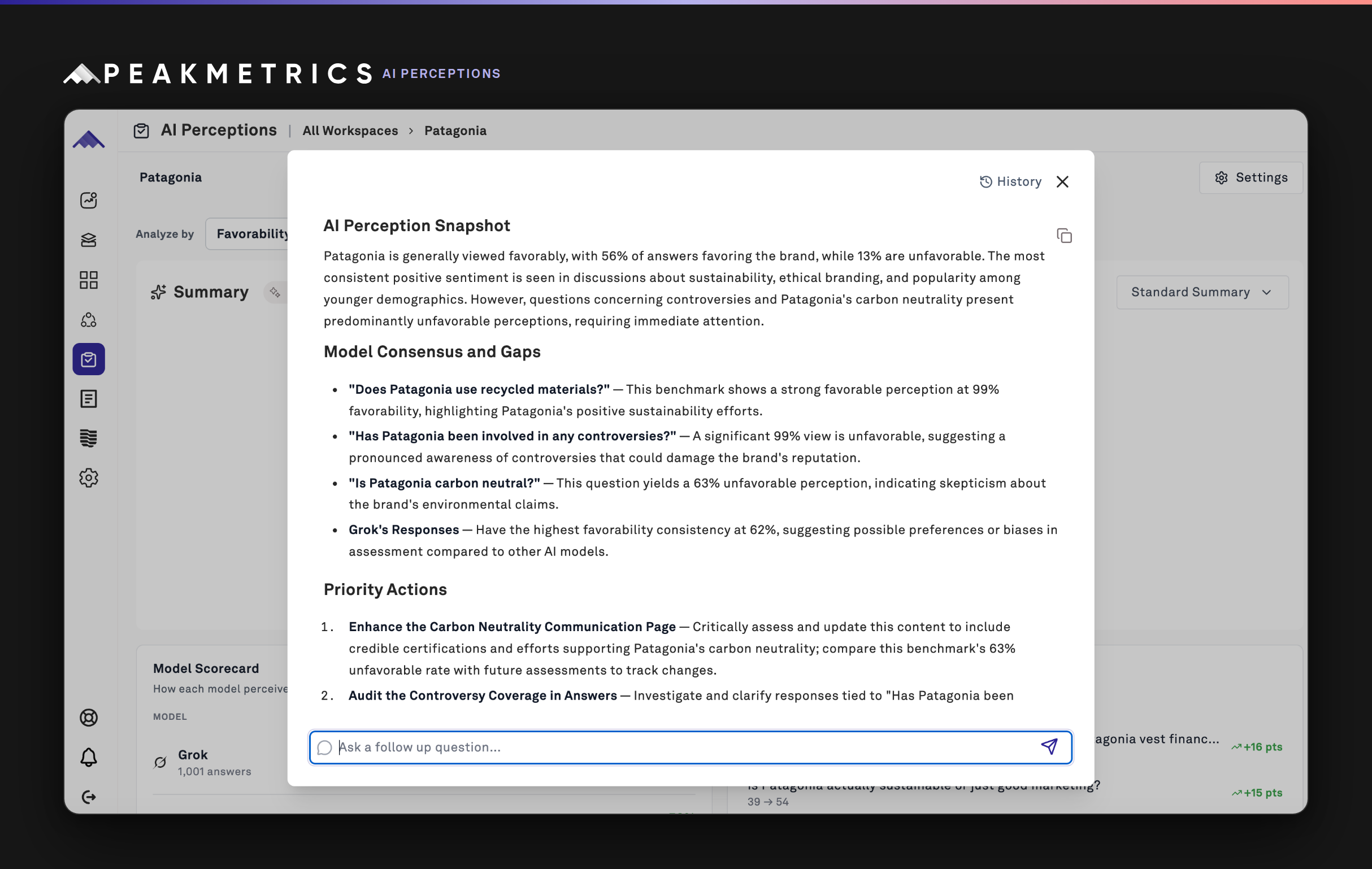
PeakMetrics Inc., a narrative intelligence company, has introduced a new monitoring service called AI Perceptions. This service measures how brands are portrayed across five leading generative artificial intelligence platforms: OpenAI's ChatGPT, Google's Gemini, Anthropic's Claude, xAI's Grok, and Perplexity AI's own engine. The goal is to help corporate communications teams understand the impact of news coverage, social media discussions, and online narratives on how AI services talk about their organizations.
PeakMetrics allows customers to select specific questions they want to monitor, which typically include their brands, products, competitors, and industry issues. The service then regularly submits these prompts to the five AI platforms, records the answers, and analyzes any changes over time. Customers can customize the scoring of the responses based on factors like favorability, trust, competitive positioning, message adoption, and purchase intent.
The AI Perceptions platform also tracks the sources AI models use when they search the web for information before generating an answer. This feature can help identify the websites and individual pages that influence a response. However, citation analysis is only available when the AI system chooses to perform a web search.
PeakMetrics has integrated AI Perceptions with its existing narrative intelligence platform. This integration allows the company to analyze how narratives originate, spread across different channels, and eventually appear in AI-generated responses. The system also aims to distinguish authentic online discussions from automated or manipulated content by assigning bot-detection scores based on factors such as posting frequency, account age, and follower patterns.
With the help of a partnership with Reality Defender Inc., PeakMetrics can analyze potentially synthetic text, images, and video. While bot activity typically makes up 20% to 30% of social media content in a customer workspace, it can increase during a crisis. This emerging capability highlights the importance of tracking narratives themselves, as identifying who shares the same ideas, even if the wording changes, can help understand how a narrative spreads and its origin.
PeakMetrics positions AI Perceptions as a reputation management tool rather than just an AI visibility monitor. By comparing perception before and after a campaign, identifying unfavorable answers, and determining the impact of websites or third-party coverage, communications teams can gain valuable insights into their brand's reputation. The service is available immediately as part of the PeakMetrics platform and is priced on a subscription basis, starting at $99 per month for a basic subscription.
Written by urgent.news from SiliconANGLE's reporting — not their text. Machine-written — may contain errors; check the original before relying on it.