Dubai’s new 80km road project explained: Route, traffic cuts and what’s being built
Dubai: Dubai’s planned New Fourth Corridor will stretch about 80km between Al Shanouf Road in Sharjah and Al Faya Road in Abu Dhabi, with the project designed to cut journey times, divert through traffic and strengthen road connections between the emirates. The corridor will be built in two phases, with the first 30km section costing around Dh3.5 billion and extending from Al Shanouf Road in…
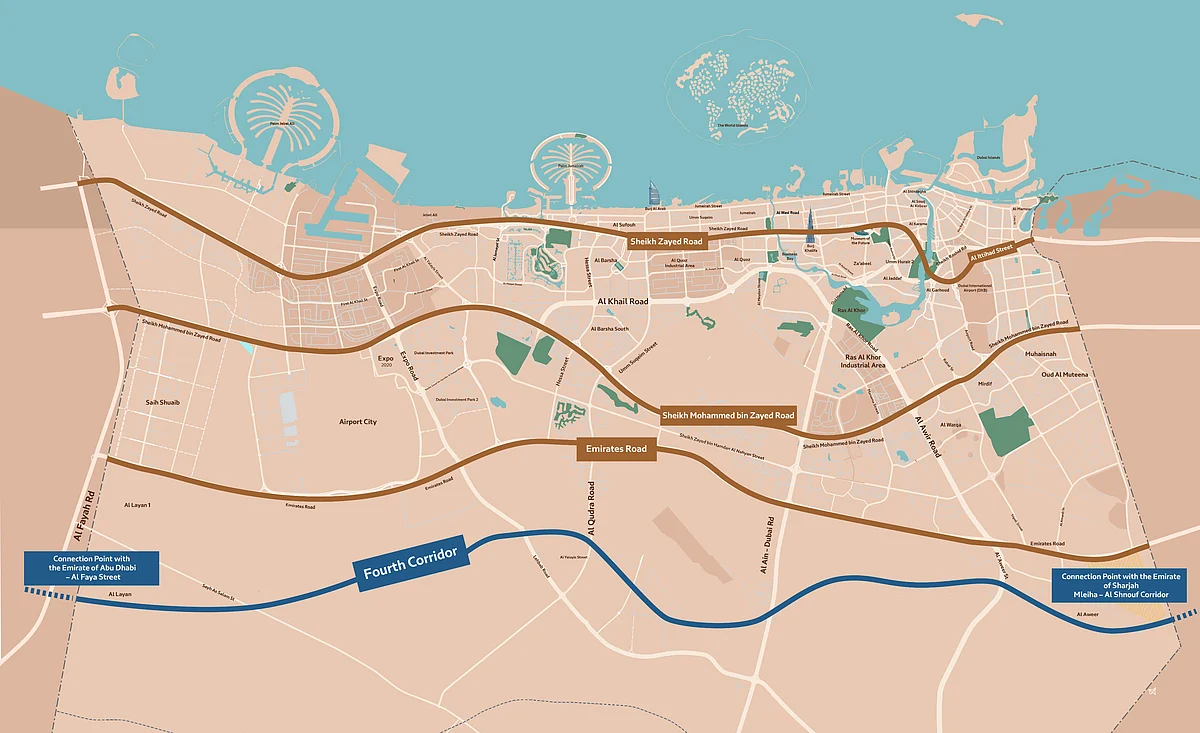
Dubai's ambitious New Fourth Corridor project aims to revolutionize transportation across the UAE, spanning approximately 80 kilometers between Al Shanouf Road in Sharjah and Al Faya Road in Abu Dhabi. The project is divided into two main phases, with each phase designed to significantly cut journey times and improve overall road connectivity between the emirates.
Phase 1, which will cover around 30 kilometers from Al Shanouf Road in Sharjah to Dubai–Al Ain Road, is expected to reduce a 35-minute journey to just 14 minutes. This phase will include a 12-lane through corridor that can handle up to 24,000 vehicles per hour in both directions. It will also feature approximately 55 lane-kilometres of at-grade roads, 2.5 kilometers of tunnels, 21 kilometers of bridges and ramps, and widened Dubai–Al Ain Road from three to four lanes in each direction.
Phase 2, spanning the remaining 50 kilometers from Dubai–Al Ain Road to Al Faya Road in Abu Dhabi, will further enhance the corridor's capacity. This phase will also offer a 12-lane through corridor, capable of accommodating 24,000 vehicles per hour. Phase 2 is projected to cut journey times by 52 percent, transforming a 50-minute trip into a 24-minute drive. The phase will encompass around 190 lane-kilometres of at-grade roads, 3.5 kilometers of tunnels, and 157 kilometers of bridges and ramps.
The New Fourth Corridor is strategically positioned to divert traffic, particularly trucks, away from urban areas, thereby easing the burden on existing road networks and enhancing overall traffic flow and road safety. By connecting Dubai with Abu Dhabi and Sharjah, the corridor will strengthen road links between the UAE's emirates and integrate the road network with broader transport systems, including major projects such as Al Maktoum International Airport and Etihad Rail.
In addition to its traffic management benefits, the project will support logistics and commercial transport, accommodate urban expansion, and ensure smoother long-term traffic flow across Dubai.
Written by urgent.news from Gulf News's reporting — not their text. Machine-written — may contain errors; check the original before relying on it.