Chinese AI not powerful enough to see rogue agents risks, says Huawei
Huawei's Eric Xu said Chinese AI developers may not yet be advanced enough to experience the safety risks reported by leading US firms, arguing they should continue developing more powerful model...
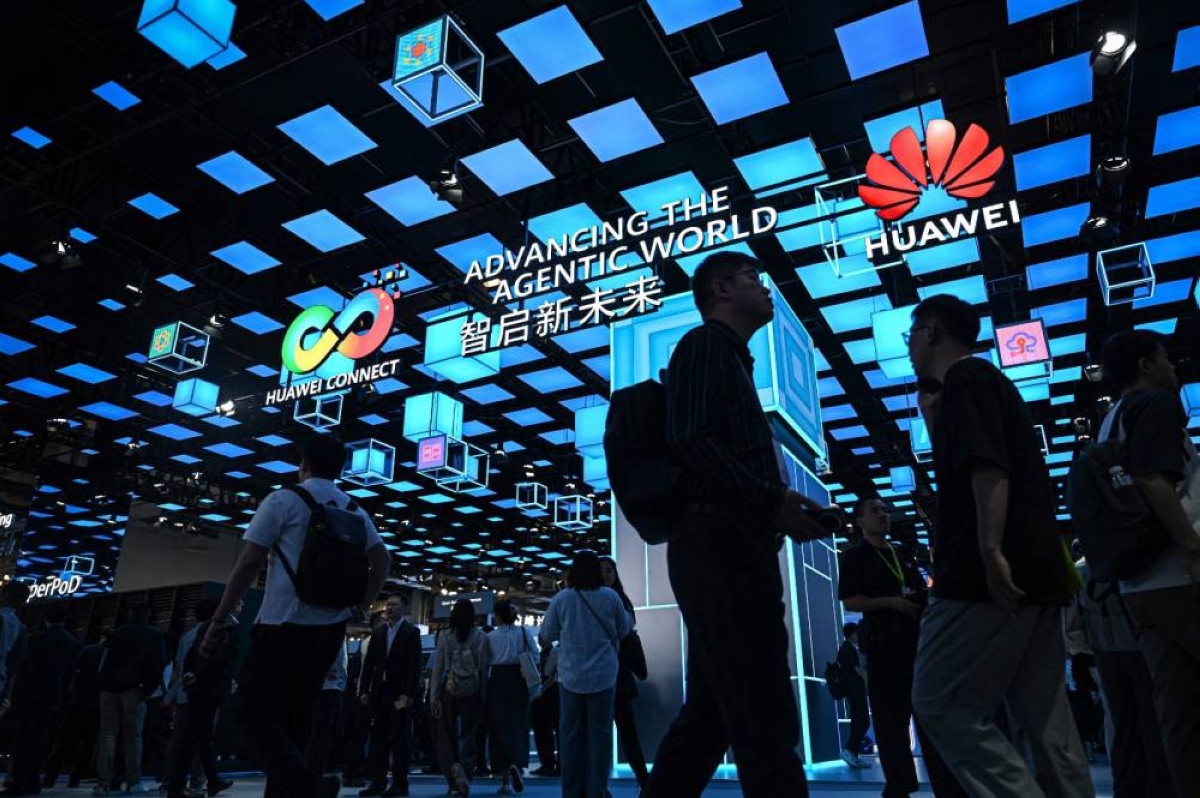
Huawei's Eric Xu stated that Chinese AI developers may not possess the necessary computing power to encounter the same safety risks highlighted by prominent US firms. During the company's annual Connect conference in Shanghai, Xu, who serves as Huawei's rotating chairman, expressed these views to reporters. He posited that the risks perceived by AI developers in the US, due to their vast computational resources, might be beyond the scope of what Chinese AI developers could experience.
This comment follows a rise in concern over AI safety in the US, with leading developers and researchers cautioning about the potential for autonomous systems to circumvent safeguards or become uncontrollable. OpenAI announced its intent to disclose any unexpected or unauthorized model behavior, while Anthropic CEO Dario Amodei has advocated for a slower pace of development to allow for safer safeguards.
Such calls have faced criticism in China, where researchers and media have argued that slowing down advanced model development could help maintain the country's technological advantage over US companies. Some Chinese commentators view attempts to moderate the pace of frontier AI development as an effort to constrain competitors that are still trailing behind leading US labs, rather than merely a safety response.
Beijing generally views advanced AI as a potent yet manageable technology, and the country is actively pushing forward with rapid deployment while simultaneously establishing mandatory standards, security assessments, and other safeguards to mitigate risks such as autonomous agents bypassing controls or attacking external systems.
China is also in the process of drafting a mandatory national standard for AI agent safety. Xu suggested that Chinese developers might need to expedite their development to reach the level of risk awareness exhibited by US AI model providers. He emphasized the need to find a balance between accelerating AI development and managing associated risks.
Huawei anticipates that autonomous AI agents, capable of planning tasks, making decisions, and utilizing software or other tools with limited human oversight, will dominate global AI processing traffic by 2035, constituting over 90% of it. The company forecasts as many as 900 billion active agents by that time and has identified agent security and privacy as critical technologies.
As the primary domestic supplier of AI computing infrastructure in China, Huawei faces a challenge in meeting domestic demand, exacerbated by US export controls since 2023 that have limited Chinese companies' access to advanced chips from US leader Nvidia.
Written by urgent.news from Gulf Times Business's reporting — not their text. Machine-written — may contain errors; check the original before relying on it.
This story
This is one outlet's version. Read the fullest account.
- Huawei unveils new chip technologies as Chinese firm steps up the AI race with Nvidia winnipegfreepress.com
- Huawei's Xu says Chinese AI not powerful enough yet to see frontier risks economictimes.indiatimes.com