Why The Midterms Elections In The US Matter To India So Much
Washington’s current foreign policy, in general and in the sense of it affecting India, resembles a bizarre reality show, like the ones US President Donald Trump used to host during his TV days. It essentially says New Delhi must agree to buy billions in American goods and services and kowtow to the White House. The United States is heading towards a crucial midterm election on November 3, 2026,…
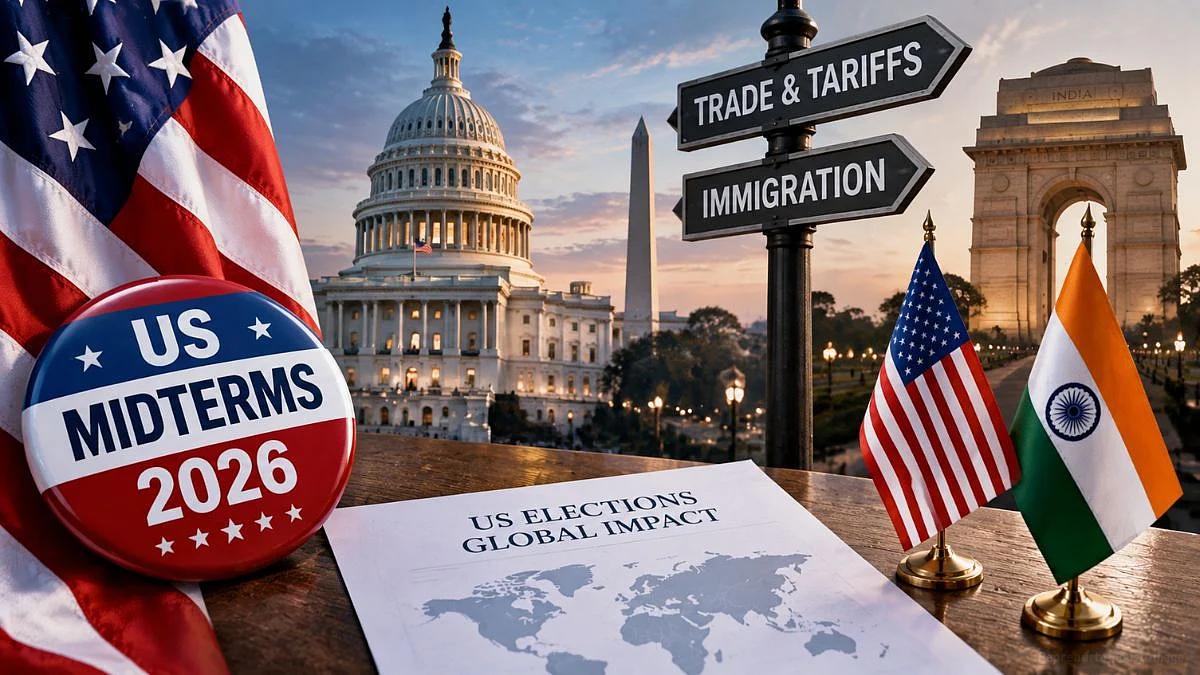
The upcoming midterms elections in the United States, scheduled for November 3, 2026, hold significant importance for India. Key issues at stake include trade and tariffs, as well as immigration policy. With a vast pool of talent residing in the US, the election could potentially disrupt the lives of these individuals. President Donald Trump, in power since January 2025, has relied on an aggressive display of American hegemony and has shown a tendency to make policy decisions based on social media without proper due process. This has created instability in US foreign policy.
In the Senate, the Republican Party holds a slim majority of 53-45, while in the House, they control 218-214 seats with two vacant seats and an independent aligning with the Republicans. A continuation of this control would enable Trump to operate with a legislative rubber stamp. However, a shift towards the Democrats in Congress could provide necessary checks and balances in a parliamentary democracy.
For India's tech sector, the H-1B visa system is at risk under Trump's proposal to eliminate the discretionary 60-day grace period, reducing it to just 24 hours. This could lead to sudden deportation of laid-off tech professionals, leaving them without a lawful residence status. India's IT industry, heavily dependent on talent mobility, would be affected by this election outcome.
A Democratic Party victory could provide protection for high-skilled legal immigrants through oversight and legislative firewalls, ensuring structural stability in India's tech sector.
India's oil supply is heavily reliant on West Asian oil, making it vulnerable to the financial and strategic costs of a protracted US-Israel-Iran war. A Republican-led Congress would expand the war budget without significant oversight, while a Democratic-controlled Congress could negotiate for restraint in military engagement. The election outcome will likely influence Washington's approach to military action or diplomatic restraint in the region.
The Democrats have shown signs of a turnaround in recent polls, with a New York Times-Siena poll giving them a 51%-43% advantage and an Ipsos Congressional Poll placing them at 44% compared to 37% for Republicans. This shift in domestic landscape should keep Indian policymakers and strategists focused on geopolitical diversification.
Though traditional diplomatic networks may face unpredictable political shifts, India must continue building its economic partnerships (BRICS, G20, etc.), expanding regional alliances (QUAD), and maintaining strategic autonomy. The result of the midterms elections may determine the immediate path of American foreign policy, but India must ensure its long-term policy trajectory remains intact.
Written by urgent.news from Free Press Journal's reporting — not their text. Machine-written — may contain errors; check the original before relying on it.