What happens when neutrinos swap identities inside a supernova?
Identity-fluid particles may carry some energy out, leading to direct collapse.
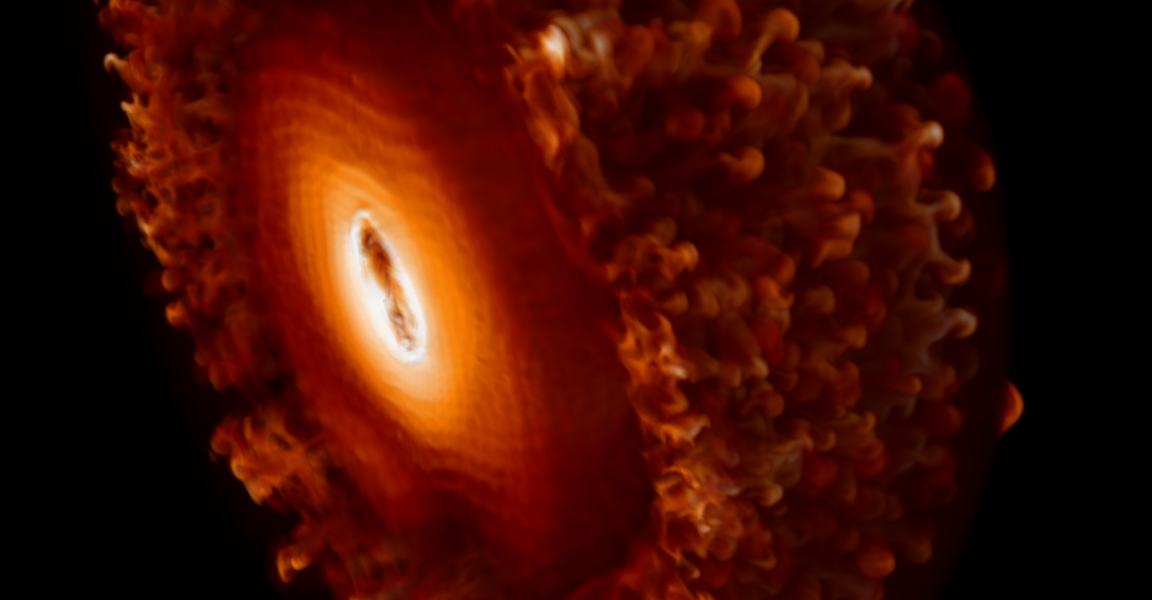
Core-collapse supernovae have remained unchanged in our understanding for decades. When large stars exhaust their core fuel, they collapse under gravity, transforming into either neutron stars or black holes. The subsequent energy release triggers a supernova explosion, dispersing the remaining star material. However, observed supernova statistics suggest that the established model might be incomplete, with uncertainties remaining over the fundamental aspects of core collapse events.
A new research paper in Physical Review D proposes a potential resolution to the observed discrepancies, involving neutrinos exhibiting the unique phenomenon of flavor change. Neutrinos, integral to current supernova models, have been found to possess this remarkable ability, which was previously overlooked in the theoretical framework.
Written by urgent.news from Ars Technica Science's reporting — not their text. Machine-written — may contain errors; check the original before relying on it.
This story
This is one outlet's version. Read the fullest account.
- What happens when neutrinos swap identities inside a supernova? arstechnica.com