Seoul Declaration sets 30-year Korea-Central Asia agenda on minerals, energy, AI
Korea and five Central Asian countries adopted the Seoul Declaration Wednesday, outlining a vision for cooperation over the next 30 years as they elevate their multilateral partnership to the leaders’ level. Announced at the inaugural multilateral summit, the declaration institutionalizes a biennial leaders’ summit and sets out cooperation across four broad areas — partnership, peace, prosperity…
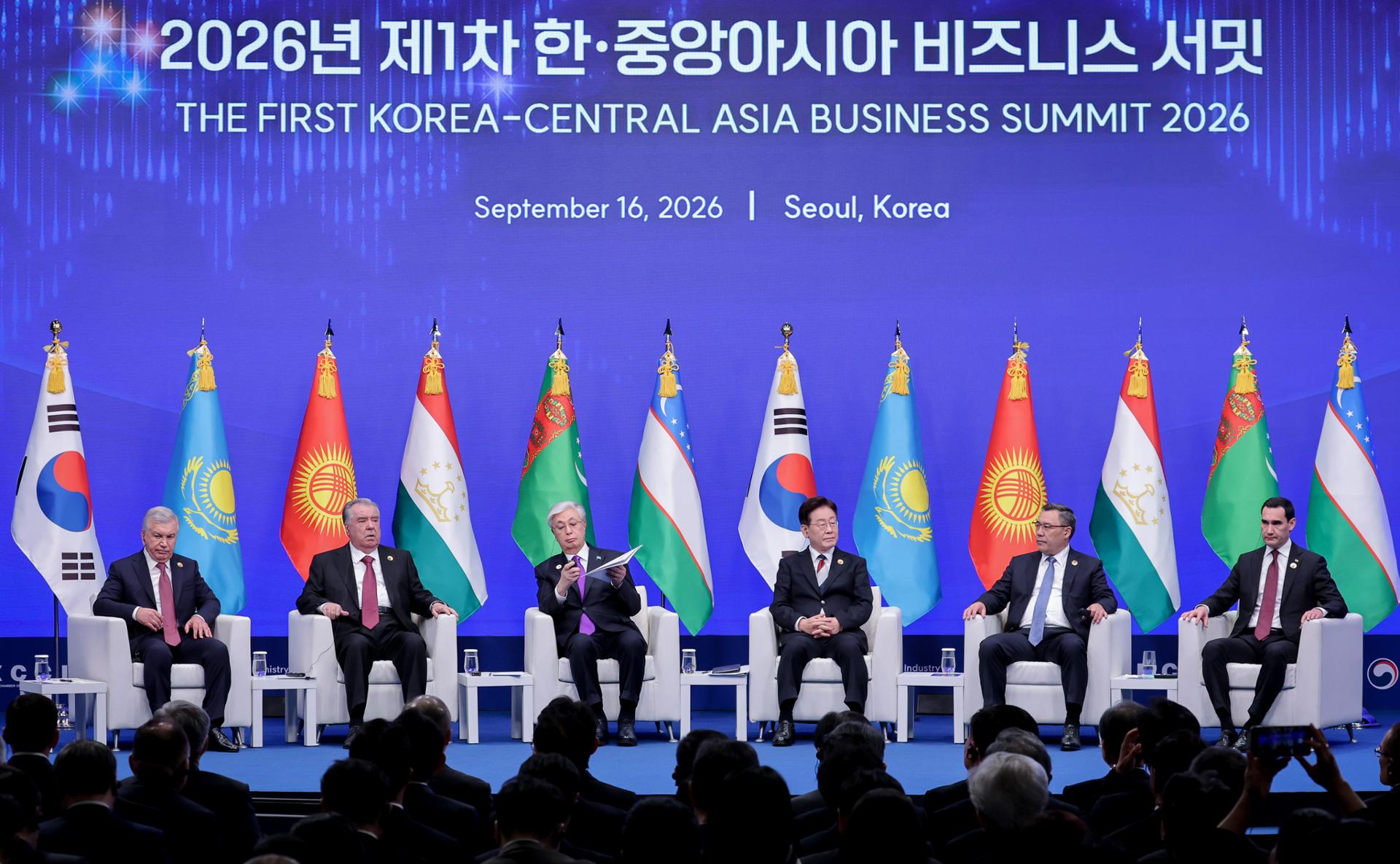
On Wednesday, Korea and five Central Asian nations finalized the Seoul Declaration, marking a 30-year agenda for collaboration across a range of strategic sectors. This elevated multilateral partnership now features a biannual summit between the leaders of the involved nations.
The declaration cemented cooperation in four primary domains: partnerships, peace, prosperity, and people-to-people exchanges. These encompassed supply chains, critical minerals, energy, trade, investment, emerging technologies, and security.
The summit convened President Lee Jae Myung of Korea alongside the leaders of Kazakhstan, Kyrgyzstan, Tajikistan, Turkmenistan, and Uzbekistan. This marks the next phase in upgrading the cooperation framework that began at the vice-ministerial level in 2007 and was raised to ministerial level in 2019.
Kazakhstan signaled its intent to host the second summit in Astana in 2028, with the participating countries unanimously endorsing the proposal. The Seoul Declaration thus set forth a structured framework for deeper economic cooperation among the nations involved.
Written by urgent.news from The Korea Times's reporting — not their text. Machine-written — may contain errors; check the original before relying on it.